

Accelerating the adoption of artificial intelligence in education
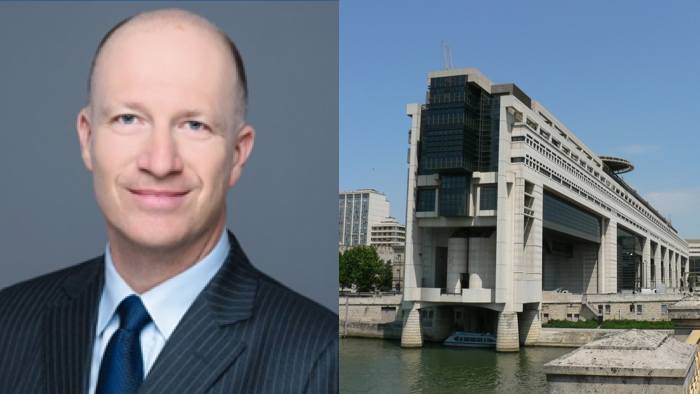
Thus, the education sector, whose adoption of digital technologies has accelerated in the context of the health crisis, is joining the national strategy for artificial intelligence. "In education, we are much less advanced than in health, a sector in which we are fortunate to have a very rich medical-administrative base. Yet it is a field which, like health, can benefit from the personalisation made possible by artificial intelligence. Thus, Renaud Vedel and Nicolas Amar note that "In education too, the progress of neurosciences and the first lessons of the Tech sector show that learning could be personalised, not only by adapting the learning rhythm to the learner (Adaptive learning), but also, via recommendation engines that make it possible to identify centres of interest, the most effective exercises for so-and-so". The pilots of the national strategy want to reassure teachers that "no one is planning to transform education or dehumanize it by taking the teacher out of the game. The aim is to allow the teacher to manage his or her class while at the same time offering a degree of personalization to the pupils. The important thing is to have mixed models.An ecological transition accelerated by artificial intelligence
The ecological and solidarity transition sector also integrates the French strategy: the MTES has just set up an ecolab, which is in the process of being set up within the General Council for Sustainable Development. The first stage of the strategy is to build up essential datasets and begin the acculturation and proof demonstration phases, in areas such as transport. The aim is to relieve congestion, optimise and minimise journeys. In addition, there is a whole section on the circular economy, energy and smart cities. The national strategy will also give increasing importance to training in all its forms: the need for data scientists is expected to grow by 7,500 over the next 4 years, bringing the number of French AI professionals to 21,500. The state will finance more than 300 theses over the coming years, but there is also an urgent need to diversify the profiles, in the form of more specialists at BAC+3 (bachelor's degree) level in order to come closer to the distribution of profiles observed worldwide. This objective can also be achieved by enabling engineers who already have solid skills in mathematics to retrain. The pilots of the strategy are also keen to put forward a broader vision of the need for training, including the need to enable the repositioning of current skills and occupations and acculturation to interacting with interfaces equipped with artificial intelligence, including among people who are far from digital because keyboards or screens can put them off. "Part of the answer to AI needs is to accompany the transformation of current professions." Translated from Intelligence artificielle : Renaud Vedel annonce de nouveaux secteurs clés de la stratégie IA
Our articles will then appear first in Google Top Stories.