

AI Chips and Infrastructure
The hardware backbone of artificial intelligence - chips, data centres, networks - has become a major strategic concern. Between rising energy demands, supply-chain tensions and questions of technological sovereignty, this foundation sits at the heart of the debate over the future of AI.
Articles
22 in total
STMicroelectronics Raises Its Data Center Guidance to $1 Billion by 2026, Amid an 89% Drop in Net Income
SoftBank in France: €45 Billion for an Initial AI Phase, €75 Billion Subject to Extension

Why Nvidia is Betting on Decart, an AI Startup Capable of Optimizing Competitor Chips

ByteDance Prepares Its Own Arm and RISC-V CPUs to Regain Control Over Cost Per Token
Huawei Announces LogicFolding: 3D Density Without EUV Machines, Targeting 1.4 nm by 2031

Anthropic rents Colossus 1 for $1.25 billion/month on an xAI park capped at 11% capacity

Security of H20 Chips: Beijing Summons NVIDIA After Suspicions of Remote Tracking Features

Sony Semiconductor Solutions accelerates in automotive LiDAR with high-speed stacked SPAD sensor
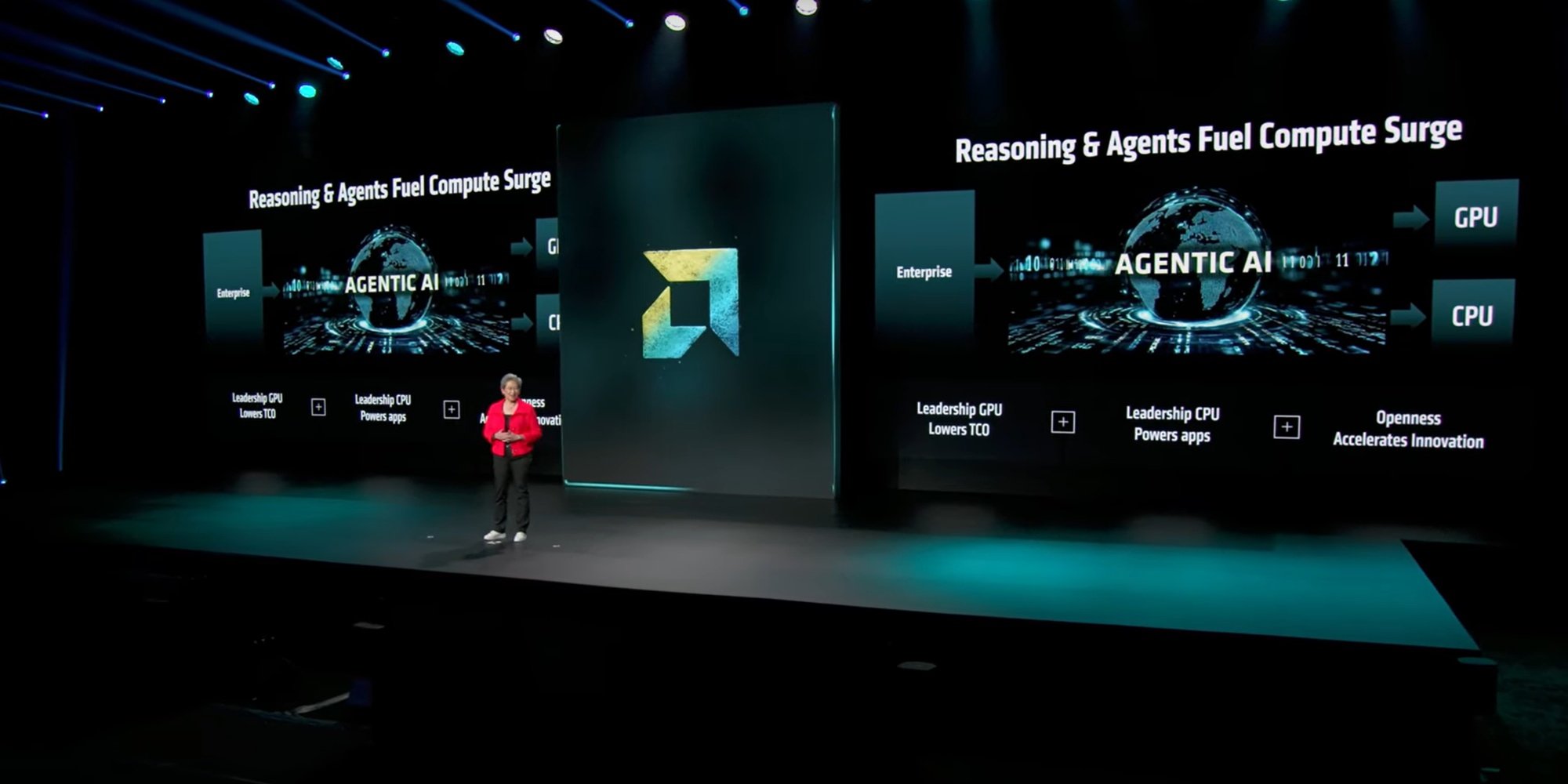
AMD Unveils Its Open Ecosystem Strategy for AI at Advancing AI 2025 Event

IBM structures its quantum offensive around Starling, the first large-scale error-tolerant system

France Quantum 2025: A 4th Edition Focused on the Internationalization of Quantum Technologies

OpenAI Announces Stargate UAE, the First International Deployment of Project Stargate

The OREUS Consortium Announces the Commissioning of One of Europe's Most Powerful Computing Centers

France Prepares to Host the Largest AI Campus in Europe

AMD and HUMAIN: An Ambitious Alliance to Develop AI Infrastructure
Relocating by Constraint: Will Semiconductors Finally Be Subject to Specific Tariffs?

AMD Completes Acquisition of ZT Systems, Strengthening Its Position in the AI and Cloud Infrastructure Market

Official Launch of the AI Cluster '3IA Côte d’Azur 2030'

Sesterce Realizes Its Supercomputer and AI Campus Project in Valence
EuroHPC selects six new sites, including one in France, to expand the AI Factories network

OpenAI concludes a strategic $11.9 billion deal with CoreWeave
NVIDIA GTC Conference Returns from March 17-21, 2025 in San Jose (California) and Online
About Chips & Infrastructure
What it covers
AI chips and infrastructure encompass the hardware resources needed to deploy artificial intelligence: graphics processors, specialised integrated circuits, high-performance memory, data centres and networks. These components form the technical base on which generative AI models and machine-learning systems run. Manufacturing these chips involves highly complex design and production processes, while deploying them requires cooling, power-supply and connectivity infrastructure.
Issues and debates
Three issues shape the debate. Energy consumption: data centres dedicated to AI draw far more electricity than conventional ones, raising environmental questions (cooling, water, carbon footprint) and tensions over access to power. Structural scarcity: demand for AI chips has outpaced global production capacity for several years, creating bottlenecks. Technological choice: the sector weighs versatile, widely used processors against specialised circuits that are more energy-efficient but less flexible. These tensions feed a debate over the optimal architecture for infrastructure that is both high-performing and sustainable.
Regulation and the European framework
The European Commission has placed mastery of AI chips and infrastructure among its strategic priorities. European measures on chips aim to ramp up semiconductor production, while the technological-sovereignty agenda tackles reliance on foreign suppliers. Sovereignty is central: the infrastructure deployed should serve as a lever to develop European technologies. The electronic-communications regulators take an interest in network-infrastructure and energy questions. The AI Act and the GDPR indirectly affect infrastructure choices (data location, compliance). Industry players and public laboratories are involved in optimising these resources.
What ActuIA tracks
ActuIA follows the evolution of available computing capacity and the technological trade-offs between generic and specialised approaches. We cover the issues of technological sovereignty and the public investment aimed at strengthening Europe's semiconductor value chain, the environmental impact of AI infrastructure, and the regulatory questions tied to the siting of data centres.