

X

The explosion of digital data and the increasing adoption of artificial intelligence are profoundly transforming French companies, yet they must face major regulatory and operational challenges. French companies find themselves at a crossroads between effective data management and compliance with regulations such as GDPR, the AI Act, and the NIS2 directive. According to a study conducted by OnePoll for Splunk, 56% of French organizations struggle to maintain compliance due to the exponential growth of data. This situation highlights the crucial importance of aligning compliance with performance, as 71% of IT decision-makers consider compliance a lever for competitive differentiation, promoting better data governance and controlled innovation.
Read more of the profile History updated on 18 September 2026
The French technology landscape is also seeing an increased adoption of artificial intelligence, although obstacles remain, particularly in data quality. France is catching up in AI with 70% of companies engaged in artificial intelligence projects, but data quality remains a major hurdle. With outdated or incomplete datasets, 42% of companies see their projects slowed down. However, the adoption momentum is underway, and French companies are showing more pragmatism and caution in their approaches, emphasizing data governance to integrate AI effectively and compliantly.
In the marketing domain, generative artificial intelligence (GenAI) is deeply transforming strategies. GenAI not only enables automated content creation and real-time personalization, but it also becomes a key tool for Chief Marketing Officers (CMOs) who are investing heavily in this technology. 83% of CMOs are confident in the transformative potential of GenAI, and 71% plan to invest more than $10 million annually between 2025 and 2027. Companies that successfully integrate GenAI achieve up to 70% additional growth, capitalizing on KPI alignment, advanced AI usage, and cross-functional collaboration.
The ESSEC AI for Responsible Leadership Grand Prix, launched by the ESSEC Business School, highlights the importance of ethical and responsible AI use, rewarding innovative projects that integrate these values. Among the winners, Vinci was praised for its Géovoie project, which optimizes railway maintenance and embodies a sustainable and innovative vision for the railway sector. Similarly, Logbook and Kayrros were recognized for their significant contributions to education and climate sustainability, respectively.
Scikit-learn, an open-source machine learning library in Python, continues its evolution with the release of version 1.7, aimed at improving the ergonomics, compatibility, and efficiency of machine learning workflows. This version introduces features such as enhanced HTML visualization, custom validation for histogram-based Gradient Boosting, and integration with the Array API, reinforcing its leading position in the field of machine learning.
In parallel, the Wikimedia Foundation's initiative to integrate AI-generated article summaries on Wikipedia has been paused, following contributor reactions. This project aimed to make articles more accessible but raised concerns about the editorial integrity of the encyclopedia.
Arcure, a French pioneer in embedded AI for industry, innovates with the introduction of augmented perception features in its Blaxtair systems. This technological advancement allows for contextual risk assessment, enhancing industrial safety while reducing unnecessary interruptions. Arcure thus positions itself as a key player in the field of industrial safety, with a significant global presence.
During the VivaTech 2025 event, discussions were held on the impact of AI across various sectors, including luxury, pharmaceutical innovation, and robotics. The exchanges highlighted the importance of AI in technological transformation, as well as the crucial role of scientific sovereignty in artificial intelligence.
IBM announced its quantum roadmap with Quantum Starling, an error-tolerant quantum computer planned for 2029. This development promises to execute large-scale quantum operations, opening new perspectives for applications in areas such as molecular modeling and quantum chemistry. IBM thus positions itself at the forefront of quantum innovation, with significant advancements expected in the coming years.
In conclusion, the French and global technology ecosystem continues to transform under the impetus of artificial intelligence and digital technologies. Companies must navigate a complex environment, balancing innovation, compliance, and effective data governance, to fully exploit the potential of these technologies and remain competitive on the international stage.
X est la plateforme de réseau social anciennement connue sous le nom Twitter. Elle permet de publier et de consulter des messages, des images et des vidéos, et d’interagir avec d’autres comptes. Elle intègre Grok, l’assistant développé par xAI, dont les fonctionnalités et les conditions d’accès évoluent avec le service. La plateforme X et l’activité de développement de modèles de xAI doivent être distinguées lorsqu’on examine une fonctionnalité ou une consigne propre à Grok sur le réseau social.
Related articles
46 in total
MBZUAI and École Polytechnique Strengthen Their Partnership in the Field of AI
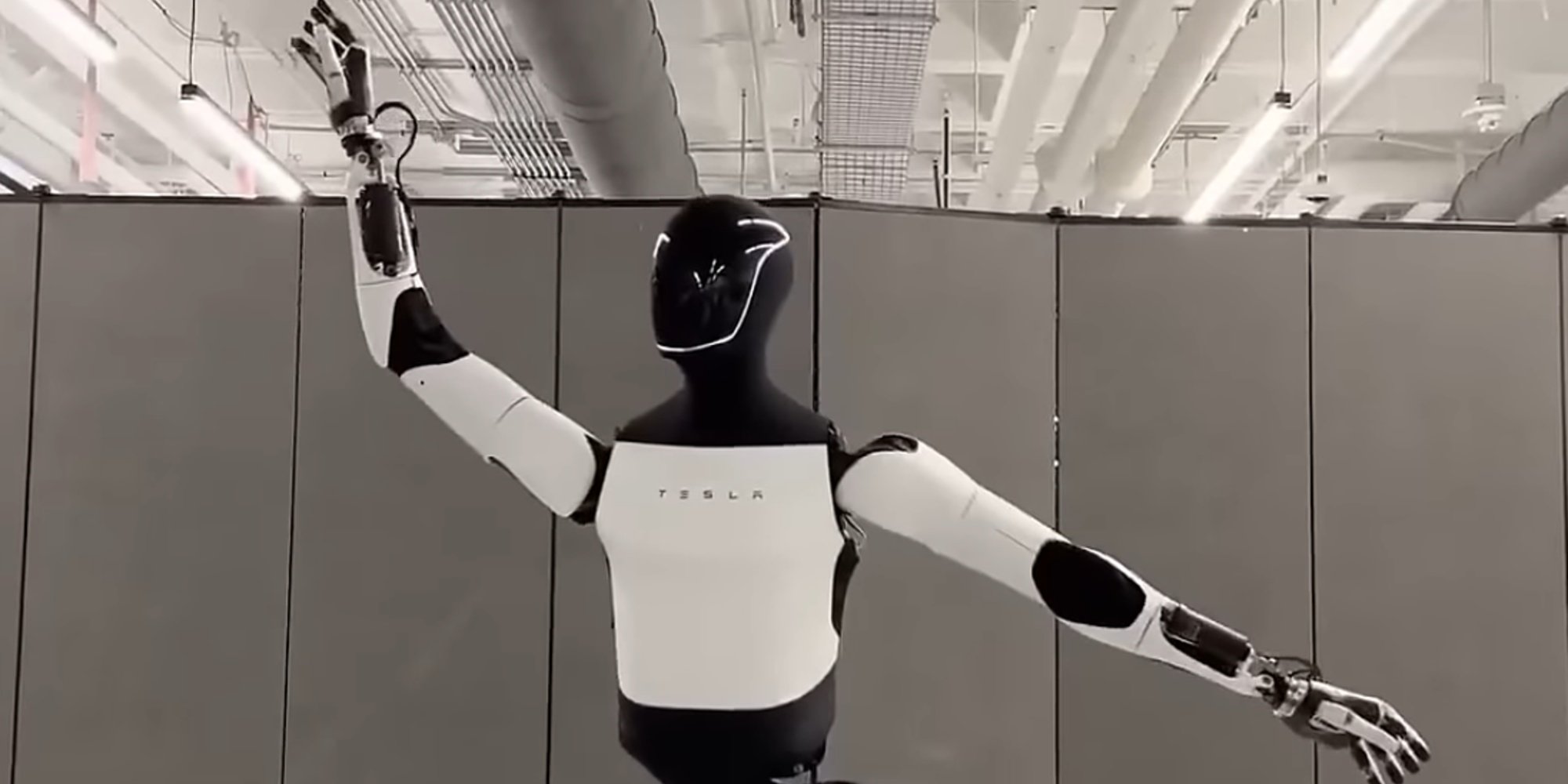
Recent Demonstrations of Optimus: An Overview of Advances in Robotics

Advertising, AI, and Generational Expectations: Towards a Multi-Speed Personalization?

DeepSeek announces a more powerful update of its DeepSeek v3 model

AMIAD Inaugurates Its Research Hub and Signs Partnership with Mistral AI

Accelerating the Ecological Transition through Data Sharing: La Caisse des Dépôts Launches the 3rd Edition of TechSprint
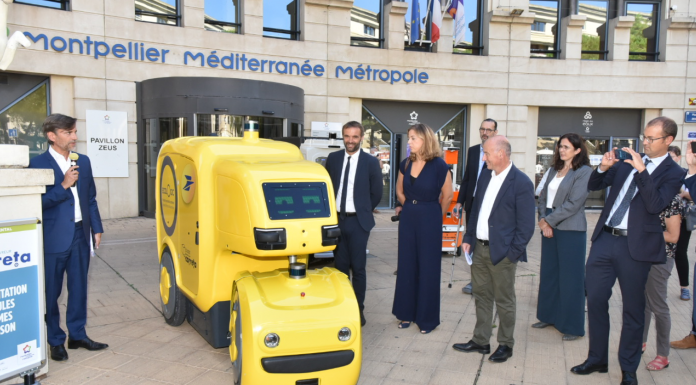
Autonomous vehicles: GRDF joins Montpellier's CARRETA project

Lowe's partners with NVIDIA and Magic Leap to create an interactive digital twin of its stores

Deep learning could help detect TB earlier in low-income countries

5 questions to Julien Chiaroni and Arno Pons on the Digital New Deal's AI trust report
AI, cybersecurity and quantum, new themes in the EDF-INRIA partnership to accelerate the energy transition