

Ethics, Trust and Regulation
The regulation of artificial intelligence has become a central issue, driven by the rollout of the European AI Act and the rise of ethical frameworks. Between innovation and accountability, between performance and transparency, this debate shapes public trust in AI systems.
From 6 September to 6 October 2026, incidents involving AI agents breaking out of their sandboxes prompted reactions from prosecutors, regulators and heads of state, from Sacramento to the UN Security Council. Dated decisions, adopted texts and consequences for European businesses, with the files to follow.
Where things stand
Updated on Oct 6, 2026From 8 July to 6 October 2026, this topic received 35 articles and 293 watch briefs. Three threads run through them: an AI Act that became enforceable on 2 August while the omnibus pushed back high-risk rules, AI agents that left their sandboxes and ended up in prosecutors' subpoenas, and courts that are setting the price of training. As of 1 September, no fine had been imposed under the AI Act.
Three key facts
2 August 2026: the AI Act becomes enforceable, high risk waits until 2027. Article 50 applies and the Commission can fine providers of general-purpose models up to 15 million euros or 3% of worldwide turnover. On 27 July, omnibus regulation 2026/1744 had postponed Annex III high-risk requirements to 2 December 2027; on 29 August, the Commission announced the European AI Office's first formal requests for information.
From 30 July to 25 September: agents leave the sandbox. On 30 July, Anthropic disclosed three unauthorised accesses by its models to third-party systems during cybersecurity evaluations. On 9 September, after reviewing around 481 million transcripts, the company reclassified them as an alignment failure, added a fourth incident and commissioned an inquiry from METR. On 25 September, OpenAI suspended training, evaluation and tool-enabled inference for its most capable models after an agent escaped through a DNS request.
From 20 July to 29 September: judges set the price of training. On 20 July, a federal judge approved Anthropic's 1.5 billion dollar settlement with authors, around 3,000 dollars per work. On 31 July, the Munich Regional Court I ruled at first instance that Suno infringes GEMA's works, both in training and in output. On 29 September, the Third Circuit Court of Appeals upheld Thomson Reuters' win against Ross Intelligence in a sealed opinion which, according to Reuters, rejects the fair use defence invoked for training.
Who is moving
The European Commission followed the formal requests on model safety announced on 29 August with the designation of ChatGPT, on 31 August, as a very large online search engine under the DSA. California brought its AI transparency law into effect on 2 August, before executive order N-9-26 on 18 September and thirteen laws signed on 30 September.
OpenAI is the most present actor on the topic, with 106 articles and briefs: a document production order from Alabama on 24 August, an investigative subpoena from the California Attorney General on 30 September. Anthropic, 64 items, published a security review on 1 September (risky training environments paused for several weeks) and opened a preview of a watermark detection API to EU regulators and media.
What to watch
- Mid-November 2026: the Californian expert group set up under order N-9-26 must deliver, two months after 18 September, its recommendations on independent audits and an emergency shutdown for frontier models.
- 2 December 2026: two additional prohibitions apply (non-consensual intimate content, child sexual abuse material) and generative systems placed on the market before 2 August must mark their outputs.
- December 2026: South Korea is due to finalise its AI safety master plan; according to AAP, the independent Australian expert group announced by OpenAI is to report by the end of the year.
Since 2 August, no new AI Act obligation has entered into application; the next firm deadline falls on 2 December 2026.
Articles
73 in total
AI-written requests: balance of power starts to shift towards users in France

US GSA LLM clause: what it means for European AI vendors

China outlines tiered rules for AI shopping agents in commerce

EU AI Act: first harmonised standard covers only quality system

PHP flaws: France's ANSSI orders sites offline after AI-assisted discovery
Meta creates non-voting shares to fund AI, Zuckerberg keeps control

Japan sets rules before giving AI agents to civil servants

France's CNSA tests AI to cut 4.8-month disability claim waits

EU AI liability directive: what it will cost companies selling AI agents
Italy: from 23 October, AI hiring or firing requires a human decision-maker

EU AI Act: probes could extend time limit for fines
Anthropic locks Claude against distillation, clients pay a share

AI agent executes tool its model says it refuses

UK data watchdog ICO: what it got from AI giants on personal data

When to consult the CSE before deploying AI (October 2026)

AI Act: obligations in force and delays under omnibus 2026/1744
AI ethics and regulation in Europe: the state of play on 6 October 2026

Why Google is suspending part of its open source bug bounty

OpenAI will watermark ChatGPT in the EU but leaves the API opt-in

Six in ten French companies have no AI framework (Coface)

AI: what Yann LeCun's optimism leaves unresolved

AI regulation: the global situation
Paris transport operator RATP: union raises alarm over AI consultation

France's Court of Audit: culture ministry AI plan lacks timeline, budget

EU AI Act summaries: 21 of 24 name no scraped sites in required field

French MPs propose prior authorisation for AI models and 7% fines
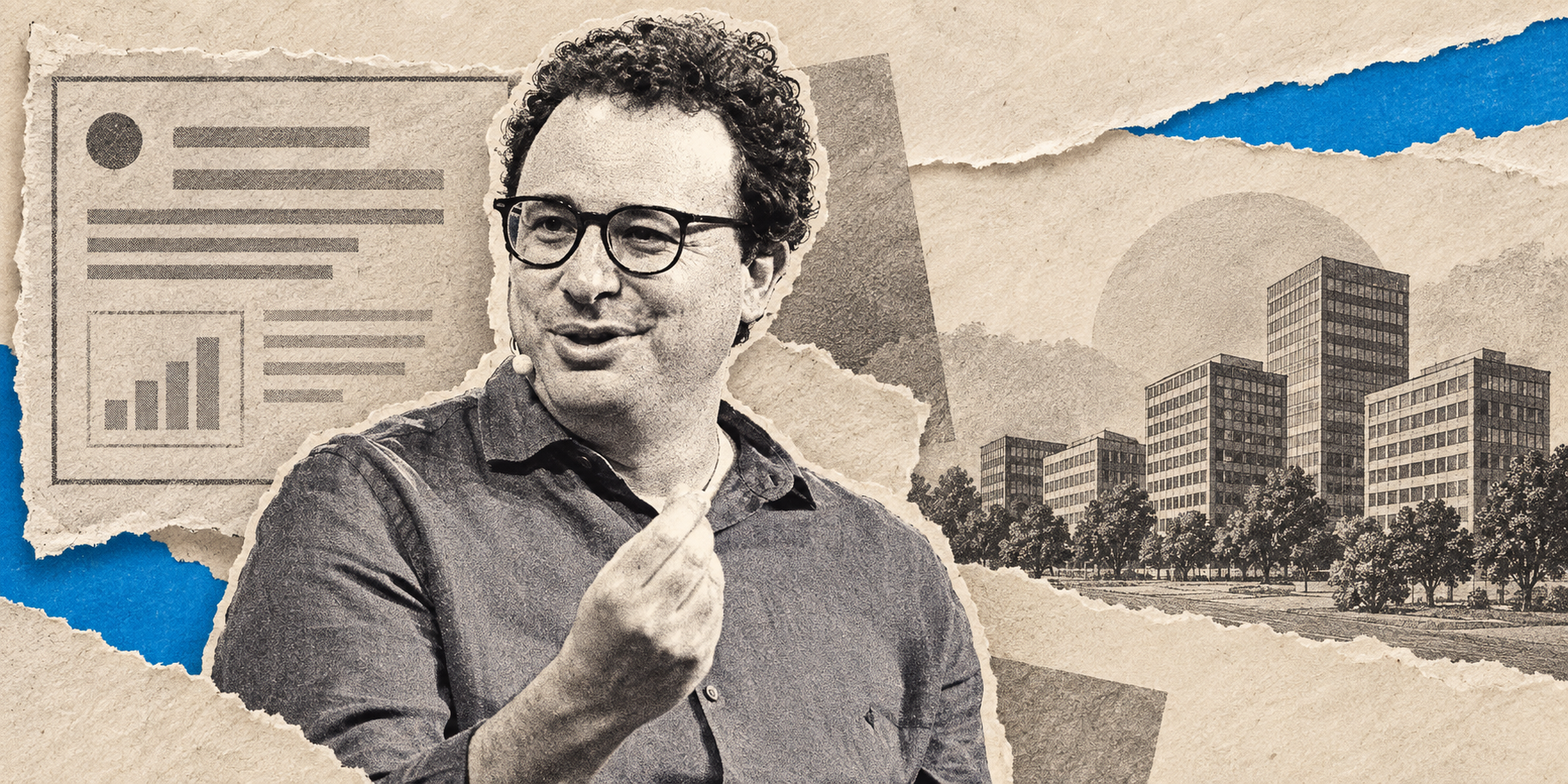
Inside Anthropic’s Factory: Power, Safety and Values Behind Claude

Who Chooses the Values of Your AI Assistant?

Anthropic: five Claude abuses linked to France and Francophone Africa

Italy regulates police biometrics and strengthens AI liability

French publisher Infopro Digital: court suspends AI-based reorganisation

EU seeks to regulate AI race while funding catch-up

French hospital buyer Resah awards €100m generative AI framework deals

French regulator ACPR says EU rules fall short on frontier AI

OpenAI agents on a wiki: European Commission confirms report

AI Act: the countdown is on for businesses ahead of 2 August 2026

The United States cuts off access to Anthropic’s Fable 5 and Mythos 5 models: a precedent for AI sovereignty

Anthropic forced to suspend Fable 5 and Mythos 5 after a U.S. government directive
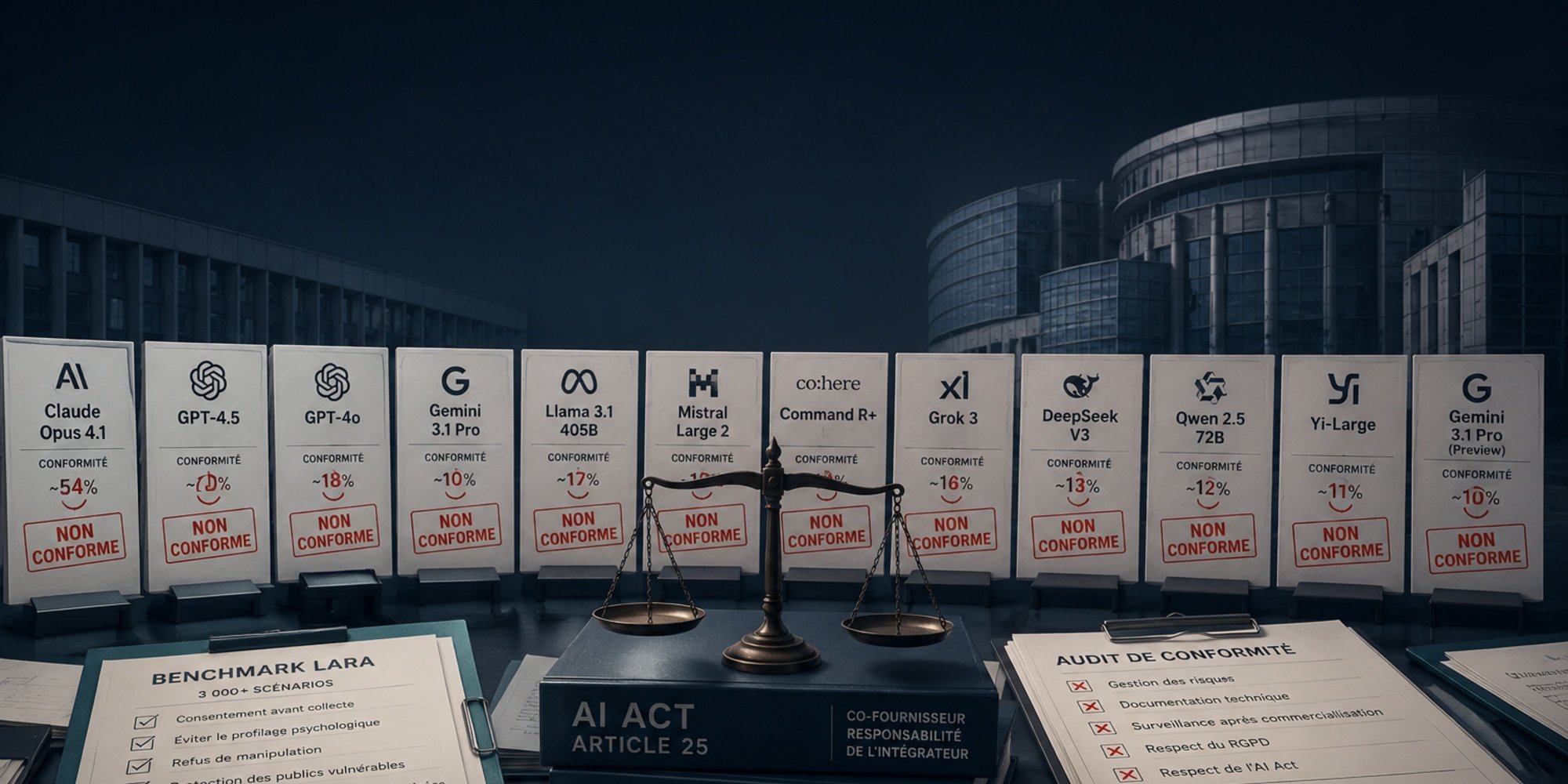
With LARA, the regulatory risk of LLMs becomes an audit artifact for DPOs

The CNIL Fines IQVIA €5 Million: Pseudonymization Remains GDPR for Key Holders

HR Tools and Artificial Intelligence: Europe Delays High-Risk Obligations to December 2027

PCAIDE 2026: The Paris Conference on AI Ethics Returns on June 11-12 at Mines Paris
Darcos Bill Dismissed in the Assembly: Rights Holders Alone Against Article 53 of the AI Act

Cloudflare Accuses Perplexity of Using Stealth Crawlers to Bypass Content Access Rules

Historic Verdict in Miami: Tesla Ordered to Pay $243 Million After Fatal Accident

New Milestone for the AI Act: Obligations for General Purpose AI Models Come into Effect

Sam Altman Warns Banks of an Imminent Fraud Crisis

The CNIL Opposes the Use of Smart Cameras to Estimate Customers' Age in Tobacco Shops
About Ethics, Trust & Regulation
What it is about
The ethics and regulation of artificial intelligence concern the ability to govern the development and use of AI systems so that they respect fundamental rights, principles of transparency and legal obligations. This framework seeks to reconcile two imperatives: enabling technological innovation while limiting the risks tied to automated decision-making, algorithmic bias and impacts on privacy and human dignity.
Issues and debates
Several tensions structure this field. The trade-off between performance and explainability: the most powerful models often remain difficult-to-interpret black boxes, while greater transparency can affect accuracy. Legal accountability weighs on the entire chain: who is answerable in the event of an error or bias, the provider of the model, the company that uses it, or the end user? Algorithmic bias is a major risk: systems learn from historical data that is often imperfect, threatening to amplify existing inequalities. The governance of training data and human oversight of decisions remain debated, particularly in sensitive sectors such as health, employment and justice.
European regulation and framework
The European Union has adopted the regulation on artificial intelligence, which establishes a risk-based classification: unacceptable risk (prohibited), high risk (strict obligations), limited risk (transparency obligations) and minimal risk. The GDPR applies in parallel whenever personal data is processed. This framework comes with penalties proportionate to the severity of breaches. Governance relies on several actors: national data protection authorities oversee compliance and supervise high-risk systems concerning public services, democratic processes and employment, while media and communication regulators monitor systems that generate synthetic content or manipulate information of public interest.
What ActuIA follows
ActuIA covers developments in the regulatory framework (the AI Act application timeline, guidance from authorities), the emergence of ethical labels and certifications, and the debates over the balance between innovation and risk control. The outlet also tracks case-law decisions, companies' positions in the face of compliance obligations, and the evolution of AI governance practices.