

AI in education
Assisted grading, personalised learning, lesson preparation: artificial intelligence is entering the classroom. Its uses run up against questions of fairness, the protection of pupils' data and the reliability of generated content.
Are you a teacher or education professional?
Follow every artificial-intelligence development in this sector — articles, briefs and signals — gathered in your personal feed. Free, ad-free.
About the sector
Concrete uses
AI is gradually becoming part of everyday practice in education. Assisted grading tools ease the administrative burden by supporting the assessment of written work, freeing up time for tutoring and individual follow-up. Adaptive learning personalises pathways according to each pupil's strengths and difficulties, analysing results, time spent and interactions to suggest targeted content.
Support for lesson preparation is advancing: generative tools help to rephrase content, vary teaching approaches or produce exercises. Detecting content produced by generative AI is also becoming a concern for safeguarding academic integrity in the face of uses such as conversational assistants.
Issues and limits
The reliability of generated content remains a risk: models sometimes produce inaccurate answers or "hallucinations" that, presented as factual, can mislead pupils and teachers alike. Awareness of these limits is essential before any classroom use.
Algorithmic bias is a concern: trained on partial data, models can reproduce stereotypes and disadvantage pupils from under-represented groups. Protecting pupils' data is a legal and ethical imperative: the GDPR requires a rigorous assessment, and use cannot rest on consent alone, given the imbalance between school and families; it must be grounded in a public-interest mission.
The risk of academic fraud increases when work is produced by AI without genuine ownership, leading institutions to clarify which uses are permitted. The environmental footprint of models is a final factor to weigh when choosing tools.
Regulation and the European framework
National education authorities are structuring this ecosystem through frameworks for the use of AI in education, which hold that AI must remain a teacher-supervised aid, never a substitute for learning, and set out principles of data protection and bias awareness. Training pupils and teachers on the issues raised by AI is gaining ground. Data protection authorities support this rollout with practical guidance on GDPR compliance and recall the rights to object and to data portability. Alongside this, an "EdTech" sector is developing solutions aligned with these principles.
What ActuIA is tracking
ActuIA documents the evolving educational uses of AI, the regulatory debates in Europe around compliance and fairness, and the emergence of tools and good practices serving teachers and institutions.
Articles
6 in total
Call for Applications: Île-de-France Region Launches DSP for an AI Hub in Paris
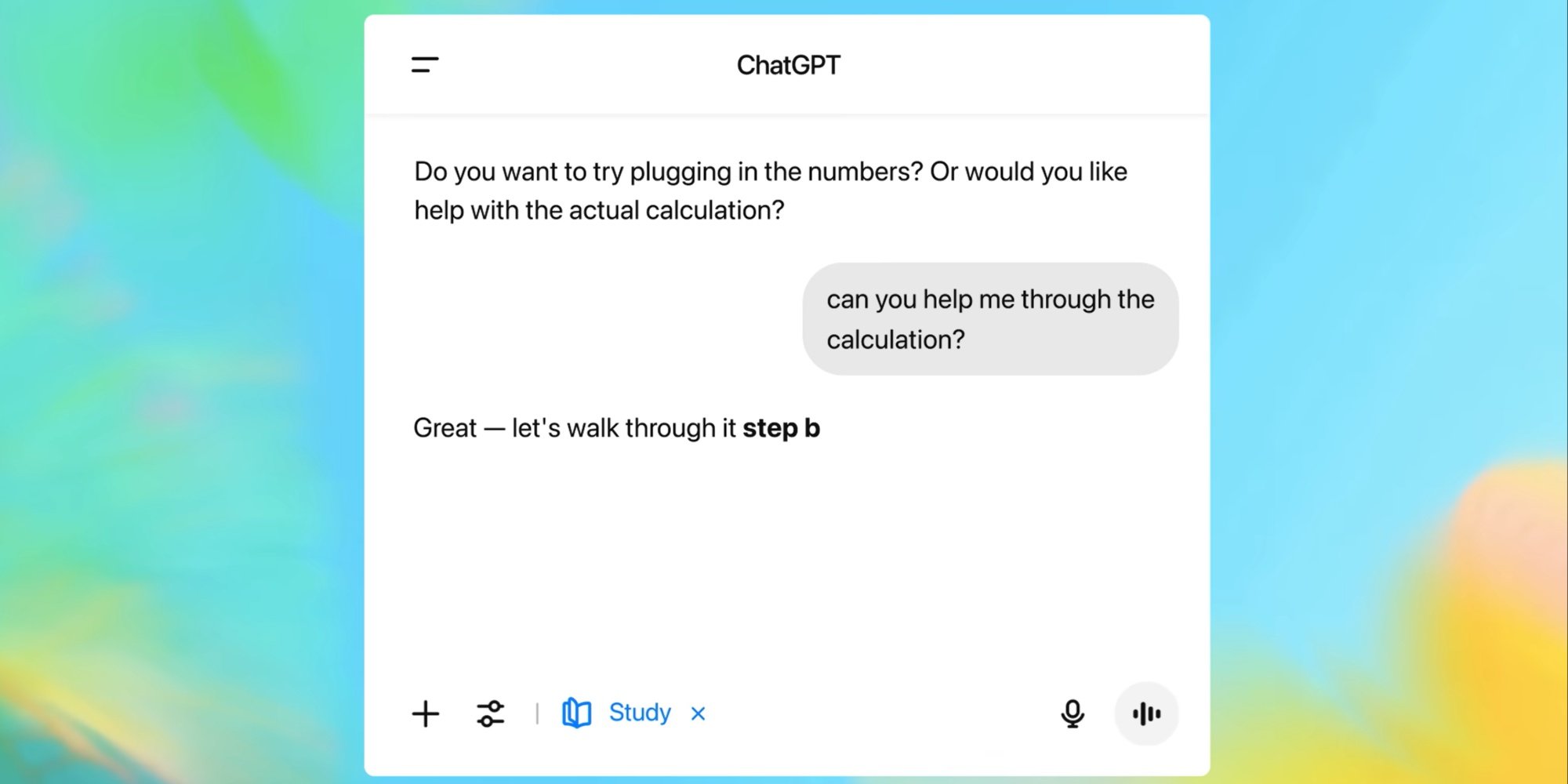
Study Mode: OpenAI Equips ChatGPT with an Educational Assistant

Paradigm Edu: LightOn's Sovereign AI Makes Its Debut in Higher Education at ENS Paris-Saclay

Suspected of AI Cheating, a High School Student Finally Earns Her Diploma

Google Makes NotebookLM's AI Available in Multilingual Version