

AI in marketing
Artificial intelligence is reshaping marketing through campaign automation, mass personalisation and predictive analytics. Decision-makers and marketing teams need to master both the business use cases and the regulatory framework in order to deploy these technologies responsibly.
Do you work in marketing or communications?
Follow every artificial-intelligence development in this sector — articles, briefs and signals — gathered in your personal feed. Free, ad-free.
About the sector
Concrete use cases
AI applied to marketing spans several areas. Content creation and optimisation remain the most widespread: drafting articles, product descriptions, email subjects and ad copy, with automatic adaptation of tone and context. Customer segmentation and personalisation form a second pillar: algorithms analyse behaviour to build targeted audiences and tailor messages and offers in real time.
Campaign automation extends to optimising advertising budgets, recommending products and lead scoring. Chatbots handle customer queries at scale, qualify requests and pass opportunities on to sales teams. Predictive analytics helps anticipate purchasing trends and adjust strategies.
Challenges and limits
The regulatory framework imposes major constraints. Any solution processing personal data must comply with the GDPR: explicit legal basis, clear consent, defined purpose. Data protection authorities stress that this obligation applies without exception. Systems that arbitrate individual interactions at scale fall into high-risk categories under the AI Act, requiring traceability, documentation and vigilance.
Beyond the legal dimension, the practical limits are substantial. Generative AI produces structured content that often lacks creative singularity. Models can reflect bias and generate plausible but inaccurate content, damaging brand credibility. Human review remains essential. The risk of content becoming uniform across competitors calls for vigilance on differentiation.
European regulation and framework
European authorities play a central role by issuing recommendations to reconcile innovation with fundamental rights. They recall that data protection must be built in by design and applies without derogation to AI systems. The GDPR strictly governs the processing of personal data. The AI Act, now being rolled out, subjects high-risk systems to obligations of documentation, traceability and compliance. In marketing, this concerns profiling and automated decision-making systems in particular.
What ActuIA tracks
ActuIA covers the evolution of the regulatory framework and its concrete application to marketing. We follow real adoption trends for these tools, the gaps between experimentation and deployment, and governance best practices. We also document algorithmic bias, the environmental impact of training and the need to balance automation with human creativity.
Articles
6 in total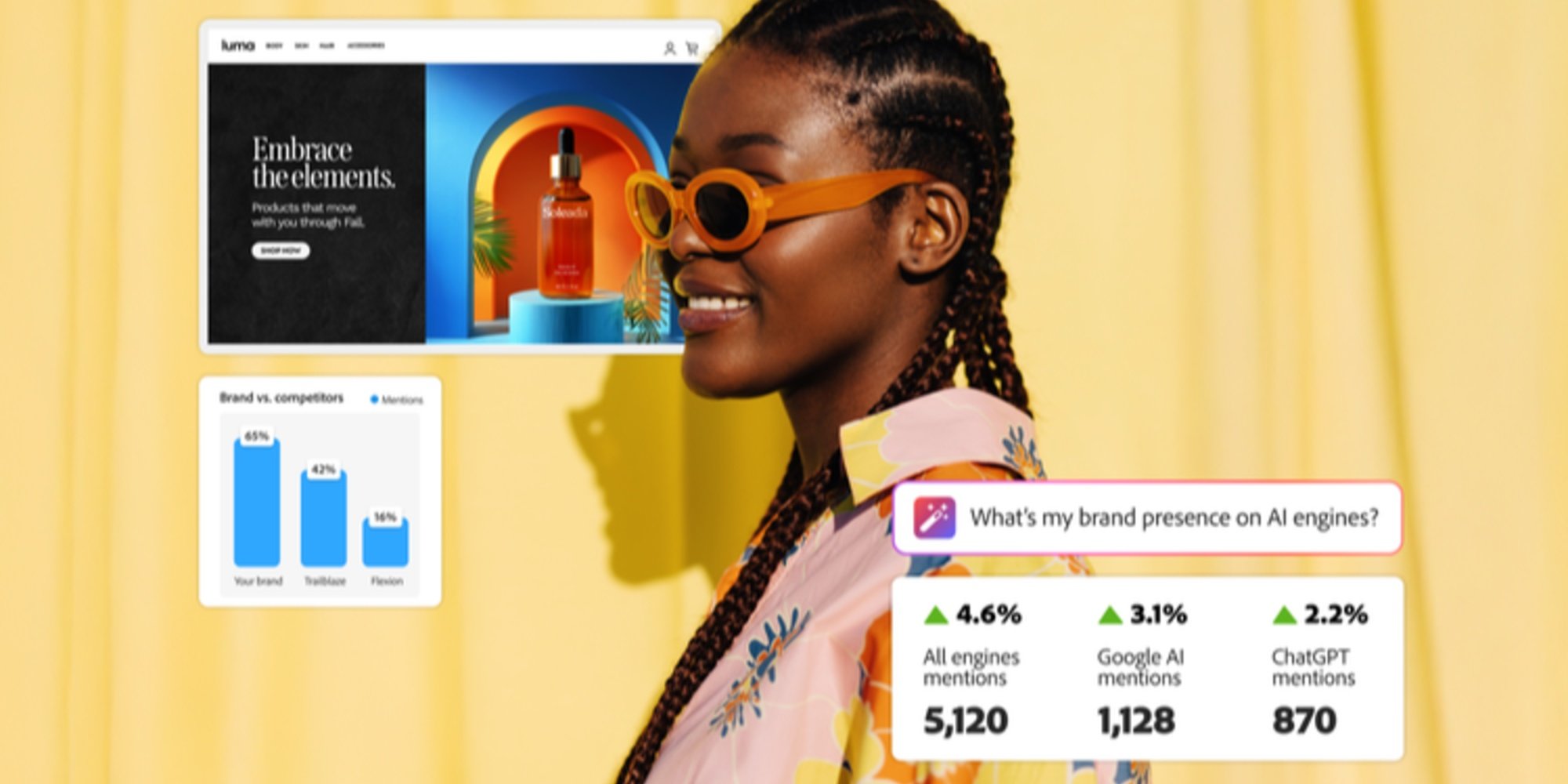
Adobe LLM Optimizer: Rethinking Brand Visibility in the Age of Generative Search

Marketing: Between the Promise of Generative AI and the Demand for Proof

AI and Creative Employment: Insights from Autodesk's First "AI Jobs Report"

Adoption of GenAI: A Strategic Turning Point for French Marketers by 2025

Advertising, AI, and Generational Expectations: Towards a Multi-Speed Personalization?