

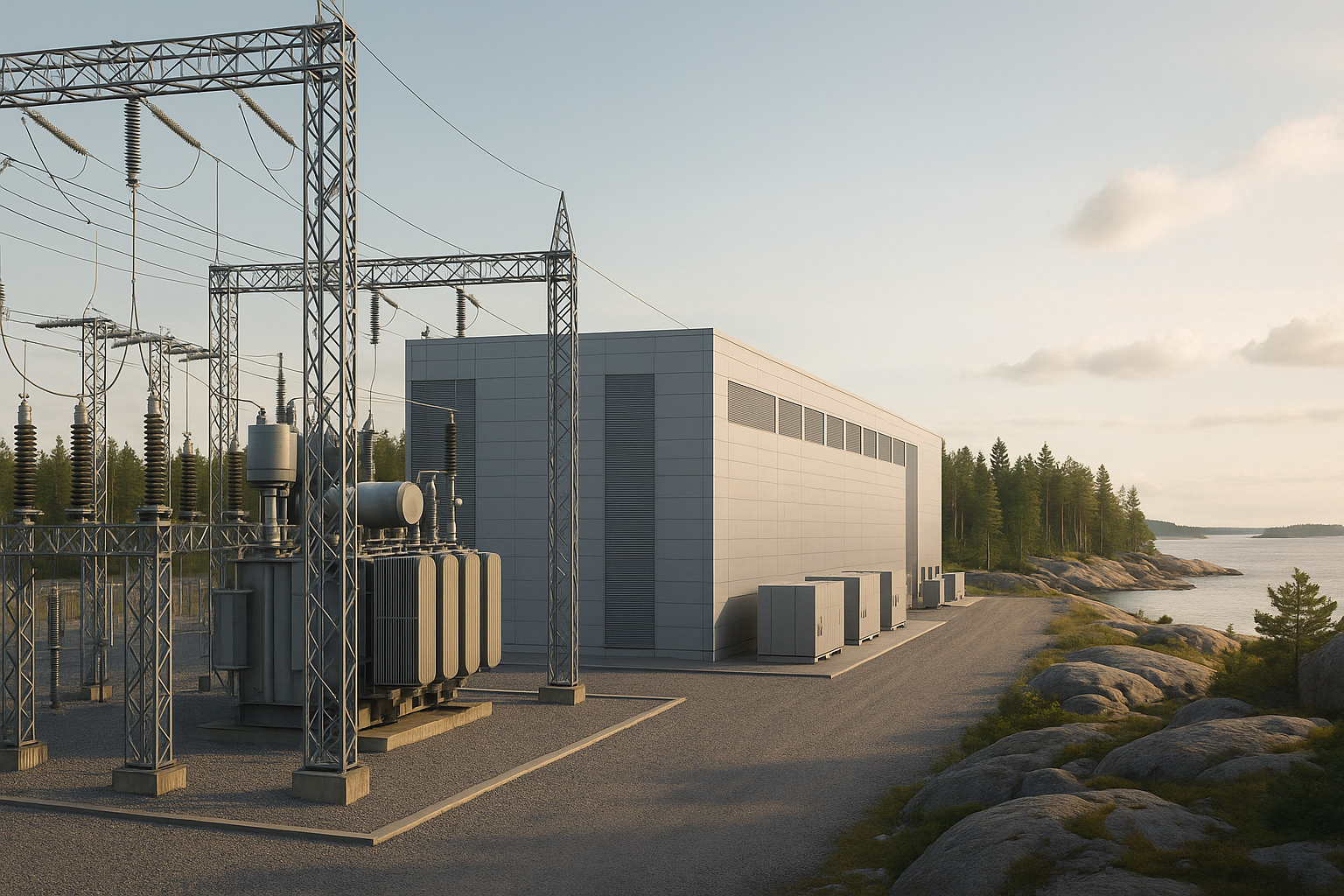
Google accompanies its Finnish expansion with an electricity commitment that goes far beyond the construction schedule of its data centres. The group announced on 9 September 2026 a €13 billion programme dedicated to digital infrastructure, energy and local partnerships. The construction work is to focus on 2027 and 2028. The agreement signed with Fortum, however, spans 22 years. This difference in horizon sheds light on a condition for AI growth in Europe: having electricity production capable of sustainably supporting new computing capacity.
Loviisa, a commitment running until 2049
The contract detailed by Fortum is to begin in 2028 with a limited share of production, then cover 50% of the capacity of the Loviisa nuclear power plant between 2030 and 2049. The energy company explains that these predictable revenues will support its programme to extend operations until 2050. This programme represents around €1 billion in investments; €700 million remains subject to investment decisions. The commercial contract therefore does not mean that all the work has already been committed.
The economic issue is one of risk sharing. By committing to buy electricity over a long period, Google gives its supplier visibility on future demand. Fortum can thus support spending on an existing asset with an identified outlet. This linkage brings together two decisions often presented separately: expanding digital infrastructure and financing the means to power it. It also commits the buyer well beyond the lifespan of a generation of chips.
The two companies have also signed a memorandum of understanding to explore new nuclear, renewable and flexibility capacity. These avenues remain to be developed. In Kajaani, Fortum is notably to optimise a 94 MW battery system contracted by Google.
Computing demand to be connected to the grid
The context extends beyond Finland. In its 2026 report on energy and AI, the International Energy Agency projects global electricity consumption by data centres rising from 485 TWh in 2025 to around 950 TWh in 2030. This total covers all data centres. The agency forecasts faster growth in the subset dedicated to AI and highlights tensions over grid connections, electrical equipment and financing.
Combining nuclear generation and batteries serves different functions. The former provides low-carbon production; storage makes it possible to shift some of the available electricity over time. Their combination does not remove the need to size connections and the local grid. A purchase agreement secures a commercial relationship, while the delivery of electricity depends on physical infrastructure and its constraints.
The IEA notes that effects on prices depend in particular on the local balance between supply and demand and on the allocation of grid costs. The agreement with Fortum therefore provides a documented answer to the financing of production. It is not enough, on its own, to establish that households and other industrial users will benefit from lower bills. The capacity actually brought into service and its timing will make it possible to judge this effect.
Announced benefits to be distinguished from hiring
Google presents this programme as its largest single investment in Europe. Its economic press release estimates that the construction phase will support more than 37,000 jobs across the country and contribute on average €3.6 billion per year to Finnish GDP. In operation, the facilities are expected to support 7,000 jobs per year. These projections encompass a network of suppliers and local activities: they do not constitute announcements of direct hiring at Google.
The implementation of the programme will be tracked on two precise timelines: the construction announced for 2027 and 2028, then the ramp-up of the Loviisa contract to half the plant's capacity in 2030.

Our articles will then appear first in Google Top Stories.