

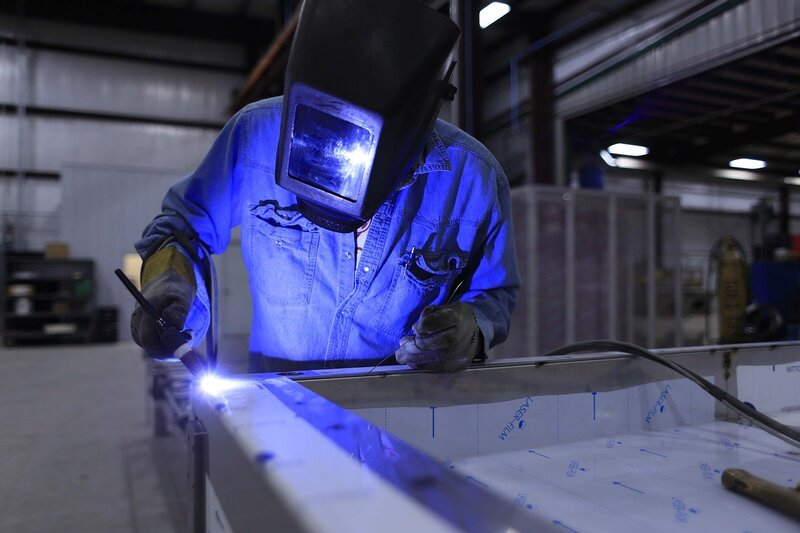
"Welding is a complicated process. This AI solution has the potential to help us produce high quality machines more efficiently than before. The introduction of new technologies into manufacturing opens up new opportunities and changes the way we look at some processes that haven't changed in years."John Deere and Intel have combined their expertise to develop a neural network-based system that can generate real-time information at the edge, surpassing human sensory capabilities. In practice, the solution registers defects and automatically stops the welding process so that the error can be fixed directly. Christine Boles, vice president of Intel's Internet of Things Group and general manager of the Industrial Solutions Group welcomes the use of Intel technology in the solution developed by John Deere:
"(John) Deere is leveraging AI and machine vision to solve one of the major issues in the robotic welding community. By using Intel technology and intelligent infrastructure in their plants, JOhn Deere is capitalizing not only on this welding solution, but potentially others that will emerge as part of their broader transformation to Industry 4.0."The AI weld defect detection solution integrated at the edge is powered by Intel Core i7 processors. It uses Intel Movidius VPUs and the Intel Distribution of OpenVINO toolkit, implemented with an industrial-grade ADLINK computer vision platform and a MeltTools welding camera. Translated from Cas d'usage : John Deere, en collaboration avec Intel, développe sa propre solution de détection automatique

Our articles will then appear first in Google Top Stories.