

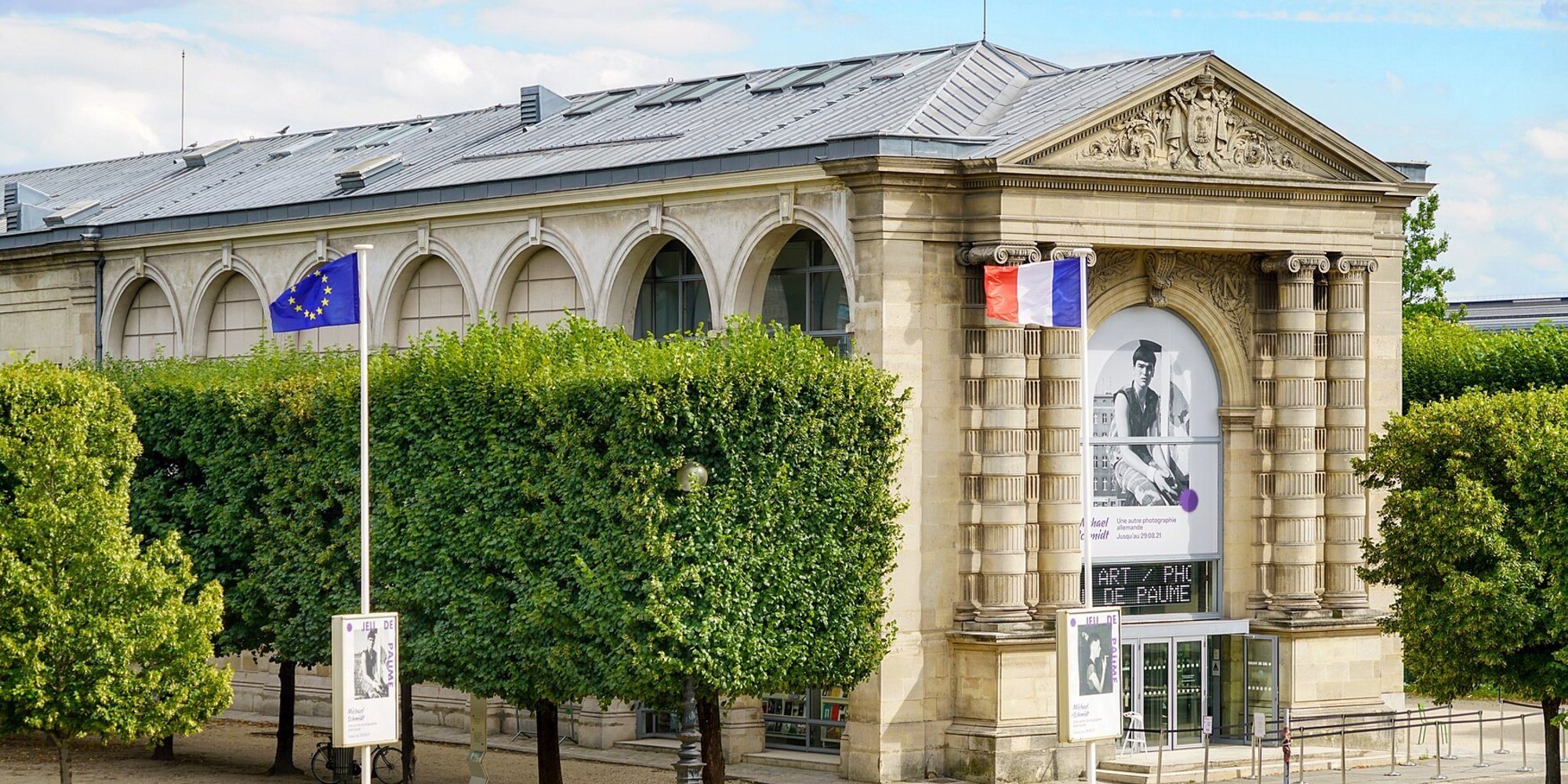
From April 11 to September 21, 2025, the Jeu de Paume, an art center dedicated to the image in all its forms, located in the heart of Paris, in the Tuileries Garden, will host the exhibition "The World According to AI." This event explores the interactions between artificial intelligence and contemporary artistic creation while addressing their social, ethical, and philosophical implications through two complementary lenses: analytical AI and generative AI.
AI is redefining creativity in art by expanding the possibilities of creation and challenging traditional notions of the artist and the artwork. The French collective Obvious, using GANs (generative adversarial networks), a technology developed by Ian Goodfellow in 2014, made headlines in 2018 by selling its artwork "Portrait of Edmond de Belamy" for $432,500 at a Christie’s auction, even though it was initially estimated at 10,000 euros. However, since the emergence of text-to-image models like Stable Diffusion, Dall-E, Imagen, or Midjourney, many artists protest against their use. Some challenge the creative process of the author of an AI-generated work, like the one awarded at the Colorado State Fair, or the fact that these models are trained on works without asking for the authors' consent or financial compensation.
Despite a petition by thousands of artists on the sidelines of the AI Summit, demanding the cancellation of the "Augmented Intelligence" auction, entirely dedicated to works created using AI, its success demonstrated that the market is now receptive to these new forms of expression. The work by Refik Anadol, Machine Hallucinations - ISS Dreams – A, created from a vast dataset including over 1.2 million images captured from the International Space Station and satellites, was sold for $277,200. The growing interest, especially from millennials and Generation Z, confirms that today's audience is ready to rethink the traditional boundaries of art.
The exhibition "The World According to AI" not limited to paintings but also exploring other media like photography, cinema, literature, and music, investigates how contemporary artists have been engaging with these AIs over the past decade in both critical and experimental ways, inviting the general public as well as art enthusiasts to question the impact of these new tools.
Julian Charrière, for instance, questions the material and environmental impact of the digital industry, while Agnieszka Kurant highlights the invisible contributions of "click workers."
A Double Perspective on AI and Artistic Creation
The exhibition is divided into two major sections. The first, dedicated to analytical AI, highlights data recognition and classification systems. Through works that question algorithmic biases and the control mechanisms inherent in current technologies, artists like Trevor Paglen (Faces of ImageNet) and Hito Steyerl (Mechanical Kurds) invite reflection on the societal impact of these tools.
The second section focuses on generative AI, capable of producing new images, sounds, and texts. Here, creators such as Kate Crawford and Vladan Joler (Anatomy of an AI System (2018) and Calculating Empires (2023) and Christian Marclay (The Organ) blur the line between human intervention and algorithmic production, thus redefining the very contours of creativity.
To enrich this journey, "time capsules" punctuate the exhibition, offering visitors insights into the cultural and scientific origins of AI. These showcases, both anachronistic and archaeological, allow for placing technological innovations in a broader historical context, encouraging the viewer to examine the genesis and evolution of these tools that are transforming the art world.
In parallel, a program of events (conferences, screenings, a mock trial against AI, and debates) accompanies this reflection on the future of creativity in the era of advanced AI technologies.

Our articles will then appear first in Google Top Stories.