

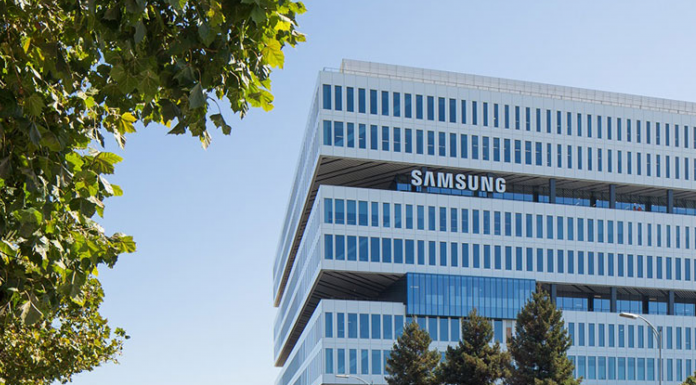
"We will continue to make aggressive investments for the distinct development and manufacturing organization (CDMO) contract business and strengthen our leading position as a biopharmaceutical production center by building our fifth and sixth plants. In addition to biopharmaceuticals, we also plan to enter the CDMO market in vaccines and gene therapy drugs."Its logic chip and foundry unit recorded its highest quarterly revenue at the end of 2021 thanks to strong demand due to the semiconductor shortage. Samsung Electronics passed its competitor INTEL and became the leader in semiconductor sales. For the foundry business, according to the latest TrendForce study, Samsung controls 18.3% of the market and is significantly outperformed by Taiwanese global market leader TSMC (Taiwan Semiconductor Manufacturing Company) which held 52.1% of the global foundry market in the last quarter of 2021. This new investment will be dedicated to semiconductors but also to biotechnology and AI, with the creation of 80,000 jobs as a result. 80% of this amount will be invested in R&D in South Korea. According to Samsung, it will bring back "long-term growth in strategic sectors and would help strengthen the global core technology industry ecosystem."
Expanding Samsung's leadership in the semiconductor market
The announcement came days after President Joe Biden visited the Pyeongtaek complex, the world's largest semiconductor plant, located 70 km south of Seoul, highlighting the group's role in securing global microchip supply chains. The plant will produce the next-generation 3-nanometer (nm) semiconductor based on Gate-All-Around (GAA) technology. According to Samsung, this process reduces chip size by 35% while offering 30% better performance or 50% lower power consumption compared to the 5nm process. The Biden administration has made the establishment of new semiconductor plants a national priority. Samsung, which employs nearly 20,000 people in the U.S., is building a plant in Taylor, Texas scheduled to open in the second half of 2024, 25kms from its existing manufacturing site in Austin. According to Reuters, U.S. government subsidies could amount to $30 billion for this sector, with Samsung Electronics and TSMC vying for it. In addition, Samsung has created the "Dream Platform One Team", a working group that will be responsible for designing a new SoC, with the aim of dethroning Apple in 2025. Samsung also announced that it wants to accelerate research on the deployment of 6G, which it plans to deploy in 2028 and whose speed would be 50 times higher than that of 5G. Translated from Samsung annonce un investissement de 330 milliards d'euros sur les semi-conducteurs, la biotechnologie et l'IA
Our articles will then appear first in Google Top Stories.