

Pooling data to accelerate AI deployment while controlling its environmental impact
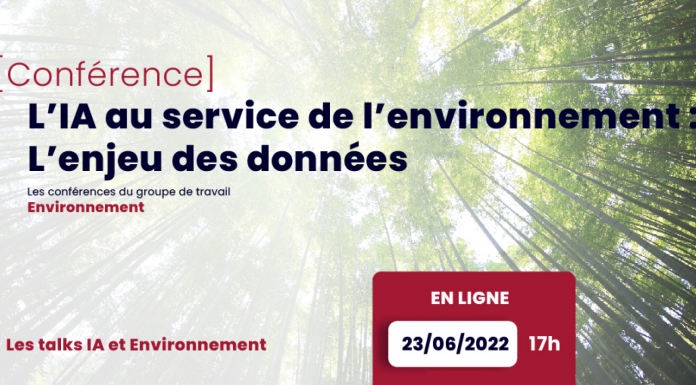
Several avenues were discussed during this conference, such as:- Reducing the size of stored data and managing it to optimize its energy consumption
- The creation of good quality, open access databases, to avoid overproduction and dispersion of data
- The pooling and sharing of data is also a strong axis that should be addressed to optimize data storage and its rational use
Data to decarbonize transport chains
The AI Cargo Foundation is a technological innovation cluster, designed to support the Transport & Logistics sector in its energy and environmental transition. It provides industry players with a digital platform for processing data using AI, business applications and collaborative APIs to support the decarbonization of transport chains. Its legal status is a guarantee of sovereignty, neutrality and confidentiality. Guillaume Desveaux, President of the AI Cargo Foundation, explains: " By connecting the players and mapping transport flows through massive data collection, it is possible to identify opportunities to massify flows and use decarbonized transport, and thus reduce the energy consumption of the sector. It is by massifying the data that we can decarbonize logistics.Using satellite data for environmental purposes
The Nimbo solution, developed by Kermap, provides an easy-to-use platform for accessing data from the Sentinel satellites of the European Copernicus program. Antoine Lefebvre, CEO and co-founder of Kermap, tells us about the use they have made of this data for their clients: " This data is a precious resource of information on the evolution of our planet. The processing carried out by AI allows, among other things, to ensure continuous monitoring of territories on a very large scale, to extract indicators on land use. These projects are at the service of agro-ecological transition initiatives.What if we were to carry out our own carbon assessment?
On a large scale, if we want to have a positive impact on the environment, each company should be able to carry out its own carbon assessment. It is a way to identify the biggest greenhouse gas emissions, in order to identify actions to reduce them. This is what Kabaun is proposing. Through its solution, Kabaun aims to optimize carbon audits and thus accelerate the awareness of companies. Alexandre Paschunite, CTO and co-founder of Kabaun, believes that today this subject is strategic and AI can help facilitate the implementation of these assessments: " Despite increasingly alarming scientific reports and global awareness, concrete actions remain marginal. Companies of all types have a role to play in responding to these environmental challenges. The carbon footprint we propose aims to identify the largest emission items and to outline actions to reduce them. Integrating these indicators into the company's overall strategy is the major challenge for successfully implementing its climate strategy. These various presentations highlighted solutions adapted to optimize the collection and use of data for AI, in a profound approach to reducing the environmental impact of the activities of companies and communities. The conference is available for replay here. If you want to know more about the work of the AI & Environment Working Group, you can contact pierre.monget@hub-franceia.fr Translated from Replay : Conférence « L'IA au service de l'environnement, l'enjeu des données » organisée par le Hub France IA
Our articles will then appear first in Google Top Stories.