

"People have asked us, why doesn't your payload have mass? We responded by asking, What if every piece of hardware in orbit could be repurposed for new uses with maximum efficiency?"Lonestar's successful demonstration mission included key contributions from digital artist Cecilie Waagner Falkenstrøm and her software team at ARTificial Mind with Niels Zibrandtsen of the Mind Future Foundation, in addition to those from Canonical and Redwire Space. ARTificial Mind provided the digital content and blockchain capabilities, Canonical, a unique "edge of network" kernel of Ubuntu Linux, the leading operating system for container, cloud, and large-scale computing, which runs on the constrained space hardware aboard the ISS. Redwire leveraged the existing server on the ISS from its microgravity 3D printing capability. Dr. Matossian, COO of Lonestar, states:
"Our team was able to move quickly and intelligently to leverage underutilized resources in an innovative way. And we applied a modern cloud virtual machine solution with advanced blockchain technologies."Chris Scott added:
"Thanks to the professionalism, vision and hard work of our superb partners, we hope we have just launched a revolution in low earth orbit. We have successfully merged the verticals of cloud and space on the International Space Station. If we can do that in LEO, imagine what we can do elsewhere."
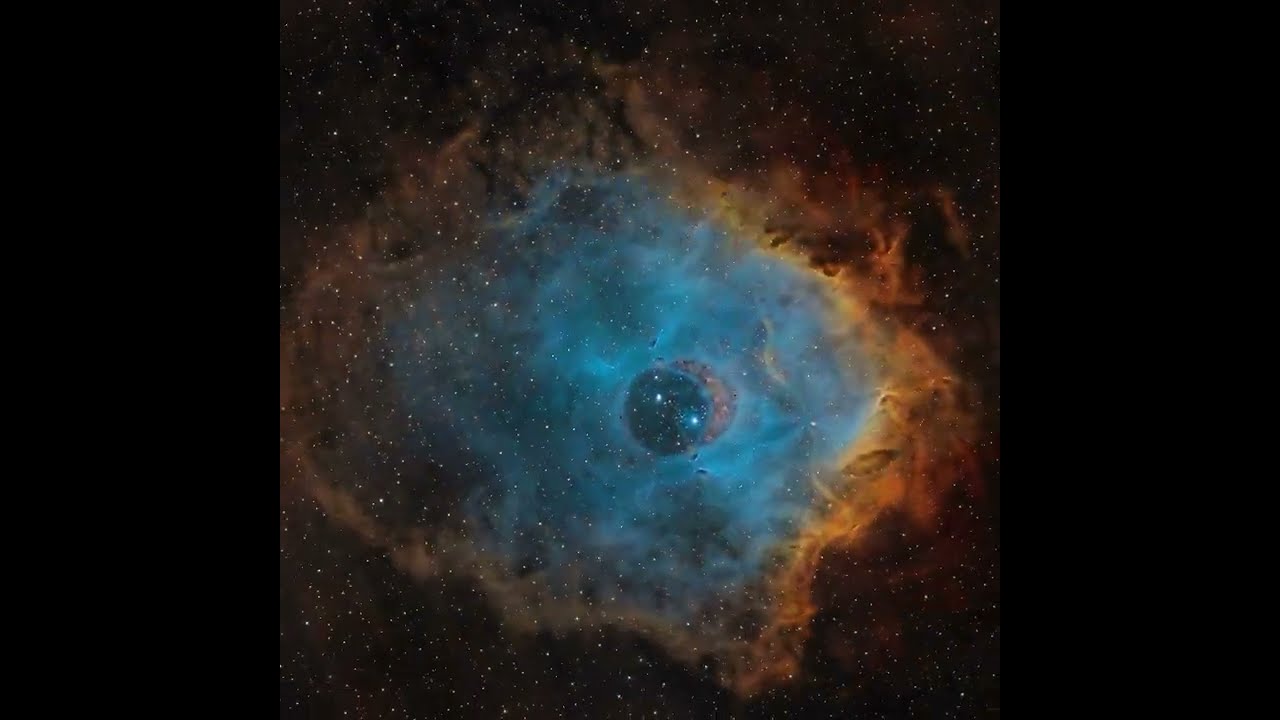
The AI-generated space artwork
Celestium is part of the global STEAM initiative. Artist Cecilie Waagner Falkenstrøm, world famous for her interactive artworks using AI technology, said:"Something new is being created in space. Thanks to NASA and CASIS, the International Space Station is truly an incredible test bed for new technologies and now also a home for digital art creation."Falkenstrøm has partnered with tech-art nonprofit MindFuture Foundation to help launch the project. Tapping into cosmic ray data experienced aboard the ISS orbiting Earth at 27,700 mph, the AI algorithm seeds and extracts thousands of space images and space tokens to distribute on a blockchain. Drawing on images of NASA deep space photographs, the unique works of Space for Art Foundation astronaut Nicole Stott and artist Tamara King, each image is generated by the AI as one-of-a-kind and embedded as a non-fungible token (NFT). The artwork pioneers an emerging genre at the intersection of art, space and technology. As a result of this historic collaboration, non-profit partners including the Arch Mission Foundation and the Angiogenesis Foundation now have their immutable data successfully stored on the ISS. Translated from Lonestar dirige Celestium, œuvre d'art créée dans l'espace basée sur l'Intelligence Artificielle et la blockchain

Our articles will then appear first in Google Top Stories.