


"Using our latest AI model, Multitasking Unified Model (MUM), our systems can now understand the notion of consensus, which is when multiple high-quality sources on the Web all agree on the same fact. Our systems can check excerpt captions (the word or words called out above the featured excerpt in a larger font) against other high-quality sources on the Web to see if there is a general consensus for that caption, even if the sources use different words or concepts to describe the same thing."She adds:
"We found that this consensus technique significantly improved the quality and usefulness of featured snippet captions."In addition, Google will highlight the caption, to provide a better answer to the viewer's query, as in the screenshot below.
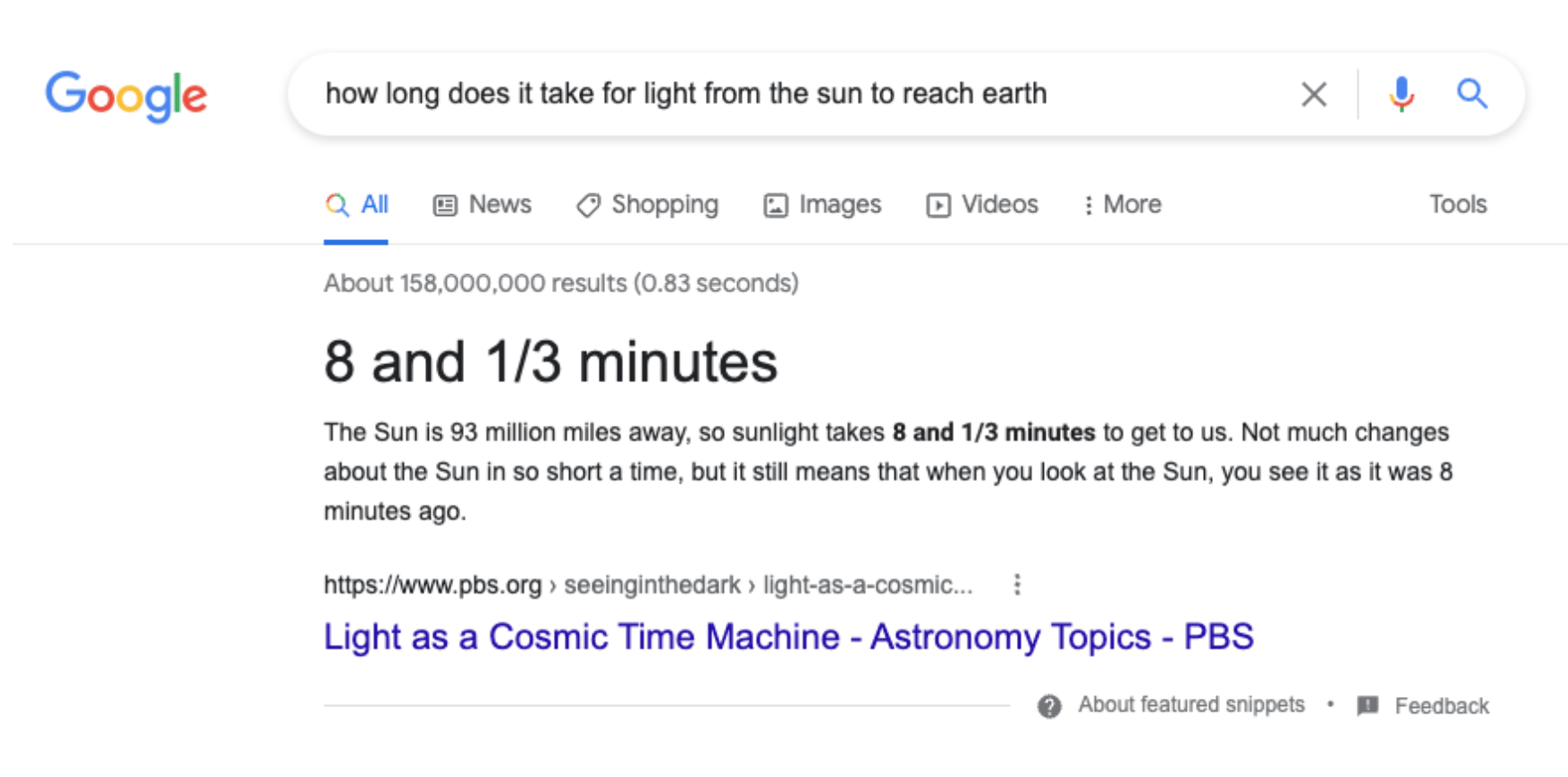
Detecting false information
Another improvement regarding featured snippets targets questions for which there is no answer, which Google calls "false premises." As an example, the company gives a recent search, "When did Snoopy assassinate Abraham Lincoln?" The snippet provided gives a specific date and information about Lincoln's assassination, but, for Google "this is clearly not the most useful way to display this result." Google said it has improved the code snippets it displays for queries containing information about events that did not occur:"We've trained our systems to better detect these kinds of false premises, which are not very common, but are cases where it's not useful to show a featured snippet. We reduced the triggering of featured snippets in these cases by 40% with this update."
Information literacy
Google is also developing information literacy features in its search to allow users to evaluate information, whether from social media or conversations. For example, the company has invested in the creation of Fact Check Explorer, Reverse Image Search and About this result and announced that it has updated these features. About this result, which has been used more than 2.4 billion times since its launch last year, will soon be available in eight more languages: Dutch, French, German, Italian, Japanese, Portuguese and Spanish. Google has also added more context to it. Translated from Google va améliorer ses featured snippets grâce à son modèle d'IA Multitask Unified Model (MUM)
Our articles will then appear first in Google Top Stories.