

In 2017, the CFVR project (targeting fraud and valuing requests) was the subject, of a financing by the FTAP (Fonds de Transformation de l'Action Publique) of 5 million euros with the objective of improving " the efficiency of tax control operations by renovating the targeting phase of operations."
The development of AI methods for tax audits
According to the DGFiP, the targeting phase of operations, which is placed upstream of the control process, determines to a large extent the results of the entire tax control chain. Given that it has a large volume of data in various fields, concerning both companies and individuals, the DGFiP has undertaken to modernize its analysis techniques using AI and data-mining. In this case, data-mining consisted in analyzing and cross-referencing all the information available to the DGFiP in order to identify fraud profiles. Machine Learning methods allow to identify, by statistical or mathematical methods, the criteria characterizing a fraudulent person and thus establish a fraud profile that will be applied to a target population.More and more AI-based controls
The share of AI-targeted controls has thus risen from 13% in 2018, to 22% in 2019, 32.49% in 2020, to nearly 45% last year and the DGFiP expects 50% for 2022. The state had received €11bn in 2019, much more than the €7.8bn in 2018. In 2020, the pandemic brought the amount of reassessments down to about €7.8bn, but by 2021, the record figure for 2019 had almost been caught up with €10.7bn. The ramp-up of targeted data-mining audits in 2021 and 2022 relied on the increased exploitation of data outside of tax returns in order to have a more global view of companies and individuals that takes into account contextual elements (managers' assets and behavior, tax history...). Data from collaborative platforms obtained by the DGFiP and data collected on social networks are also used.The "Foncier Innovant" project
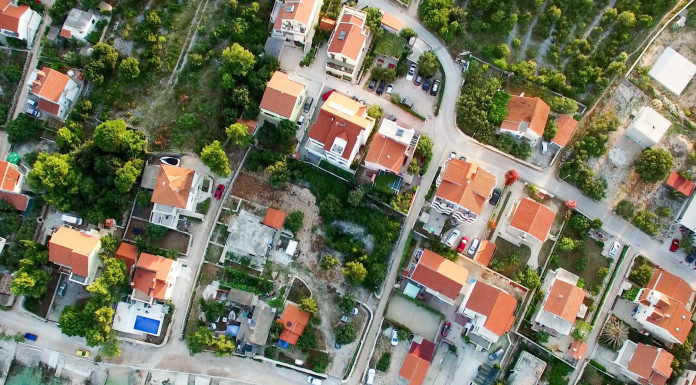
To combat irregularities in the declaration of buildings, the DGFiP has launched the "Innovative Property" project, which uses innovative artificial intelligence and data enhancement technologies based on IGN aerial photographs. An experiment of this project has begun in 9 departments, focusing initially on the detection of swimming pools:- In the southeast: Alpes-Maritimes, Var, Bouches-du-Rhône, Ardèche, Rhône, Haute-Savoie;
- In the West: Morbihan, Maine-et-Loire and Vendée.
Respect of personal data
Only the IGN's public aerial images, to the exclusion of any other source of imagery, are processed on a public cloud. The use of the public cloud is linked to the need to benefit from significant graphic computing power. Regarding the respect of personal data and the intervention of Google and Capgemini, Ondine Acquaviva assures:"there is a strict respect for the confidentiality of tax data and taxpayers' declaration data. The DGFiP is in control of the system. It steers the process and ensures the confidentiality of the data, which is absolutely not accessible to private partners. CapGemini and Google are only involved in the IGN maps, which are already public.However, some detractors of the project mention the fact that Capgemini would have subcontracted part of the process to make up for the delay. Other buildings, such as house extensions or garden sheds, should be identified by the end of 2022 for regularization in 2023.