

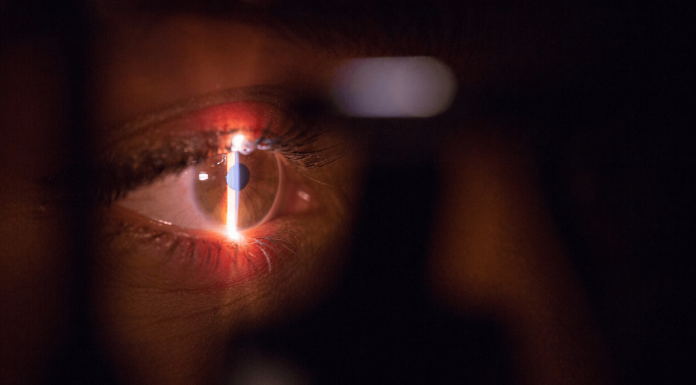
Launch of the clinical study
The launch of this clinical study will make it possible to establish, in a precise manner, the level of performance of autonomous algorithms for identifying and classifying the level of severity of the disease in patients with diabetic retinopathy. André Larente, president of DIAGNOS, states:"THIS PHASE INITIATES THE CONCLUSION OF THE PARTNERSHIP AIMED AT AUTOMATED DETECTION OF DIABETIC RETINOPATHY STARTED IN JUNE 2018. THIS PHASE OF TESTING AND PERFORMANCE ANALYSIS WAS APPROVED BY CHUM, FOLLOWING THE POSITIVE RESULTS OF EVALUATION OF THE CLASSIFICATION ALGORITHMS BY SEVERITY LEVEL IN AUTONOMOUS MODE ENCOUNTERED IN RECENT MONTHS, FOLLOWING A RIGOROUS INDEPENDENT EVALUATION PROCESS THAT CHUM CLINICIANS CONDUCTED."The retinal fundus images of more than 600 diabetic patients from the CHUM endocrinology department will be analyzed by the DIAGNOS "NeoRetina" deep learning algorithm in collaboration with the CHUM ophthalmology department. The latter allows the identification of lesions caused by diabetic retinopathy and the classification of the evolution of the disease by level of severity. Carried out in a "double-blind" comparison mode, this test will allow CHUM professionals to precisely establish the level of performance and accuracy of NeoRetina's autonomous algorithms. AI will increase the number of screenings, CHUM's head of endocrinology, Andrée Boucher states:
"DIABETIC RETINOPATHY AFFECTS MANY DIABETIC PATIENTS. HOWEVER, SINCE IN THE INITIAL STAGES OF THE DISEASE, PATIENTS ARE GENERALLY ASYMPTOMATIC AND SYMPTOMS USUALLY ONLY APPEAR IN THE LATER STAGES OF THE DISEASE, THIS STAND-ALONE SCREENING MODALITY, WHICH CAN BE EASILY PERFORMED AT THE TIME OF THE PATIENT'S ANNUAL EXAMINATION, WILL ALLOW US TO REDUCE THE NUMBER OF COMPLICATIONS THAT CAN LEAD TO BLINDNESS.Dr. Salim Lahoud, head of the CHUM's ophthalmology department, says that screening for diabetic retinopathy using AI solutions developed by DIAGNOS will help prioritize and improve the speed of patient management by the ophthalmologists in his department. Fast, efficient and accurate, they will significantly reduce screening costs. Diabetes being the second most important cause of blindness in Canada, the integration of these solutions in the medical follow-up programs of diabetic patients will allow them to preserve their sight... Dr. Fabrice Brunet, President and CEO of the CHUM, concludes:
"THIS PROJECT IS COMPLETELY IN LINE WITH THE CHUM'S DESIRE TO IMPROVE THE ACCESSIBILITY OF SERVICES TO PATIENTS THROUGH PARTNERSHIPS THAT ALLOW THE DEVELOPMENT AND INTEGRATION OF INNOVATIVE SOLUTIONS."Translated from Canada : Retour sur le partenariat du Centre Hospitalier de Montréal et de DIAGNOS pour le dépistage de la rétinopathie diabétique
 Add ActuIA to my preferred sources on Google
On the Google page, tick the box next to ActuIA: our articles will then appear first in Top Stories.