

The KU Leuven study
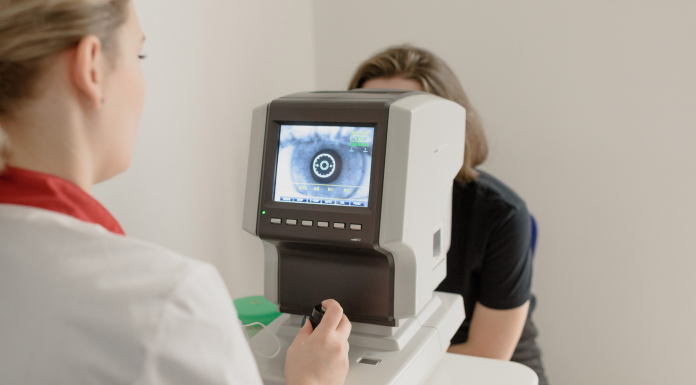
A retinal scan, a very quick examination, uses a low intensity light source and a sensor to scan the blood vessels at the back of the retina and is commonly performed by ophthalmologists. Because biomarkers of these vessels (density, tortuosity...) are associated with cardiac function, the KU Leuven researchers studied the use of retinal images alongside patient data,"to estimate left ventricular mass and left ventricular end-diastolic volume, and subsequently predict incident myocardial infarction." and published the results of this research on Jan. 25 in the journal Nature Machine Intelligence. They titled it: "Predicting myocardial infarction using retinal scans and minimal personal information." The researchers trained an algorithm relying on deep learning with more than 5,000 retinal scans, they searched for those that matched patients who had a heart attack afterwards. The algorithm would estimate the size and efficiency of the left ventricle of the heart. Enlargement of the left ventricle is an increased risk of heart attack and can currently only be checked by echocardiography or MRI. Being able to do this during a visit to the ophthalmologist would simplify the process for the patient and the examination would be less expensive. The diagnosis would be valid for one year. Alexandre Frangi of KU Leuven said:"Our technique could revolutionize the detection of heart problems. Retinal scans are relatively cheap and are already widely used by ophthalmologists. Thanks to automatic screening with our AI, high-risk patients can be identified and referred more quickly."
A real revolution?
In the magazine "Nature Journal Biomedical Engineering", researchers from Alphabet (formerly Google) published, in February 2018, the results of a study where they explained that they had scanned the retinas of patients to detect cardiovascular weaknesses and diseases thanks to deep learning. Their algorithm would have been able to detect risk factors such as age, gender of the person, but also blood pressure or diabetes of patients. The project was first interested in age-related macular degeneration (AMD) and diabetic retinopathy of type 2 diabetes, which can cause retinal vessels to burst. According to the researchers, their model still needed to be fine-tuned before it was ready for clinical use. Translated from Belgique : Les chercheurs de la KU Leuven (Université de Louvain) utilisent des scans rétiniens pour prédire les infarctus du myocarde
Our articles will then appear first in Google Top Stories.