

arXiv

In the dynamic world of scientific research, arXiv stands out as an essential platform for the rapid and free dissemination of knowledge. Created in 1991 by Paul Ginsparg, arXiv is an online archive of scientific preprints, covering a multitude of disciplines ranging from physics and mathematics to computer science and social sciences. Hosted by Cornell University, this platform significantly contributes to the evolution of research by allowing researchers worldwide to share their advancements even before publication in peer-reviewed journals.
Read more of the profile History updated on 11 July 2025
ArXiv plays a crucial role in promoting open science by facilitating free and immediate access to research results. It covers a wide range of scientific fields, with a predominance in physical and mathematical sciences. This platform is particularly valued for its ability to host high-quality preprints, making it an essential resource for researchers and academic institutions. Over the years, arXiv has accumulated millions of documents, thus constituting a rich and varied database for the global scientific community.
Recent Contributions and Notable ProjectsArXiv continues to evolve to meet the changing needs of the scientific community. Among its recent contributions is the integration of new research categories, such as generative AI and language models, reflecting emerging trends in the technology field. As a repository of choice for researchers working on innovative projects, arXiv has seen the publication of major works on topics such as cybersecurity, machine learning, and computer vision, demonstrating its importance in the technological research ecosystem.
Position in the Technological EcosystemArXiv holds a central place in the technological ecosystem, serving as a bridge between researchers and the public. Its preprint function allows scientists to quickly share their results, thus fostering collaboration and innovation at an accelerated pace. Moreover, arXiv acts as a catalyst in the development of new technologies by providing early access to research before formal validation. This dynamic accelerates the transfer of knowledge between academia and industry, thereby stimulating technological innovation on a global scale.
Recent Developments and NewsRecently, arXiv has strengthened its technical infrastructure to better manage the growing influx of submissions and ensure the sustainability of its services. It has also implemented measures to improve the quality and relevance of publications, by introducing automatic verification tools and stricter submission criteria. These efforts aim to maintain the platform's credibility and reliability as a source of scientific knowledge. In parallel, arXiv is exploring partnerships with other research platforms to extend its reach and integrate advanced technologies, such as AI, to enhance its services.
In conclusion, arXiv remains a pioneering and essential platform in the landscape of scientific research. Its ability to adapt to emerging needs and integrate the latest technological advancements ensures its continued relevance in promoting open and accessible science for all.
arXiv est une archive ouverte de travaux scientifiques, notamment en informatique, en mathématiques, en physique et en statistique. Elle permet aux chercheurs de diffuser rapidement leurs manuscrits et leurs versions successives. Les textes déposés sur arXiv ne sont pas évalués par les pairs par la plateforme elle-même.
Related articles
28 in total
Helped by GPT-5, Then Left to Their Own Devices: A Randomized Trial Measures the Learning Cost of AI Assistance

Machine unlearning: Google Research validates an audit test, but not yet on LLMs

The preprint ExpGraph proposes a self-evolving graph memory for LLM agents

Cigref: €140 Billion in Cloud Overcharges in Europe, AI Bundle as Second Cause

Claude Mythos: The EU Excluded from Briefing Received by the Fed and Bank of England

GPT More Confident on Difficult Tasks Where It Makes the Most Mistakes, According to a USC/Berkeley Preprint
ContextEcho: Compaction Does Not Correct Persona Drift, Benchmark on 23 Models

Anthropic rents Colossus 1 for $1.25 billion/month on an xAI park capped at 11% capacity
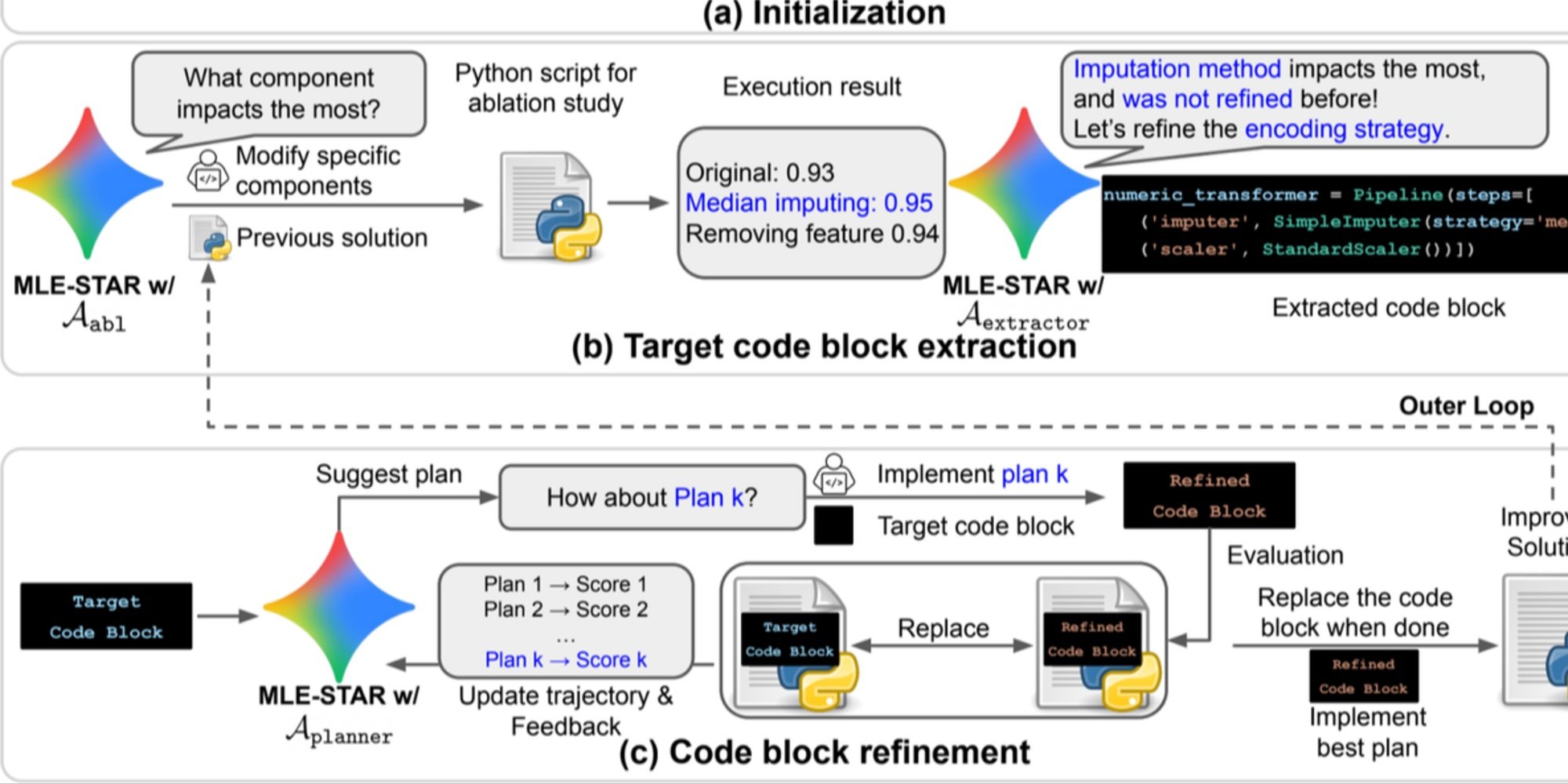
Google Introduces MLE-STAR: A New Approach for Machine Learning Engineering

When AI Becomes a Shield: How LLMs Concretely Change Cybersecurity

ML Drift: Facilitating Local Inference
