

AI in the Enterprise
Artificial intelligence is moving beyond experimentation to become a question of organisational structure. Caught between automation opportunities and governance imperatives, companies are weighing operational gains against risk control, regulatory expectations and the transformation of jobs.
About AI in Business
What it covers
AI in the enterprise no longer refers to a simple automation or data-analysis technology. It now spans the full range of artificial intelligence systems, from generative AI to autonomous agents and recommendation processes, embedded in the daily operations of organisations. The question is no longer technological feasibility, but how to organise its use in a sustainable and secure way. Long described as a future lever of competitiveness, AI has become a present-day reality whose use cases span research and knowledge management, content generation, the automation of business processes, cost optimisation and the personalisation of customer services.
Issues and debates
Many organisations that have adopted AI acknowledge that they still master its uses only partially. Three challenges stand out. Skills: the lack of know-how remains the main barrier to operational integration. Data quality and interconnection: poorly structured or incomplete data limits the effectiveness of systems. And the strategic question: how to measure the real return on investment and avoid AI remaining confined to a few pilot projects. Beyond operations, companies must manage concrete risks: leaks of confidential data, liability in the event of algorithmic error, impact on jobs. AI governance is emerging as a key lever to frame these risks and build trust.
European regulation and framework
The regulatory framework is thickening. The European AI Act establishes a compliance regime based on managing risks according to the level of exposure. The European Commission supports member states. National regulators, data protection authorities and financial supervisors are clarifying the conditions for the responsible use of AI in their respective fields. Public authorities are publishing practical guides to help companies structure their AI governance. Compliance rests on several converging requirements: respect for the GDPR, transparency about algorithms, human oversight of critical decisions, documentation of impacts. Governance demands organisational clarity: who decides, who validates, who controls, who bears responsibility for each system in production.
What ActuIA follows
ActuIA documents how organisations structure AI: governance strategies, regulatory developments, acquisitions and partnerships, sector-specific approaches, and public debates on ethics and accountability. We cover advances in tools and practices, the barriers identified, lessons learned from early deployments, as well as the defining questions: system autonomy, impact on employment, technological sovereignty, fairness and algorithmic discrimination.
The complete guide
Key concepts
Articles
62 in total
Hospital Scheduling Management: AI Wins the Duel Organized by Anap

Paris-Saclay SPRING invites innovation leaders on May 20, 2025, at École Polytechnique

The first digital models from the LiDAR HD program are available

E-commerce: Mirakl Transforms Its Business Model into a Multi-Solution Ecosystem Based on AI
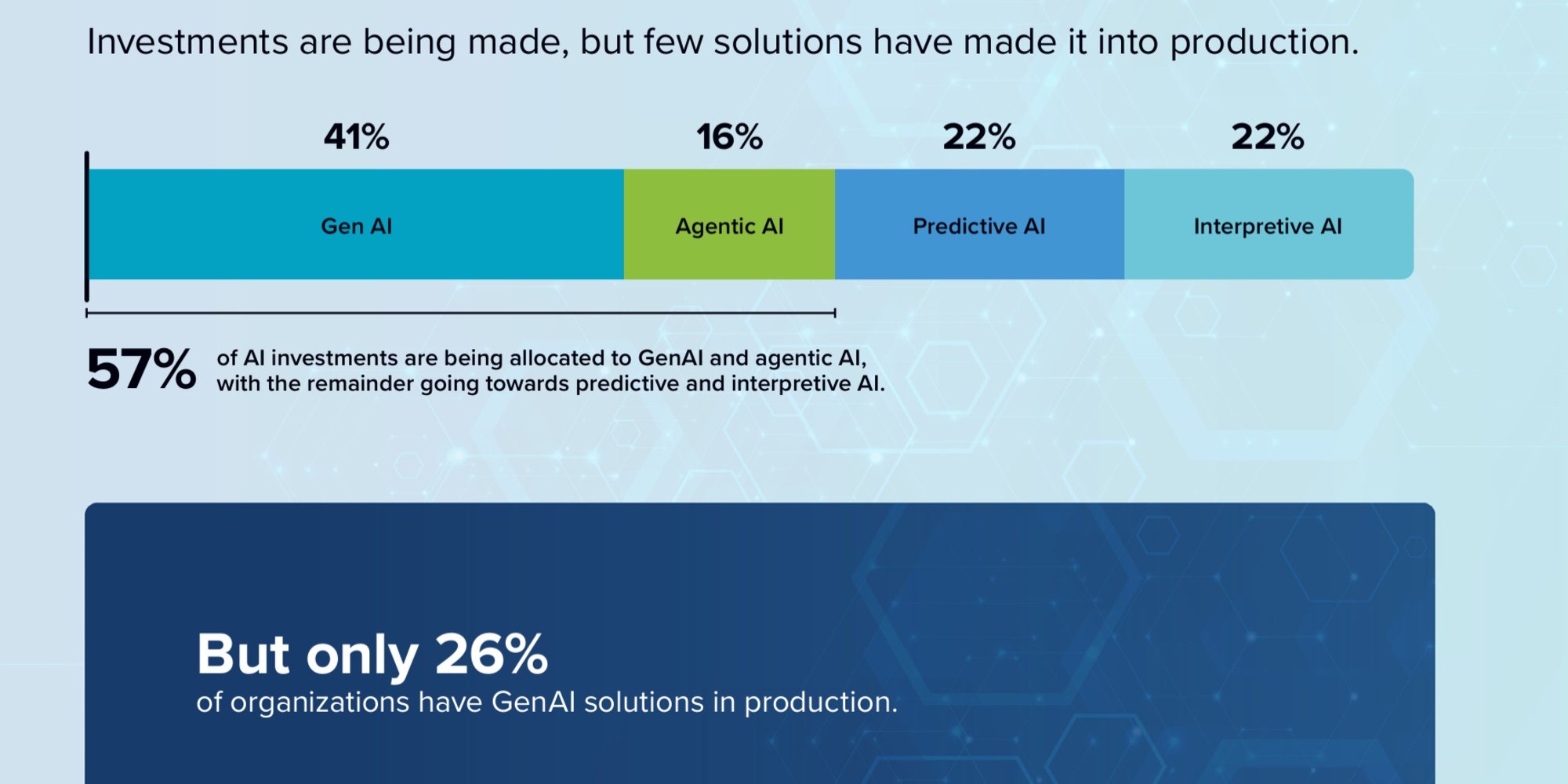
GenAI: According to Qlik, Bridging the Gap Between Ambition and Organizational Reality Becomes Urgent for Businesses

Indre-et-Loire Bets on AI to Combat Forest Fires

SNCF Revamps Its Digital Governance to Accelerate AI Integration

Precision Medicine: Dassault Systems Integrates AI with 'Living Heart' Virtual Twins

Couchbase Launches Edge Server to Tackle the Edge Computing Challenge

Digital Twins: Atos and Esri Announce a Partnership for Territories and Infrastructures

Jio, AMD, Cisco, and Nokia Develop an Open AI Platform for Telecom

MongoDB Acquires Voyage AI to Enhance AI Application Reliability

Volta Medical Demonstrates How AI Can Assist Cardiologists in Treating Atrial Fibrillation
