

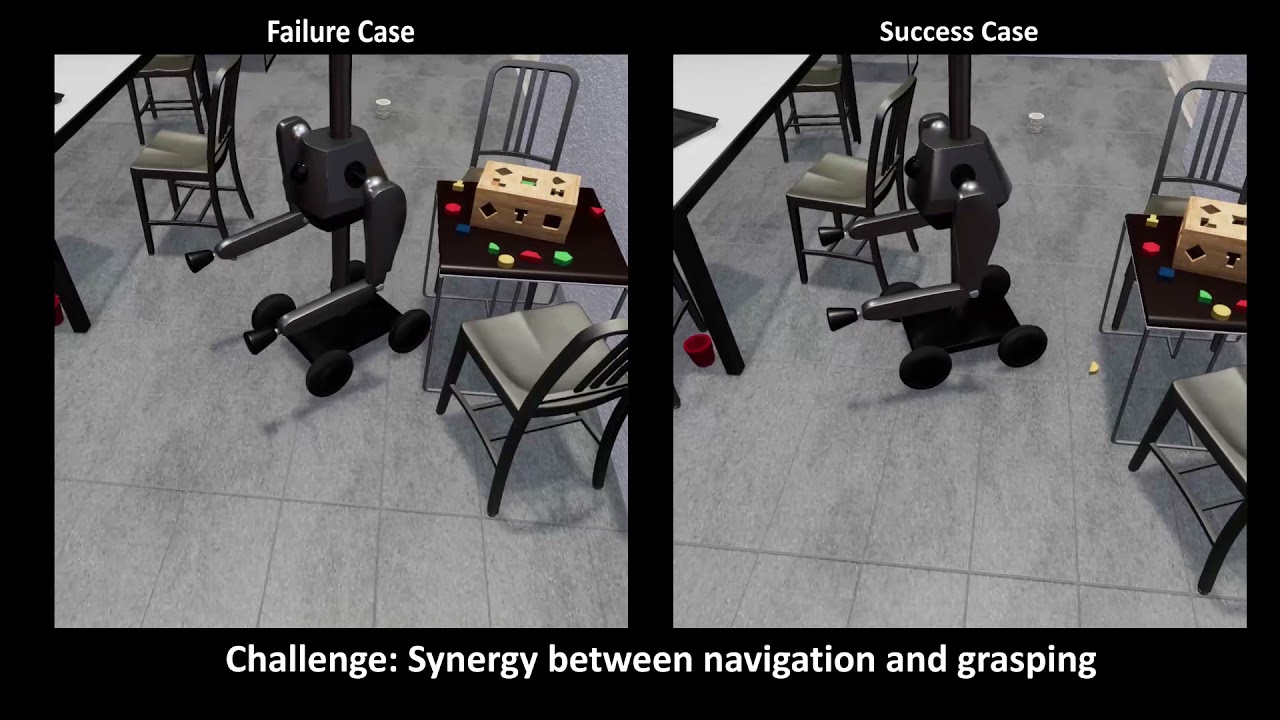
In a study, several researchers from IBM, the Massachusetts Institute of Technology (MIT) and Stanford University have teamed up to launch the "ThreeDWorld Transport Challenge". Its objective is to evaluate the ability of artificial intelligence systems to find paths, interact with objects or plan tasks efficiently. To date, no AI model has been able to meet the challenge.
A challenge launched by a team of researchers
In the field of robotics, succeeding in developing a system that can physically sense the world and interact with its environment is often presented as one of the main challenges of artificial intelligence. Today, even if the achievements can be remarkable, they are still very far from human capabilities. A team of researchers from MIT, IBM and Stanford have launched a challenge called the ThreeDWorld Transport Challenge. Collaborating scientists include Chunang Gan, Abhishek Bhandwaldar, Jeremy Schwartz, Seth Alter, Todd, Mummert, Josh McDermott, Daniel Yamins, James DiCarlo, Siyuan Zhou, Antonio Torrala, Joshua Tenenbaum and Dan Gutfreund. The goal of the challenge is simple: if the artificial intelligence system passes all the tests, it will be considered highly evolved. It should be noted that no system has yet succeeded in completing this challenge. But then, why propose to AI systems, a challenge that seems unattainable? In reality, researchers are wondering about the limits of current models. The results of the competition may determine which research directions to focus on.A virtual environment created especially for this challenge
Most robotics applications use reinforcement learning. The creation of this type of model presents several challenges:- One of them is to design one that takes into account several factors like gravity, wind, physical interactions with objects or other people. This is in contrast to environments such as chess where machines now win against humans.
- Data collection is another major challenge: reinforcement learning systems need to train with a lot of data, even if it means simulating millions of interactions with their environment. This kind of process can slow down robotic systems, as they must collect their data from the constantly changing physical world.