

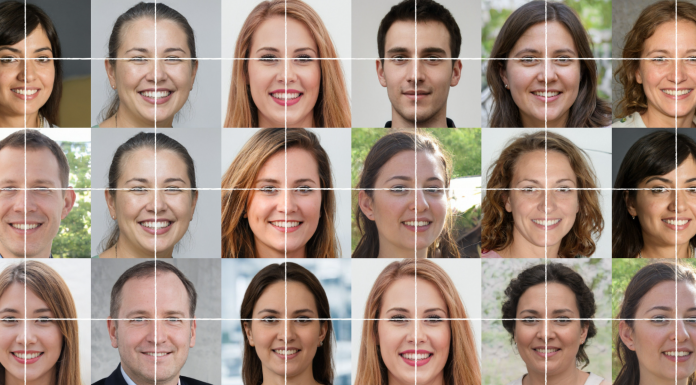
"Within a few weeks, we found over a thousand accounts that appeared to be fake accounts with images generated by GAN. And when we searched the internet for these people, we found no evidence of their existence anywhere else, which is rare."Renee DiResta adds on twitter:
"This is not a story of misinformation or disinformation, but rather the intersection of a fairly mundane commercial use case with AI technology, and the resulting questions of ethics and expectations. What assumptions do we make when we encounter others on social networks? What actions cross the line into manipulation?"The NPR website decided to continue the investigation with more than 70 companies where these fake profiles were supposed to work. Most of them were unaware that these fake profiles existed, having outsourced their marketing to specialized agencies, and claimed that they had in no way authorized the use of AI-generated photos.
Fake profiles of RingCentral employees
Stanford researchers found 60 fake profiles of alleged RingCentral employees, the company confirmed that none of them ever worked there. The person who emailed Renee DiResta following Keenan Ramsey's LinkedIn message was a real RingCentral employee but left the company. RingCentral acknowledged that it subcontracted with other companies to contact potential customers and set up meetings with its own salespeople (known in the company as "lead generation"). One of them created fake profiles, but RingCentral did not disclose its name. Heather Hinton, RingCentral's chief information security officer, said she was unaware of the practice and did not approve of it. She told NPR in an interview:"That's not how we do business. It was a reminder to us that technology is changing faster than even those of us who are watching it can keep up. And we just have to be more and more vigilant about what we do and what our vendors are going to do on our behalf."RingCentral spokeswoman Mariana Leventis said in a statement:
"While this may have been an accepted industry practice in the past, going forward, we do not believe this is an acceptable practice and goes against our commitment to our customers. We are taking specific steps to update our approach to lead generation and to educate our employees on what is and is not acceptable in terms of communication with customers and partners."Several of the other companies listed as current employers on the apparently fake profiles told NPR the same thing: they used outside vendors to introduce potential customers on LinkedIn. LinkedIn says all inauthentic profiles, including those using images that don't represent a real user, are against its rules. In fact, it states on its "Professional Community Policies" page, " Do not use someone else's image, or any image that does not look like you, for your profile picture." The professional network said it investigated and removed those who violated its policies, including rules about creating fake profiles or falsifying information. Leonna Spilman, a spokeswoman for LinkedIn, confirmed:
"Our policies clearly state that each LinkedIn profile must represent a real person. We are constantly updating our technical defenses to better identify fake profiles and remove them from our community, as we did in this case Ultimately, it's about making sure our members can connect with real people, and we strive to ensure they have a safe environment to do so."Translated from Des faux profils générés par l'intelligence artificielle identifiés et supprimés du réseau LinkedIn

Our articles will then appear first in Google Top Stories.