

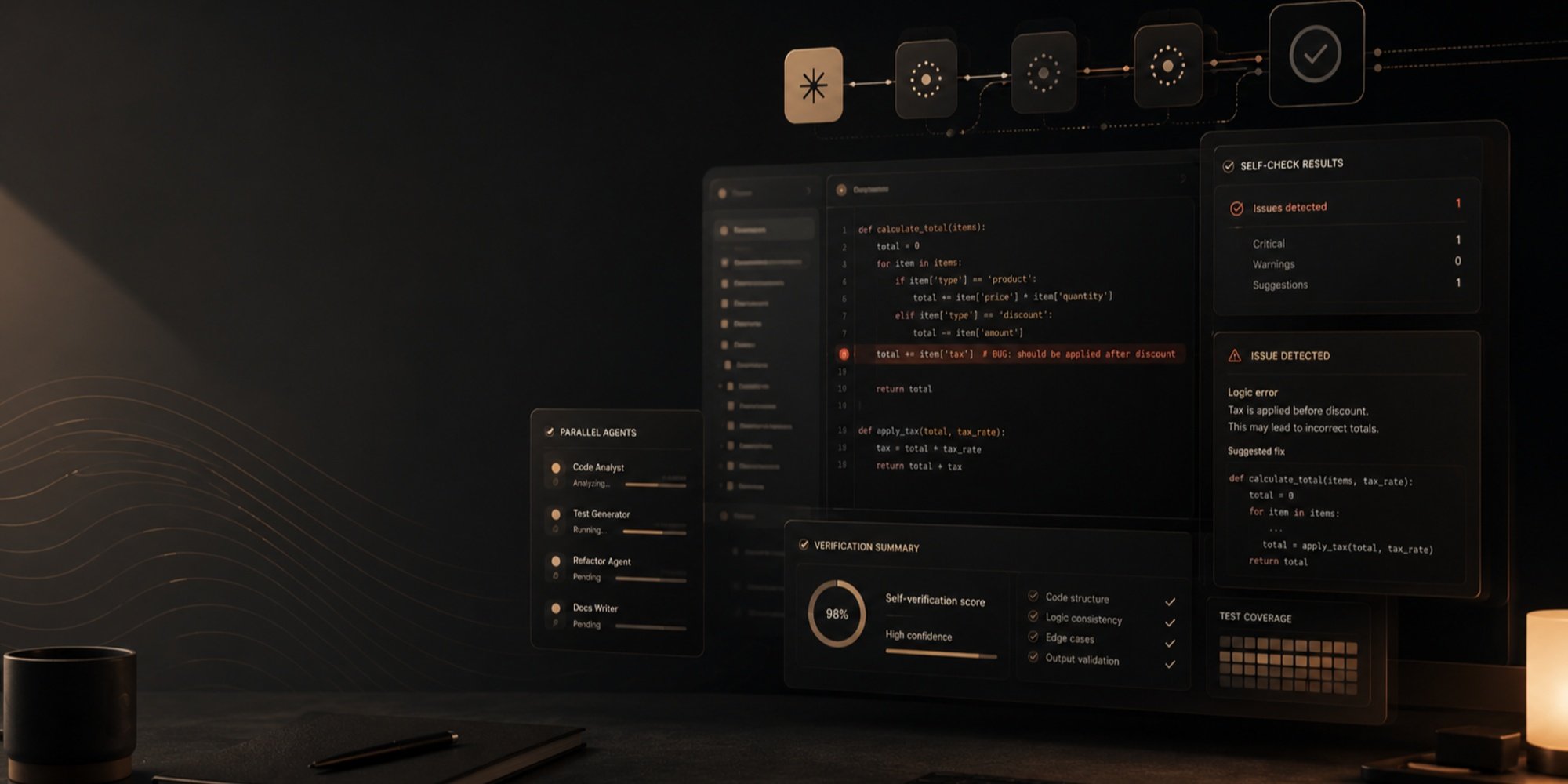
The improvement highlighted by Anthropic for Claude Opus 4.8, released on May 28, 2026, rests on one metric: according to the publisher, the model is four times less likely than its predecessor to allow defects in the code it has produced to go unnoticed. The figure is self-reported, produced by the in-house Alignment team and based on a protocol that has not been made public. The model is immediately available via the API under the identifier claude-opus-4-8 and on claude.ai, with standard pricing aligned with that of Opus 4.7 ($5 per million tokens input, $25 per million output). The Opus 4.8 'fast mode,' which runs at 2.5 times the speed of the standard mode, is priced at $10 per million tokens input and $50 output, which, according to the official statement, is three times cheaper than the fast mode of previous Opus models.
Claude Opus 4.8 - API pricing at launch (May 28, 2026)
| Mode | Input ($/M tokens) | Output ($/M tokens) | Note |
|---|---|---|---|
| Standard | $5 | $25 | Unchanged from Opus 4.7 |
| Fast mode (2.5×) | $10 | $50 | 3× cheaper than previous fast mode |
Source: official announcement by Anthropic, anthropic.com/news/claude-opus-4-8
Three Operational Levers Accompany the Release
Beyond the model, three features alter how Opus 4.8 integrates into an agentic workstation (designed to orchestrate multi-step tasks autonomously). The first, called 'dynamic workflows' and deployed in developer early access (research preview), extends Claude Code to very large projects: the agent plans the work, launches several hundred sub-agents in parallel in the same session, then checks its outputs before delivering the result. Anthropic cites as a use case the migration of a codebase spanning several hundred thousand lines, from launch to merge, with the existing test suite as a reference. The feature is reserved for Claude Code's Enterprise, Team, and Max plans. The second, 'effort control,' adds alongside the model selector on claude.ai a four-level slider: 'low,' 'default,' 'extra,' and 'max,' accessible to all subscription plans. Anthropic recommends the 'extra' setting for heavy tasks and long-duration asynchronous flows. The third, on the Messages API side, now allows the insertion of system entries inside the messages array during a task, without breaking the prompt cache or going through a user turn, enabling real-time updates to permissions, token budgets, or the environment context for an agent in execution.
A Metacognition Metric Set as an Industrial Benchmark
The claimed fourfold factor on unnoticed defects is the most structuring element of the announcement and the most challenging for a buyer to handle. The metric is documented in the model's safety sheet (System Card) published the same day, but it was produced by Anthropic's Alignment team, not by a third-party evaluator, and the protocol is not replayable outside the publisher's environment. According to this same team, Opus 4.8 would have substantially lower rates of misaligned behaviors, like deception or cooperation in abuses, compared to Opus 4.7 and close to those of its best-aligned model, Claude Mythos Preview. What the metric acknowledges is less the fact—a self-reported fourfold factor on a non-published protocol is weakly engaging—than the shift in evaluation axis: Anthropic now proposes the model's metacognition (knowing what it cannot do, signaling its uncertainties about its own productions) as a central criterion for qualifying an agentic model. This missing piece prevents going further: the publisher does not release the formula for counting unnoticed defects, the protocol for generating the tested code corpus, or the disturbance conditions. Independent work published on the Aithos AI Research Foundation's research journal on February 9, 2026 showed, by replicating Anthropic's evaluation scenarios, that 'Published testing scenarios show near-perfect alignment for newer Claude models, but perturbations reveal persistent compliance gaps' (free translation of 'Published testing scenarios show near-perfect alignment for newer Claude models, but perturbations reveal persistent compliance gaps'). The observation targeted Opus 4.6; it sketches the scenario against which the 4× metric alone is not armed.
'Published testing scenarios show near-perfect alignment for newer Claude models, but perturbations reveal persistent compliance gaps.'
Aithos AI Research Foundation - Daan Henselmans, Arno Libert, Lennard Zwart (February 2026, translated from English). Study on Opus 4.6; authors have not yet evaluated Opus 4.8.
A Product Line Milestone before the Mythos Breakthrough
Opus 4.8 fits into a rapid iteration cadence of the Claude family: ActuIA had already documented the launch of Claude Opus 4 in May 2025 as a generation focused on coding and agent-driven automation, a trajectory later pursued by Claude Sonnet 4.5 on the programming axis. The publisher even presents it as 'a modest but tangible improvement' over Opus 4.7, before the announced arrival of a superior class. This class is Claude Mythos Preview, already deployed in restricted access as part of Project Glasswing (a defensive cybersecurity initiative launched in April 2026). In one month, Anthropic and 'approximately 50 partners,' including AWS, Apple, Cisco, Google, Microsoft, and NVIDIA, claim to have identified with Mythos Preview more than ten thousand high or critical severity vulnerabilities in software deemed systemically important. The public release of Mythos is announced 'in the coming weeks,' pending the deployment of reinforced safeguards. Reading Opus 4.8's performance remains, for now, dependent on a second filter: among the dozen quantified testimonials published by Anthropic, the only one relying on a public academic benchmark is that of Induced AI, which reports 84% on Online-Mind2Web. This benchmark, maintained by the OSU-NLP-Group of Ohio State University under MIT license, is precisely titled 'An Illusion of Progress? Assessing the Current State of Web Agents,' an editorial choice by the academic authors that invites cautious handling of triumphant scores on web agents. The other claimed performances (Relevance AI's Super-Agent Benchmark, Harvey's Legal Agent Benchmark, Cursor's CursorBench) are based on proprietary, unpublished protocols.

Our articles will then appear first in Google Top Stories.