

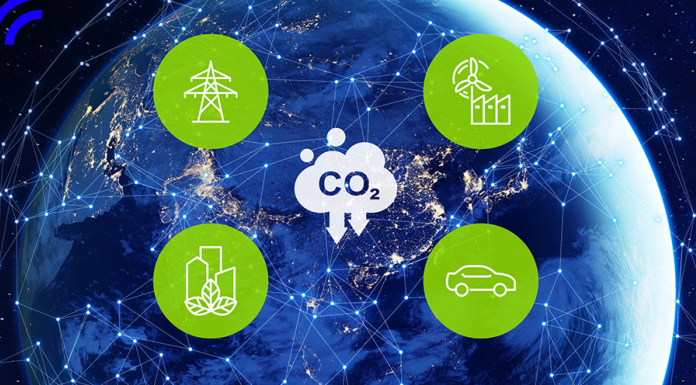
The 4 sectors emitting the most CO2
Industry
Industry is responsible for 29% of Belgium's CO2 missions (33.6 megatons), with the processing industry, with chemicals, metals and cement contributing the most. On the other hand, it is industry that has the greatest potential for CO2 reduction. Digital technologies such as AI, digital twin and industrial IoT could reduce CO2 emissions by 3.4 to 4.2 megatons, or some 10 to 12.3% of the sector's total emissions. Advanced data analytics and automation can significantly reduce energy intensity, and virtual product and process simulations such as digital twin can model reality with great accuracy, with benefits in terms of efficiency and CO2 emissions reduction.The building industry
Construction is the sector of the building industry with the largest footprint, 8.3 to 10.8% of total building emissions could be reduced, mainly through Building Management System (BMS) for buildings and Building Information Modeling (BIM) in construction.Energy
The energy sector can achieve a 12-14.5% carbon reduction through digital technologies that catalyze the transition to green energy.Mobility and logistics
In this sector, digital technologies could lower total emissions by 10.6 and 14.2%. Increasing telecommuting, optimizing existing modes of transport with smart traffic management tools and reducing freight transport with, for example, autonomous ships on inland waterways are identified as key drivers of this reduction.Digital4Climate: "yes, we can
 Citizens, governments and businesses can play an important role in deploying digital technologies for climate. Companies that are committed to the digital and ecological transition are favored by customers and gain a competitive advantage. All of them can be inspired by the 15 concrete digital solutions of the study and its 20 practical examples of Belgian companies in the different sectors.
A Digital4Climate innovation program, in which Agoria is ready to cooperate, is essential to raise awareness among citizens and companies and to encourage them to adopt a "yes we can" attitude. The public authorities must set up such a program before the end of the current legislature in order to massively reduce CO2 emissions and thus reach the Belgian climate objective. On the other hand, it would also facilitate data collaboration and train more people in digital and green skills.
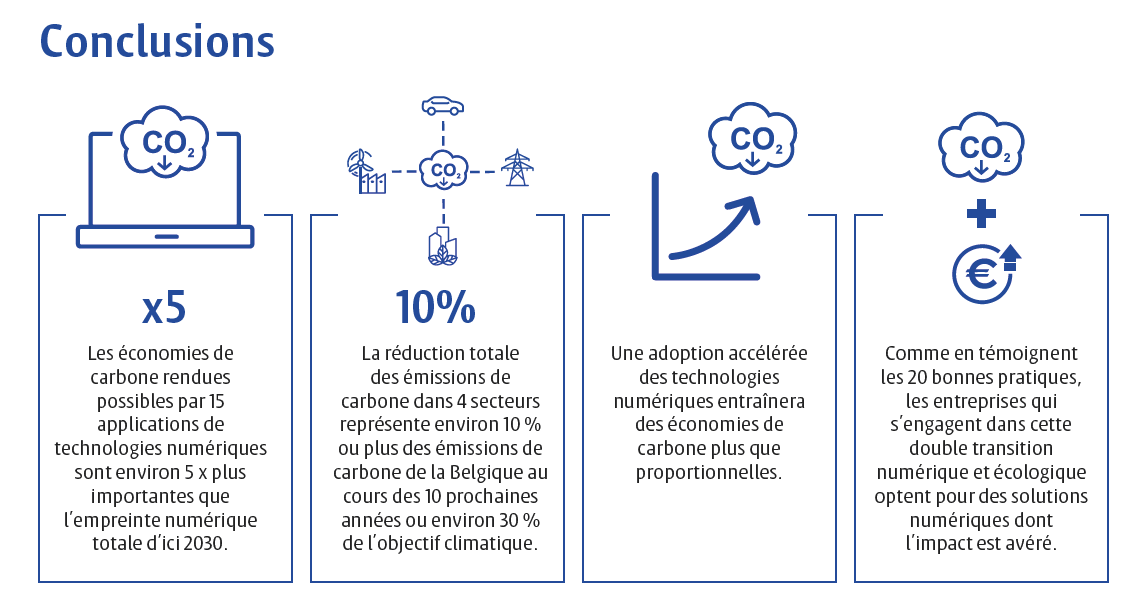
The study considered 2 scenarios depending on the adoption rate of the 15 proposed digital solutions and technologies by 2030. According to these, the reduction in CO2 emissions in these four sectors is 4.7 to 5.2 times the total digital footprint of Belgium. They demonstrated that the more digitalization, the more CO2 emissions can be reduced. Agoria is firmly convinced that digital technologies can contribute to the answer to the climate challenge. The digital transition and the green transition can reinforce each other, ensure sustainable growth and contribute to Belgium's economic and social prosperity.
Translated from Belgique : l'étude Digital4climate conclut que 15 technologies auront un impact positif sur l'empreinte carbone du secteur numérique d'ici 2030
Citizens, governments and businesses can play an important role in deploying digital technologies for climate. Companies that are committed to the digital and ecological transition are favored by customers and gain a competitive advantage. All of them can be inspired by the 15 concrete digital solutions of the study and its 20 practical examples of Belgian companies in the different sectors.
A Digital4Climate innovation program, in which Agoria is ready to cooperate, is essential to raise awareness among citizens and companies and to encourage them to adopt a "yes we can" attitude. The public authorities must set up such a program before the end of the current legislature in order to massively reduce CO2 emissions and thus reach the Belgian climate objective. On the other hand, it would also facilitate data collaboration and train more people in digital and green skills.
The study considered 2 scenarios depending on the adoption rate of the 15 proposed digital solutions and technologies by 2030. According to these, the reduction in CO2 emissions in these four sectors is 4.7 to 5.2 times the total digital footprint of Belgium. They demonstrated that the more digitalization, the more CO2 emissions can be reduced. Agoria is firmly convinced that digital technologies can contribute to the answer to the climate challenge. The digital transition and the green transition can reinforce each other, ensure sustainable growth and contribute to Belgium's economic and social prosperity.
Translated from Belgique : l'étude Digital4climate conclut que 15 technologies auront un impact positif sur l'empreinte carbone du secteur numérique d'ici 2030

Our articles will then appear first in Google Top Stories.