

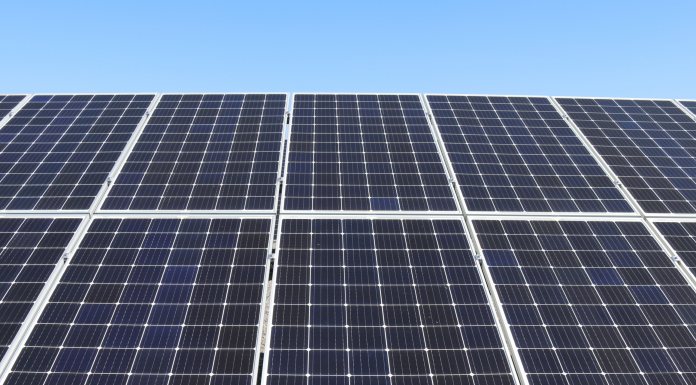
Hugo Le Picard, researcher at the Ifri's Energy & Climate Center, and Mathieu Toulemont, Senior Machine Learning Engineer at PhotoRoom, sought to measure the progression of decentralized solar power in urban areas in Africa. To do so, they used deep learning methods to analyze 2.4 million satellite images of 14 sub-Saharan cities. They published their study entitled "Decentralized Solar in African Cities. An original analysis of satellite analysis and Deep Learning" in the Ifri Briefings on January 18.
The French Institute of International Relations (Ifri) was founded by Thierry de Montbrial in 1979, he is in fact its President and states:
"TheFrench Institute of International Relations (Ifri) is the leading French institution for research and debate on international relations. It is also a unique platform for understanding the contemporary world. In 40 years, it has become a reference on a global scale, recognized by its peers. Hugo le Picard works in particular on issues of energy poverty, access to electricity and financing of electrical infrastructure in sub-Saharan Africa. He conducted this study, which showed that decentralized solar systems were increasingly present in cities that are covered by the electricity grid, with Matthieu Toulemont.
An unreliable electricity grid
In 2016, the World Bank stated:"Currently, only one in three Africans has access to electricity, with residents often condemned to rely on kerosene or spend hours in the dark. The region's power companies are cash-strapped, burdened by aging infrastructure and unable to provide reliable power to their customers. If nothing is done to remedy this situation, there will be more Africans without electricity in 2030 than today." The Covid-19 crisis has caused the number of people without access to electricity to rise again despite real electrification efforts. The major obstacle for those connected is the unreliability of the grid. There are frequent power outages and even if the grid is working, voltage drops limit the use of electrical appliances. Nigeria, for example, has a grid connection rate of about 83.9 percent in urban areas, but the grid only works 50 percent of the time. This weakness of the sub-Saharan power grids also has a considerable negative effect on economies, representing on average, depending on the country, a cost ranging from 1 to 5 percent of national gross domestic product (GDP). The African continent is experiencing rapid demographic growth: the UN predicts that the sub-Saharan population will double by 2050 to reach 2.1 billion people. The increasing need for electricity due to economic and demographic growth, its high price and the unreliability of the networks have encouraged consumers to self-sufficiency for their electrical consumption through diesel generators or decentralized solar systems, even in urban areas.