

Union Européenne
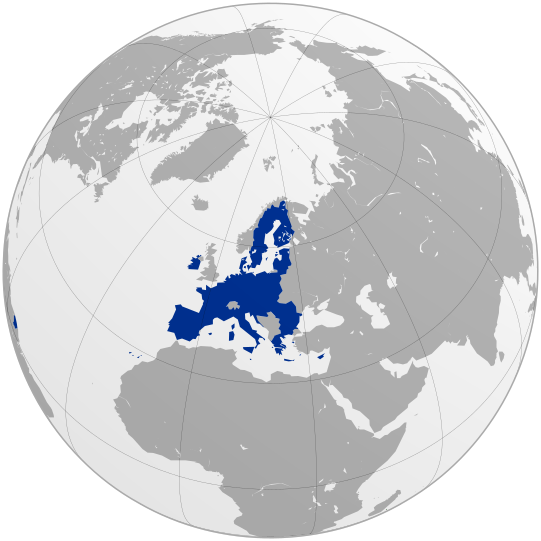
The European Union (EU) is a major player on the global stage, particularly in the field of artificial intelligence (AI) and new technologies. As an economic and political bloc comprising 27 countries, the EU is committed to becoming a leader in AI while ensuring an ethical and secure approach to this technology.
Read more of the profile History updated on 11 July 2025
The European Union, established by the Maastricht Treaty in 1993, is a political and economic union aimed at promoting peace, its values, and the well-being of its people. With a single market that facilitates the free movement of people, goods, services, and capital, the EU strives to consolidate its positions in the technological field by investing heavily in innovation and establishing robust regulatory frameworks.
Areas of Expertise and Key AchievementsIn the realm of new technologies, the EU stands out for its efforts to regulate AI in a way that balances innovation with the protection of fundamental rights. The regulatory framework on AI, known as the AI Act, is one of the world's first comprehensive regulations, aiming to ensure that AI systems are used ethically and securely.
Moreover, the European Union has launched initiatives such as the Horizon Europe program, which allocates significant funding to stimulate research in key areas such as AI, data, and computing, thus supporting the dual digital and green transition.
Recent Contributions and Notable ProjectsRecently, the EU announced an investment of 200 billion euros to strengthen its position in the AI sector, with projects such as the creation of AI gigafactories and the development of cutting-edge supercomputers. These initiatives aim to establish a robust technological infrastructure capable of supporting the development of large-scale AI models.
Furthermore, the EU has adopted the Data Act, which sets new rules on data access and usage rights generated in Europe, to stimulate data sharing and encourage innovation across various economic sectors.
Position in the Technological EcosystemThe European Union positions itself as a global leader in technological regulation, notably with the AI Act, which imposes strict obligations on AI developers and users. This legislation aims to create a safe environment for AI development while protecting consumers and promoting responsible innovation.
Additionally, the EU actively collaborates with other regions and countries to establish international technology standards, thereby strengthening its position as a key player on the global stage.
Recent Developments and NewsThe framework for personal data transfer between the EU and the United States has been recently revised to ensure an adequate level of protection, thus facilitating transatlantic exchanges while safeguarding the privacy of European citizens. This new agreement, although criticized by some, represents an important step in strengthening economic cooperation between the EU and the United States.
In response to the rise of generative AI, the EU has also intensified its efforts to regulate the use of these technologies while encouraging innovation and supporting SMEs through initiatives like regulatory sandboxes.
In conclusion, the European Union continues to play a central role in the development and regulation of cutting-edge technologies, striving to reconcile innovation, security, and ethics. Its massive investments in AI and data, combined with a rigorous regulatory framework, position the EU as a global leader in the digital transition. In the face of the challenges and opportunities presented by AI, the EU emerges as a model of technological governance, seeking to establish a balance between technological progress and the protection of fundamental rights.
L’Union européenne réunit 27 États membres dans une union politique et économique. Ses institutions élaborent des politiques et des règles communes dans de nombreux domaines. Le marché unique, la recherche et la transformation numérique font partie des cadres dans lesquels s’inscrit le développement de l’intelligence artificielle en Europe.
Related articles
12 in total
Claude Mythos: The EU Excluded from Briefing Received by the Fed and Bank of England

AI & Banks: The ECB Calls Its Banks on Mythos, but DORA Does Not Guarantee Any Sovereign Access to the Tool
EQT appointed manager of the €5 billion Scaleup Europe Fund, without founding French LP
New Milestone for the AI Act: Obligations for General Purpose AI Models Come into Effect

Ocean IA: Artificial Intelligence for Whale Protection in Polynesia
Open Badges for IT: Towards a New European Standard for Digital Certification
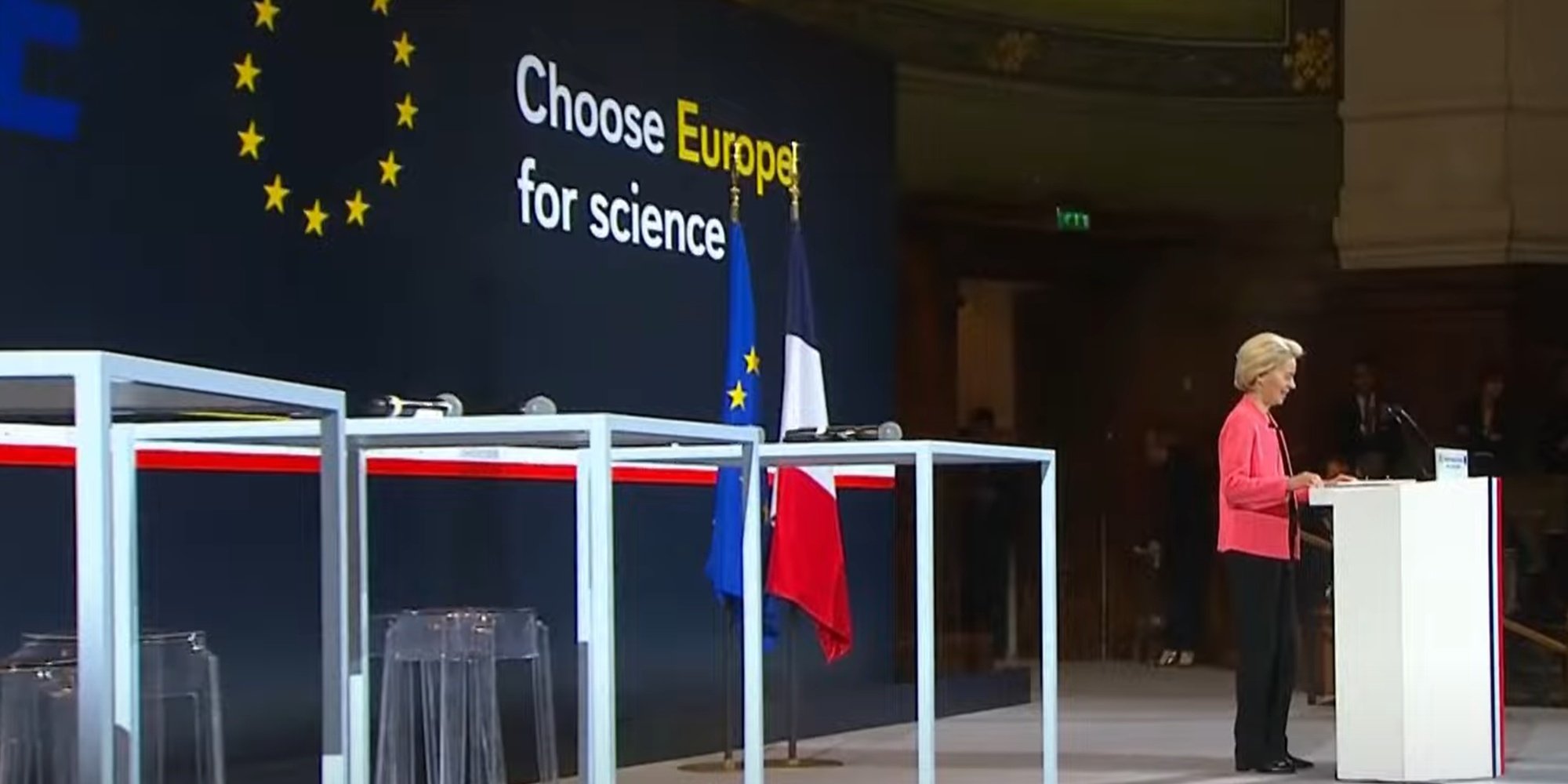
The EU Invests 600 Million Euros to Attract Top Talent
The CSPLA Launches a Mission on the Applicable Law for AI Models Commercialized within the EU

EU Economic Blueprint: OpenAI's Recommendations for Enabling the EU to Harness the Potential of AI

GenAI: The State Launches a Call for Expressions of Interest to Equip the Public Sector

Spain Imposes Heavy Sanctions for Lack of Labeling on AI-Generated Content