

GPAI

The Global Partnership on Artificial Intelligence (GPAI) represents a major international initiative aimed at guiding the development and use of artificial intelligence (AI) responsibly. Launched in 2020 through a joint initiative by Canada and France, GPAI builds on the efforts made during the G7 summit in Biarritz in 2019. Hosted by the Organisation for Economic Co-operation and Development (OECD) in Paris, it aims to ensure that AI is used in a manner that respects human rights, democracy, and the values shared by its founding members.
Read more of the profile History updated on 12 July 2025
GPAI focuses on several areas of expertise through its dedicated working groups. Among these are responsible AI, data governance, the future of work, as well as innovation and commercialization. Each working group is tasked with providing clear and precise recommendations on how to manage the challenges posed by AI while promoting its beneficial use for humanity.
A notable aspect of GPAI is its commitment to creating and maintaining a delicate balance between technological innovation and regulation. In collaboration with international experts from various sectors, the partnership strives to bridge the gap between the theory and practice of AI, ensuring that advances in this field align with ethical and societal values.
Recent Contributions and Notable ProjectsRecently, GPAI has been actively involved in organizing various events, including the Annual GPAI Summit, which brings together AI specialists to discuss recent developments and future perspectives. Projects such as the "Living Lab" to assess the impact of AI in the workplace demonstrate the partnership's commitment to studying the concrete effects of AI in real-world contexts.
Moreover, GPAI has worked on initiatives focused on developing guidelines for managing risks associated with general-purpose AI models (GPAI). These efforts are essential for defining transparency and safety practices in deploying AI technologies while addressing growing concerns about the systemic risks associated with these technologies.
Position in the Technological EcosystemIn the global technological ecosystem, GPAI positions itself as a key player in promoting responsible AI. Through its multi-stakeholder approach and collaboration with entities like the OECD and UNESCO, GPAI plays a central role in defining international standards for the ethical use of AI. Its ability to bring together experts from different sectors and countries enables it to guide discussions on AI regulation at a global level.
Recent Developments and NewsGPAI continues to evolve in response to emerging challenges posed by AI. With the upcoming implementation of the AI Act provisions in Europe, the partnership has intensified its efforts to ensure that providers of general-purpose AI models adhere to the new regulations. The publication of the code of good practices for these models, developed in consultation with a wide range of stakeholders, illustrates GPAI's efforts to provide clear and practical guidance.
In conclusion, GPAI stands out for its commitment to promoting artificial intelligence that respects fundamental human values while fostering innovation. Through its projects and collaborations, it strives to create a framework where AI can thrive safely and beneficially for all members of the global society.
Le Partenariat mondial sur l'IA (GPAI) est une initiative internationale créée par la France et le Canada avec l'Australie, l'Union européenne, l'Allemagne, l'Inde, l'Italie, le Japon, le Mexique, la Nouvelle-Zélande, la République de Corée, Singapour, la Slovénie et le Royaume-Uni. et les États-Unis d'Amérique. Il est également multipartite et cherche à guider le développement et l'utilisation responsables de l'IA dans un esprit de respect des droits de l'homme, d'inclusion, de diversité, d'innovation et de croissance économique. Afin d'atteindre cet objectif, les pays membres s'attacheront à jeter des ponts entre la théorie et la pratique et apporteront leur soutien aux activités de recherche de pointe et aux activités de mise en œuvre pratique liées aux priorités de l'IA.
Related articles
21 in total
Machine unlearning: Google Research validates an audit test, but not yet on LLMs

“AI for Everyone”: How Much Is a Voluntary Code Worth Without an Enforceable Presumption of Compliance
New Milestone for the AI Act: Obligations for General Purpose AI Models Come into Effect
AI Act: The European Commission Releases the Final Version of the Code of Good Practices for General Purpose AI Models

“Stop the Clock”: The Call for a Moratorium on the AI Act Rejected by the European Commission
Code of Good Practices for General Purpose AI: The Quest for a Delicate Balance

AI Act will slow down innovation in Europe's AI ecosystem, survey finds
Declaration of the Ministers of the GPAI members

Job offer: the Ministry of Economy, Finance and Industrial and Economic Sovereignty is looking for a successor (m/f) to Renaud Vedel
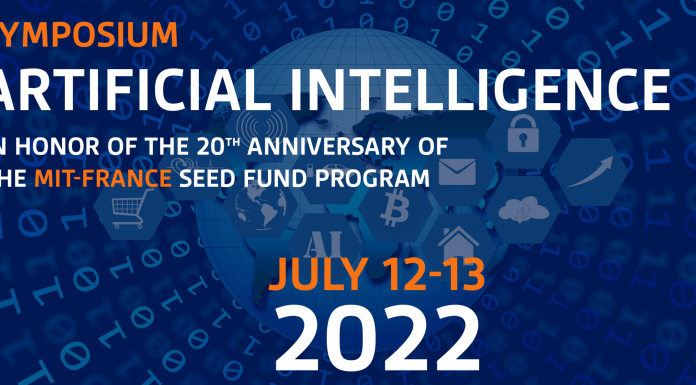
Event: A Symposium on AI is organized on July 12 and 13 for the 20th anniversary of the MIT-France Fund

Focus on the UJM and University of Ottawa project: "Towards a Franco-Canadian approach to the regulation of artificial intelligence