

CNRS

The Centre National de la Recherche Scientifique, more commonly known by the acronym CNRS, stands as a central pillar of scientific research in France and internationally. Founded in 1939, this public organization operates under the responsibility of the Ministry of Higher Education, Research and Innovation. The CNRS is renowned for its significant contribution to the advancement of scientific research, particularly in the fields of exact, human, and social sciences.
Read more of the profile History updated on 11 July 2025
The CNRS is distinguished by its vast range of scientific disciplines. It is involved in research projects ranging from mathematics to physics, including the human and social sciences. Its expertise is particularly notable in the field of mathematics, where it is recognized worldwide. The CNRS is also a key player in technological innovation, notably through research in artificial intelligence (AI) and digital sciences.
The CNRS plays a crucial role in oncology research, ranking second worldwide in terms of patents filed in this field, just behind Inserm. This position reflects the quality of its research and its ability to transform scientific discoveries into concrete innovations.
Recent Contributions and Notable ProjectsAmong the recent contributions of the CNRS is its involvement in the PEPR (Priority Research and Equipment Program) for Artificial Intelligence, which aims to strengthen French research in AI. This program, with a budget of 73 million euros, is co-led with the CEA and Inria, focusing on strategic themes such as frugal AI, trusted AI, and the mathematics of deep learning.
The CNRS is also participating in large-scale initiatives such as the AI Factory France project, which is part of the network of AI factories supported by the EuroHPC initiative. This project aims to unite AI players in France around innovative projects, leveraging high-performance computing infrastructures.
Position in the Technological EcosystemThe CNRS is a driving force of scientific innovation in France and Europe, positioned at the heart of international collaborations and interdisciplinary initiatives. It is associated with numerous laboratories and research institutes, such as the Institut de Recherche en Informatique de Toulouse (IRIT) and the Laboratoire des sciences du numérique de Nantes (LS2N), thereby strengthening its network and influence in the global scientific landscape.
Moreover, the CNRS is involved in collaborative projects with the private sector, illustrating its role as a catalyst between academic research and industry. Successful collaborations, such as those with companies like Microsoft in the context of the research and excellence center in generative AI dedicated to pedagogy, highlight its commitment to promoting responsible and ethical innovation.
Recent Developments and NewsThe CNRS recently launched a national citizen consultation on the role of mathematics in society, an initiative aimed at understanding and overcoming barriers to equal access to this essential discipline. This consultation is part of an unprecedented participatory approach, reflecting the CNRS's commitment to directly involving the public and adapting its research to societal needs.
Furthermore, the CNRS is a key partner in organizing the "Choose CNRS" program, which aims to attract international researchers at risk so that they can continue their work in France. This initiative is part of a broader context of enhancing Europe's attractiveness for researchers, supported by significant investments from the European Union and the French government.
In conclusion, the CNRS continues to play a central role in scientific and technological development, both nationally and internationally. Its involvement in innovative projects and its ability to mobilize resources for research make it an indispensable player in the global scientific ecosystem.
Le Centre national de la recherche scientifique, plus connu sous le sigle CNRS, est le plus grand organisme public français de recherche scientifique.
Related articles
126 in total
PCAIDE 2026: The Paris Conference on AI Ethics Returns on June 11-12 at Mines Paris

Hugging Face Introduces Reachy Mini: A New Milestone in the Democratization of AI Robotics

PCAIDE 2025: The Paris Conference on AI Ethics Returns on June 16-17 at the Sorbonne
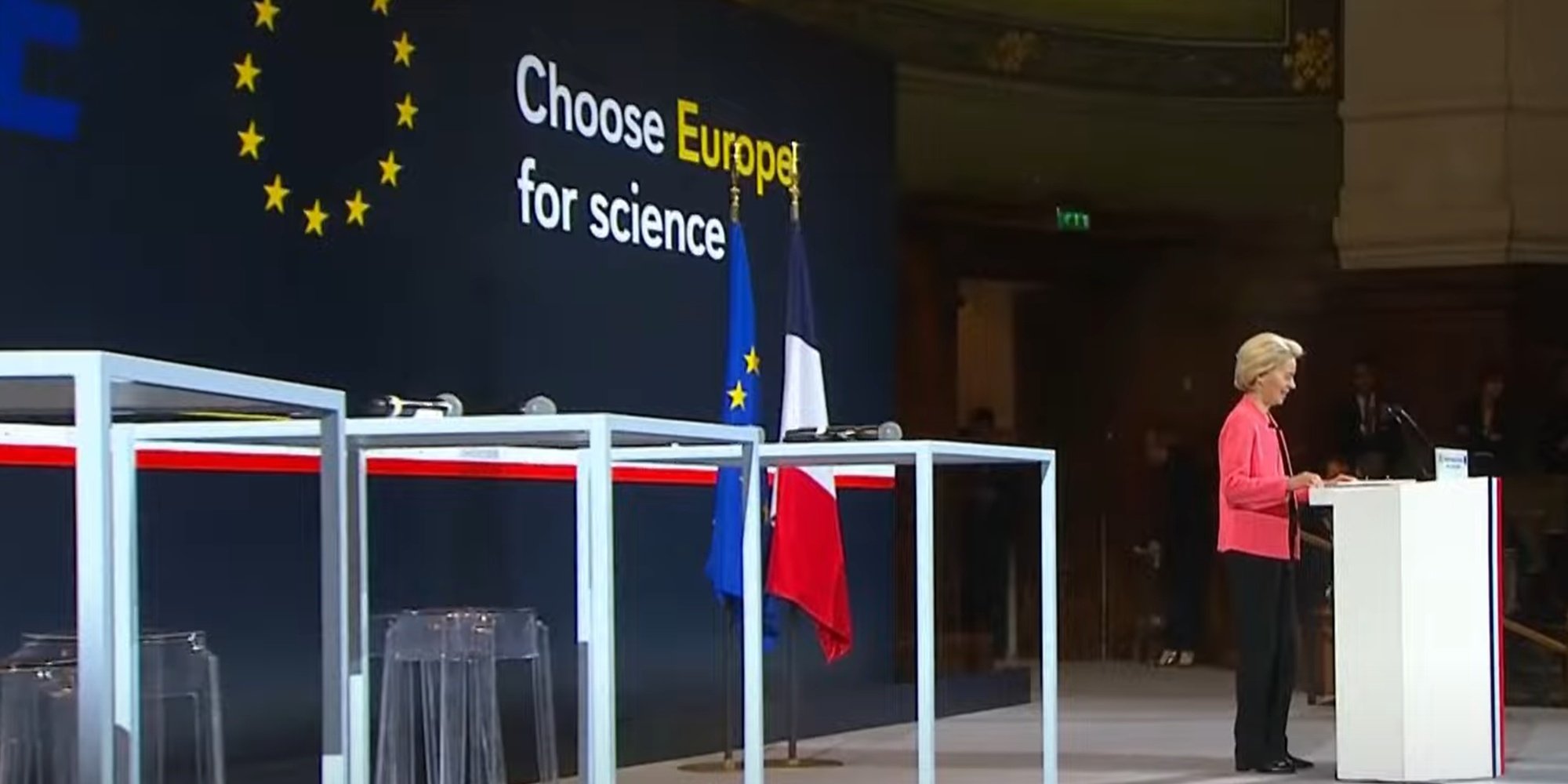
The EU Invests 600 Million Euros to Attract Top Talent
Paris-Saclay SPRING invites innovation leaders on May 20, 2025, at École Polytechnique

Official Launch of the AI Cluster '3IA Côte d’Azur 2030'

EuroHPC selects six new sites, including one in France, to expand the AI Factories network

AI and NLP: EuroBert, the Multilingual Encoder Serving European Languages

CNRS invites you to participate in its national citizen consultation on the role of mathematics in society

IONIS Education Group Launches a Research and Excellence Center in Generative AI Dedicated to Pedagogy and Education

Launch of Siquance, a CEA Leti and CNRS start-up dedicated to quantum computing