

Google Research
Google Research presents itself as a leading entity in the field of artificial intelligence and new technologies, playing a major role in the research and development of innovative solutions. As an integral part of Google's technological ecosystem, Google Research works closely with other divisions such as DeepMind to drive innovation across various sectors. This research unit focuses on a wide range of projects, from robotics to meteorology, health, and multimedia content generation.
Read more of the profile History updated on 12 July 2025
Google Research excels in creating advanced natural language models, as evidenced by the development of Gemini, a multimodal model powering BARD, Google's response to ChatGPT. This model comes in several versions, including Gemini Ultra, which surpasses competitors like GPT-4 on numerous academic benchmarks. The success of these models demonstrates Google Research's commitment to pushing the boundaries of AI to deliver high-performing and adaptable solutions.
In the field of robotics, Google Research has collaborated with DeepMind to develop RT-2, a vision-language-action (VLA) model that enables robots to interpret and execute complex actions. This model significantly improves robots' ability to understand their environment and respond to various user commands, showcasing enhanced generalization capabilities.
Recent Contributions and Notable ProjectsAmong recent contributions, Google Research has collaborated in creating MetNet-3, a neural weather model that offers accurate precipitation forecasts up to 24 hours in advance. Integrated into Google products such as the Pixel Weather app, MetNet-3 uses direct observations to provide detailed forecasts, surpassing traditional physics-based methods.
In terms of content generation, Google Research has been involved in the development of Lumiere and W.A.L.T, video generation models that use diffusion and transformer architectures to produce realistic videos from text or still images. These models illustrate Google Research's ability to innovate in the field of multimedia content creation.
Position in the Technological EcosystemGoogle Research holds a central position within the global technological ecosystem, frequently partnering with research institutions, tech companies, and health organizations to advance AI research. Its commitment to open source, as demonstrated by the release of models such as SynthID and TF-GNN, shows a willingness to share its technological advancements to encourage collaborative innovation.
Recent Developments and NewsIn collaboration with the Institut Curie, Google Research launched a project aimed at using AI to improve the diagnosis and treatment of female cancers. This partnership relies on the analysis of medical data to identify new biomarkers, thus contributing to the fight against serious diseases.
Furthermore, the open sourcing of SynthID, a tool for detecting AI-generated content, reflects Google Research's commitment to promoting responsible AI. This tool integrates an imperceptible watermark into generated content, thus facilitating traceability and combating misinformation.
In conclusion, Google Research continues to position itself at the forefront of technological innovation, developing solutions that not only push the boundaries of artificial intelligence but also address complex global challenges. Through its advanced research and strategic collaborations, Google Research remains a key player in the digital and technological transformation of our era.
Related articles
11 in total
Machine unlearning: Google Research validates an audit test, but not yet on LLMs
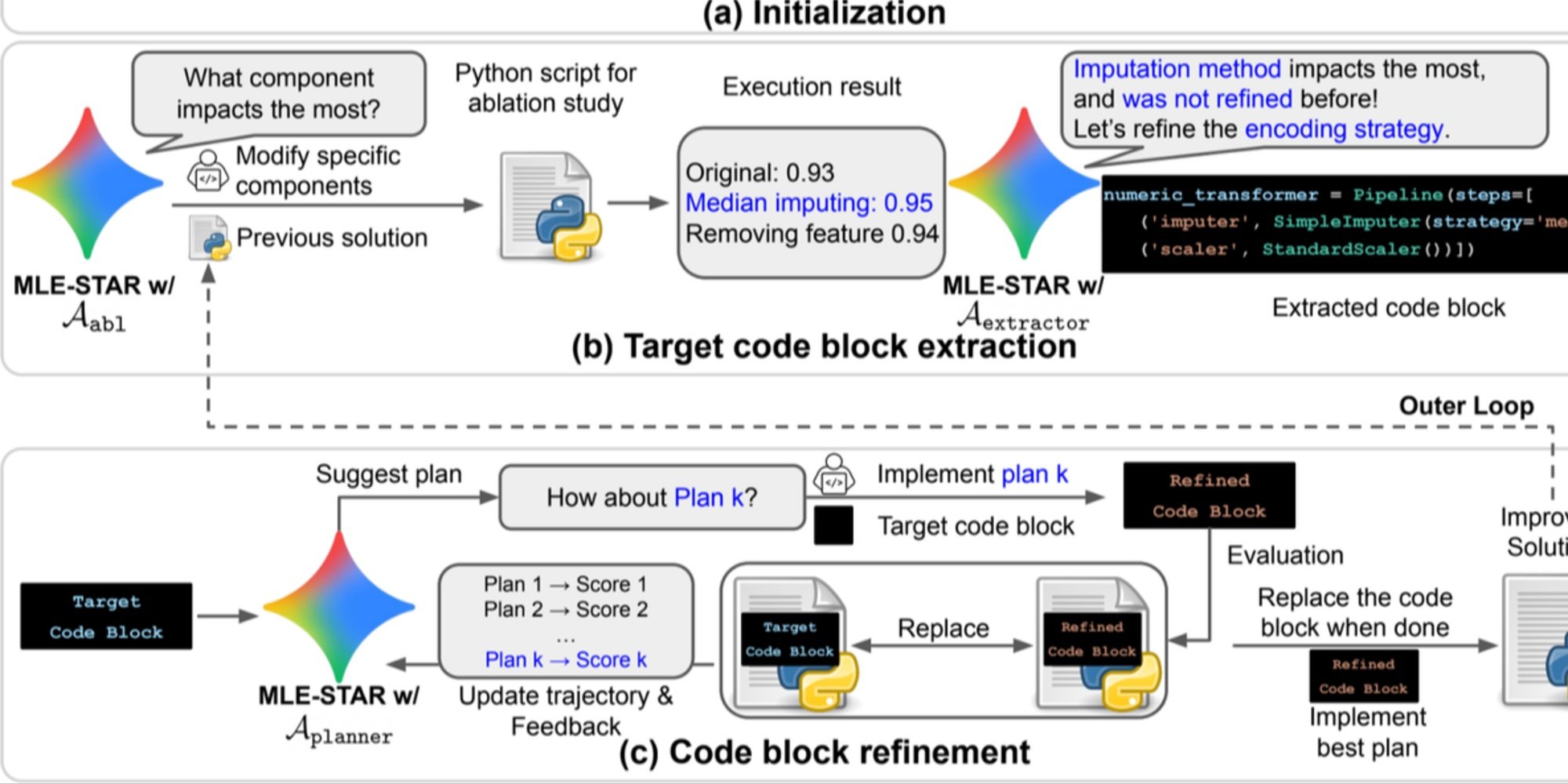
Google Introduces MLE-STAR: A New Approach for Machine Learning Engineering

New Partnership between Institut Curie and Google
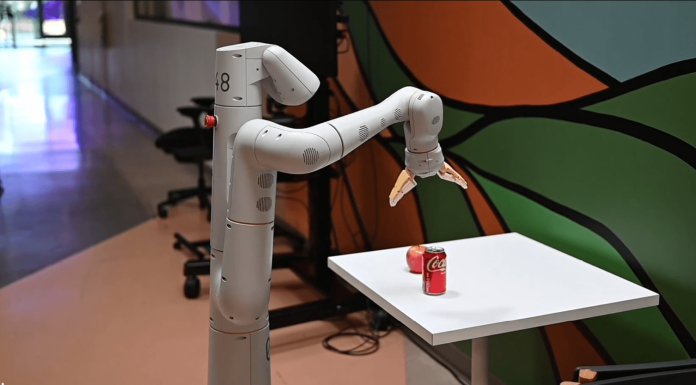
Google Research introduces Code as Policies (CaP), a new code generation tool

The Wordcraft Writers Workshop evaluates Wordcraft, Google's creative writing tool

Predicting protein function using deep learning

AI and neuroscience: discover the winners of the Simons Foundation prize, Guillaume Lajoie and Amy Osborn
InstaDeep raises $100 million for decision support AI
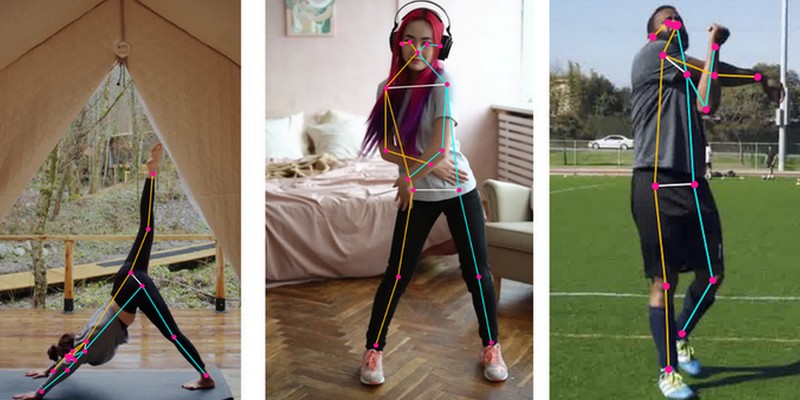
MoveNet by TensorFlow: the machine learning model analyzing the human body posture

Artificial intelligence: can facial expression recognition be universal?