


TLDR : ESSEC's Grand Prix AI for Responsible Leadership promotes ethical AI use. Winners include Vinci's railway maintenance project and Logbook's educational tool.
Table of contents
Launched by ESSEC Business School with its historical partner Accenture France and with the support of Saur, Optic 2000, Bpifrance, Medef and Hub France IA, the Grand Prix ESSEC AI for Responsible Leadership aims to promote an ethical and responsible use of AI in the professional world. Last Wednesday, the four winning projects of the 1st edition were honored during a ceremony in Paris.
This Grand Prix is part of the "AI for Responsible Leadership" initiative launched last January on the occasion of the tenth anniversary of the ESSEC Accenture "Strategic Business Analytics" Chair, supported by Optic 2000 and Saur. Its objective is to equip today's and tomorrow's leaders with the necessary tools to tackle social, economic, and environmental challenges, while ensuring sustainable growth and fostering the emergence of an ecosystem of actors committed to a more conscious and equitable use of AI.
This first edition was dedicated to the memory of Benoit Jaubert, General Director of Optic 2000, ESSEC alumnus and long-time committed partner, who passed away on May 28th. The award ceremony brought together nearly 200 participants: leaders, students, teacher-researchers...
After a rigorous selection process, the jury selected four applications.
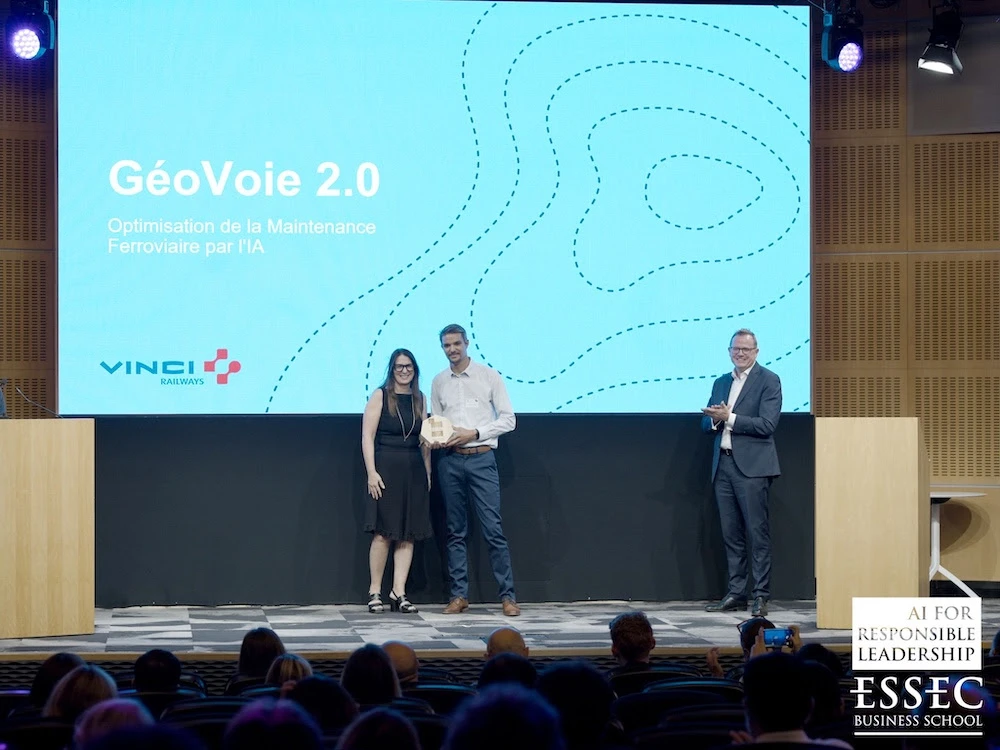
The Gold prize was awarded to Vinci for its project Géovoie. Praised by the jury for its maturity and strong deployment potential, this innovative initiative aims to optimize the maintenance of railway tracks. This project contributes to strengthening the reliability of railway infrastructure, reducing the hardship of interventions, and promoting a more ecological process, thus embodying a sustainable and innovative vision for the railway sector.
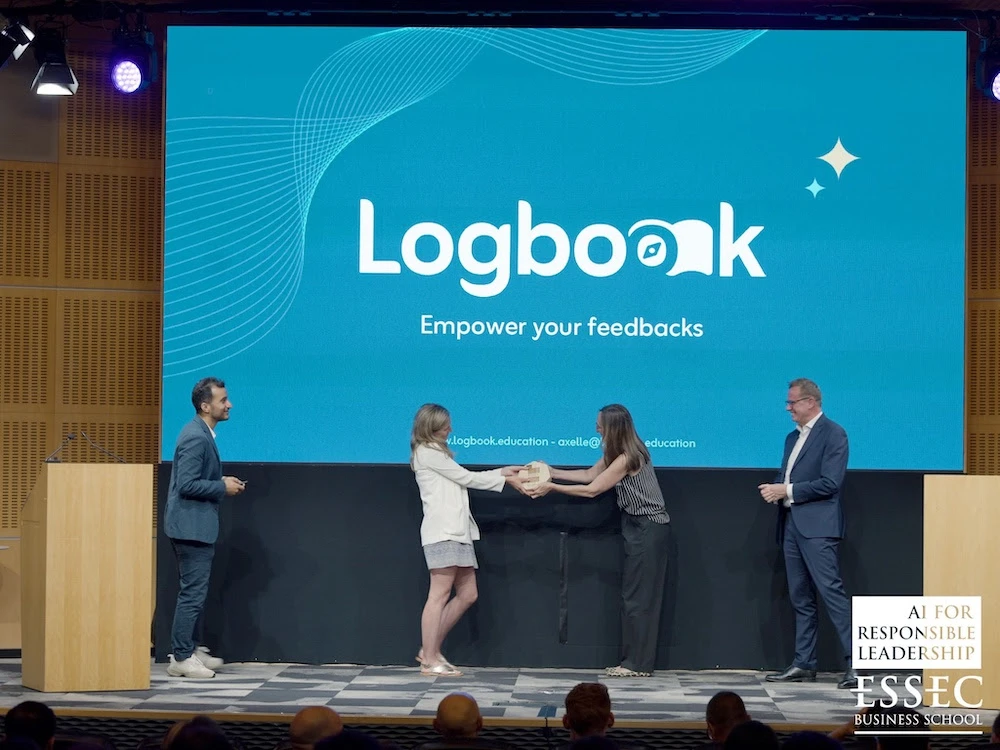
The Silver prize was awarded to Logbook, a Parisian edtech startup.
Logbook is an intelligent logbook that allows teachers to record their oral feedback during corrections. Thanks to AI, these feedbacks are structured to track students' progress individually. The audio format strengthens the student-teacher relationship.
The jury was particularly sensitive to the theme of education, aware of the importance of better supporting teachers and combating school dropout. By facilitating management and reducing the workload of educational teams, Logbook appears to them as a strategic tool to improve teaching and support the directors of educational structures.
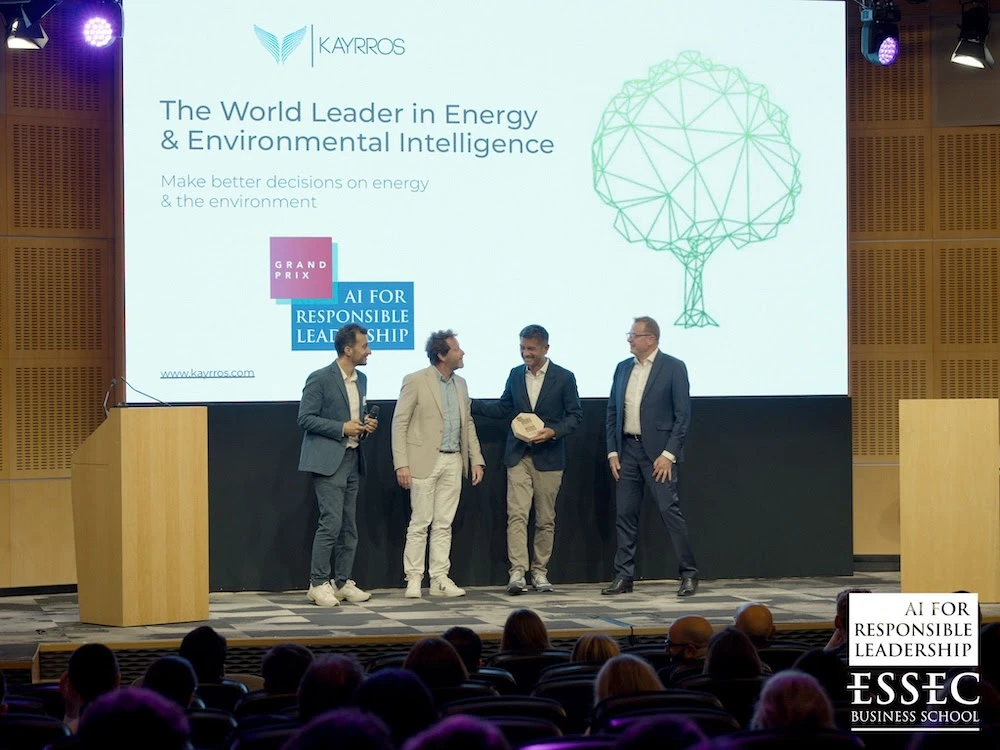
The Bronze prize rewarded Kayrros, a climate tech startup created in 2016.
It uses satellite images (notably from the Copernicus program), public data and proprietary algorithms to detect methane leaks, a powerful greenhouse gas, track crude oil stocks, and estimate the volumes of carbon sequestered in vegetation. These varied and concrete use cases greatly appealed to the jury members, who recognized Kayrros as a key player in sustainability for decision-makers.
A special jury prize was awarded to AI Energy Score, developed by the Franco-American unicorn Hugging Face, in collaboration with Salesforce and Carnegie Mellon University (Pennsylvania).
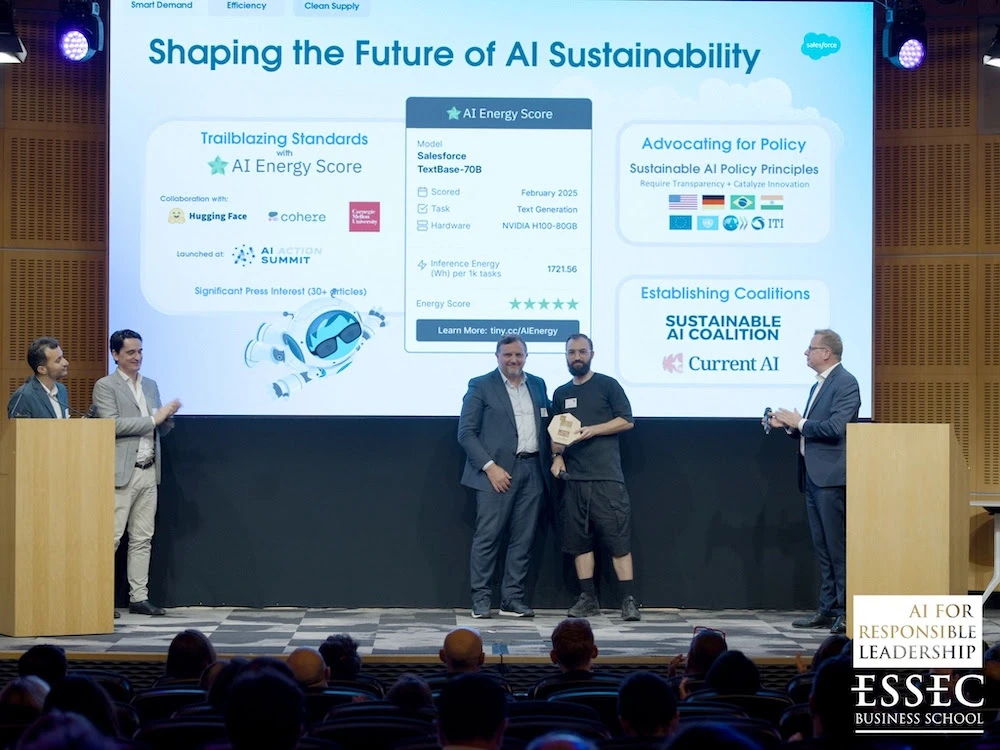
This unique comparative analysis tool allows AI developers and users to evaluate, identify, and compare the energy consumption of AI models.