
Belgium: KU Leuven researchers use retinal scans to predict myocardial infarction
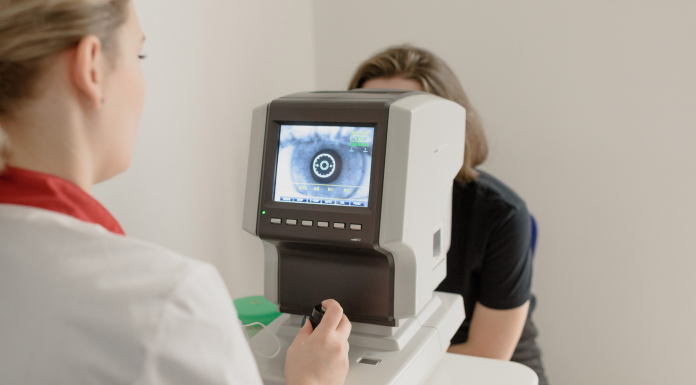
The University of Leuven in Belgium, KU Leuven, reported in a statement that one of its research teams has successfully predicted the risk of heart at...
La France s’est positionnée très tôt comme un acteur majeur de l’intelligence artificielle (IA) en Europe. Dès 2018, la Stratégie nationale pour l’IA, impulsée par le rapport Villani, a fixé un cap ambitieux : faire de la France un pôle de recherche et d’innovation de rang mondial dans le domaine.
Portée par un écosystème dense mêlant laboratoires publics d’excellence, start-ups, grands groupes industriels et institutions, cette stratégie repose sur quatre piliers :
Le renforcement de la recherche (création d'instituts 3IA, financement de thèses, etc.)
Le soutien aux talents et à la formation (masters spécialisés, écoles d’ingénieurs, etc.)
Le développement d’une IA de confiance, éthique et souveraine
L’accélération de l’adoption par les entreprises, en particulier les PME
La France bénéficie d’un tissu unique de recherche fondamentale en IA :
L’Inria, le CNRS, le CEA ou encore les grandes écoles comme l’ENS, Polytechnique et Télécom Paris sont au cœur de la production scientifique.
Des initiatives comme Hi! PARIS, MIAI Grenoble, PRAIRIE Paris, ou ANITI Toulouse incarnent cette excellence académique.
Parallèlement, l'écosystème start-up est en pleine expansion, avec des pépites comme Mistral AI, Hugging Face (fondée par des Français), Heuritech, ou encore LightOn, qui explorent des usages variés : NLP, edge AI, fashion tech, IA frugale, etc.
La France se distingue par sa volonté de défendre une troisième voie entre la vision américaine (dominée par les GAFAM) et l’approche chinoise (centrée sur la surveillance de masse). Cette vision repose sur :
La régulation par le droit : participation active à la construction de l’IA Act européen
Le soutien à l’open source et à la souveraineté technologique
La promotion d’une IA éthique, centrée sur les valeurs démocratiques, la transparence et l’inclusion
Pays
490 articles liés à cet acteur
The University of Leuven in Belgium, KU Leuven, reported in a statement that one of its research teams has successfully predicted the risk of heart at...
Last December, the Burgundy-Franche-Comté region made official the creation this year of the Regional Digital and Artificial Intelligence Agency: ARNI...
One of the most studied aspects of magnetic confinement fusion is the turbulence of the edge plasma, which is critical to the performance and operatio...
In France, banking and insurance supervision is carried out by the Autorité de contrôle prudentiel et de résolution (ACPR). Created in 2010, following...
The interministerial service of the Archives of France (SIAF), in partnership with the Paris School of Economics, is launching the Socface research pr...
50 years ago, Alain Colmerauer laid the foundations of Prolog, the first computer language for "logic programming". Like LISP, it was to become one of...
The DEEL project aims to develop an interpretable, robust, secure and certifiable artificial intelligence (AI) applied to critical systems in the aero...
The National Conferenceon Artificial Intelligence(CNIA), supported by the AFIA Board of Directors, is intended for the entire AI research community. I...
Sanofi and Exscientia have been collaborating since 2016, they recently signed a license and research collaboration agreement to develop up to 15 nove...
In early January 2022, Pascal Faure, Director General of INPI and Ms. Rena Lee, his counterpart at the Intellectual Property Office of Singapore (IPOS...
Artificial Intelligence is booming and the technologies it has developed are in constant evolution. The ethical problems that can arise from their use...
On January 10, 2022, the RATP group announced the launch of the 3rd edition of its start-up gas pedal dedicated to new mobility and better urban livin...