DeepMind, now a subsidiary of Google, is a major player in the field of artificial intelligence. Founded in 2010 by Demis Hassabis, Shane Legg, and Mustafa Suleyman, it was acquired by Google in 2015. Since then, DeepMind has distinguished itself through significant advances in AI development, notably through its innovations in reinforcement learning and deep neural networks.
Areas of Expertise and Key Achievements
DeepMind is particularly recognized for its achievements in the field of reinforcement learning, an AI technique that allows systems to improve through trial and error. This approach notably led to the development of AlphaGo, a program that defeated the world champion of Go, a game traditionally considered one of the most complex. AlphaGo marked a turning point in the field of AI, proving the ability of machines to surpass human intelligence in specialized areas.
DeepMind has also made significant advances with AlphaFold, a technology that uses AI to predict the three-dimensional structure of proteins from their amino acid sequences. This innovation has considerable implications for biology and medicine, enabling better understanding of diseases and the development of new therapies. In 2024, AlphaFold was awarded the Nobel Prize in Chemistry, highlighting the scientific and societal impact of this technology.
Recent Contributions and Notable Projects
DeepMind continues to explore new frontiers with projects like AlphaChip, which is revolutionizing electronic chip design. AlphaChip uses reinforcement learning to optimize the layout of chip components, significantly reducing design time. This technology is already used in Google's tensor processing units (TPUs) and by other companies like MediaTek to enhance chip performance and energy efficiency.
Another noteworthy project is V2A, a technology that generates audio from video, enabling creative and practical applications in the film industry and beyond. V2A integrates with video generation models to produce synchronized soundtracks, thus expanding the possibilities of audiovisual creation.
Position in the Technological Ecosystem
DeepMind positions itself as a leader in the development of responsible and safe artificial intelligence. It has participated in initiatives such as the AI Safety Summit in Seoul, where it committed to adopting safety measures for AI, emphasizing its active role in promoting ethical and secure standards in the development of advanced technologies. Furthermore, DeepMind collaborates with academic institutions and companies to apply its technologies to fundamental research projects, such as the creation of a virtual rat for neuroscience studies.
Recent Developments and News
Recently, DeepMind launched Gemini, a multimodal model integrated into several Google products, including the search engine and Android 15. Gemini is designed to enhance user interactions by providing contextual and personalized responses. This model illustrates DeepMind's commitment to making AI more accessible and useful in everyday life.
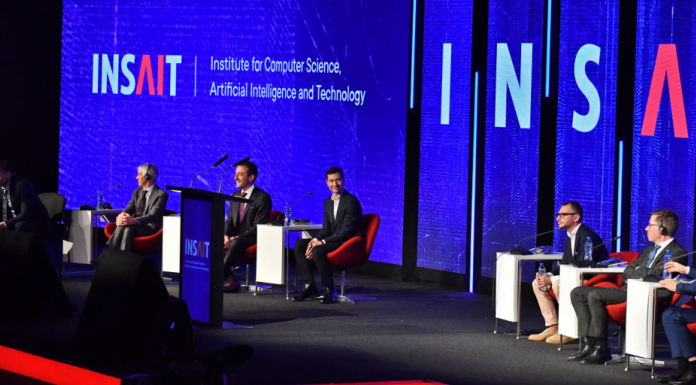
Moreover, DeepMind actively participates in international conferences and events, sharing its advancements and collaborating with other major players in the technology industry. At the dotAI conference in Paris, DeepMind presented its latest innovations alongside other leaders like OpenAI and Mistral AI, highlighting its central role in discussions about the future of AI.
In conclusion, DeepMind continues to push the boundaries of artificial intelligence, with projects that not only demonstrate its capacity for innovation but also align with an ethical and responsible vision of technological development. With its pioneering contributions, DeepMind is actively shaping the AI landscape, influencing both practical applications and discussions on the governance of this transformative technology.
DeepMind Technologies est une entreprise anglaise spécialisée dans l'intelligence artificielle. Elle a été fondée en 2010 par Demis Hassabis, Mustafa Suleyman et Shane Legg. Le 26 janvier 2014, elle a été rachetée par Google pour plus de 628 millions de dollars.
L'entreprise s'est imposée comme l'une des plus connues du domaine grâce à de nombreuses publications et, entre autres, à son programme AlphaGo. Ce dernier a été développé à partir de l'algorithme de Monte-Carlo et des réseaux de neurones. Depuis 2015, AlphaGo est parvenu à battre plusieurs champions de go avant de remporter une victoire définitive sur le n°1 mondial en 2017.
DeepMind travaille également sur une forme de calcul baptisée la Machine de Turing neuronal. Mais également sur les raisonnements rationnel et prédictif, ainsi que sur les méthodes d'apprentissage de type deep learning et deep reinforcement learning.
En juillet 2017, DeepMind a inauguré son premier centre de R&D en partenariat avec l'université d'Alberta.