A prestigious academic institution, the Collège de France plays a central role in the French scientific and intellectual landscape. Founded in the 16th century, it is renowned for its interdisciplinary approach and its mission to disseminate knowledge to the widest audience. Unlike other institutions, the Collège de France does not award degrees but offers free courses open to all, taught by professors elected from among the world's leading experts in their respective fields.
Areas of Expertise and Key Achievements
The Collège de France is known for its wide range of disciplines, covering the humanities, social sciences, natural sciences, and formal sciences. Iconic figures such as Pierre Corvol, a physician and biology researcher, and Gérard Berry, a computer scientist specializing in algorithms, have contributed to its renown. Berry, for instance, holds the chair of "Algorithms, Machines, and Language" and has participated in numerous discussions on aircraft automation and contemporary technological issues.
Among the notable achievements are the works of Stéphane Mallat, a mathematician and inventor of the JPEG 2000 compression standard, who is interested in deep neural network learning. Mallat teaches at the Collège de France as part of the "Data Sciences" chair, exploring automatic algorithms and the geometry of high-dimensional data.
Recent Contributions and Notable Projects
The Collège de France is actively involved in the development of artificial intelligence (AI) and its applications. Philippe Aghion, an economist at the Collège de France, has discussed the potential impact of AI on economic growth and the need for appropriate governance to maximize its positive effects. Aghion also co-chaired the Commission on Artificial Intelligence in France, which recently published a report with 25 recommendations to strengthen France's position in the AI field.
In 2023, Benoît Sagot was appointed to the "Computer Science and Digital Sciences" chair, focusing on natural language processing (NLP). His research focuses on linguistic variability, particularly for French, and the design of language models, thus contributing to the democratization of generative AI technologies.
Position in the Technological Ecosystem
The Collège de France stands out for its ability to integrate technological advancements within its interdisciplinary research. Through collaborations with institutions such as Inria and Université PSL, it participates in cutting-edge projects in artificial intelligence and data sciences. Professors at the Collège, such as Xavier Leroy, a pioneer in program verification and computer security, are key players in the development of safe and innovative technologies.
The role of the Collège de France in the technological ecosystem is also marked by its contribution to training the scientific and technical elite, offering high-level courses on subjects ranging from quantum physics to behavioral economics.
Recent Developments and News
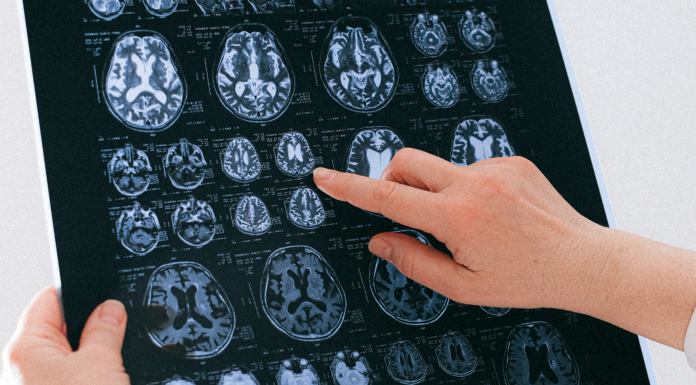
Recently, the Collège de France has been at the heart of groundbreaking research in neuroscience, notably on deep brain stimulation to restore consciousness, in collaboration with institutions like the CEA and Inserm. These works pave the way for potential clinical trials to treat chronic consciousness disorders.
In terms of events, the Collège de France continues to host conferences and debates on current scientific and technological issues. For example, the "Conversations Avenir" conference organized in partnership with BNP Paribas allowed for discussions on the impacts of AI on society and the economy.
In conclusion, the Collège de France remains a pillar of research and education in France, actively contributing to the advancement of knowledge and the integration of new technologies into society. Through its commitment to ambitious research projects and its openness to the public, it continues to influence the scientific and technological debate on both national and international scales.