Germany, often considered the economic powerhouse of Europe, stands out for its strong and ongoing commitment to technological innovation and artificial intelligence. As a European leader in the field of supercomputing and AI, Germany plays a central role in the continent's technological development.
General Overview
As one of the largest economies in the world, Germany has always relied on industry and innovation to maintain its competitiveness. The country benefits from a robust technological ecosystem, supported by world-renowned research institutions and leading companies in various sectors such as automotive, engineering, and information technology. The German government, in collaboration with the private sector and academic institutions, is investing heavily in the development of artificial intelligence and high-performance computing.
Areas of Expertise and Key Achievements
Germany is particularly distinguished in the field of high-performance computing (HPC). The High-Performance Computing Center of the University of Stuttgart (HLRS) recently inaugurated Hunter, a state-of-the-art supercomputer designed by Hewlett Packard Enterprise. With a maximum theoretical computing capacity of 48.1 petaflops, Hunter nearly doubles the power of its predecessor while significantly reducing energy consumption thanks to an innovative architecture integrating AMD's accelerated processing units.
In terms of artificial intelligence, Germany is also at the forefront, with companies like Helsing, specializing in AI-based defense technologies. Helsing works closely with the government and industrial partners to enhance military systems' capabilities, as demonstrated by their project to modernize the Luftwaffe's Eurofighters with Saab.
Recent Contributions and Notable Projects
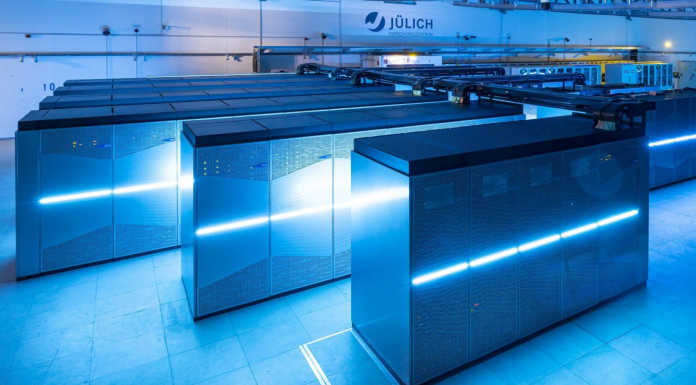
Germany continues to strengthen its position in the European technological ecosystem. The country hosts one of Europe's first exascale supercomputers, JUPITER, as part of the AI Factory initiative. This project supports the development and deployment of large-scale AI solutions, an effort that underscores Germany's commitment to collaborative European technological development.
Moreover, the country has inaugurated IBM's first quantum datacenter in Europe, located in Ehningen. This datacenter houses quantum computers based on IBM's advanced processors, allowing dozens of European organizations to explore the potential applications of quantum computing in various sectors, from material science to high-energy physics.
Position in the Technological Ecosystem
Germany is a key player in the European and global technological ecosystem. With access to high-performance computing resources and cutting-edge research infrastructures, the country attracts numerous international collaboration projects. Germany remains proactive in adopting policies that foster technological innovation while ensuring compliance with strict European data security and privacy regulations.
Recent Developments and News
Recently, Germany has strengthened its commitment to sustainability in the field of intensive computing. Hunter, the new HLRS supercomputer, integrates a fanless liquid cooling system to maximize energy efficiency, aligning with a broader strategy to make intensive computing more environmentally friendly.
In parallel, Germany is asserting itself in the field of generative AI, with companies investing heavily in this technology. A study conducted by ABBYY reveals that the average AI investment in Germany surpasses that of many other countries, illustrating the German industry's desire to remain at the forefront of technological innovation.
In conclusion, Germany positions itself as an undisputed leader in the field of technology in Europe. Through its strategic investments and dynamic ecosystem, the country continues to play a crucial role in global technological evolution, emphasizing sustainable innovation and international collaboration.