

TLDR : The start-up Sapient Intelligence is developing an innovative approach to general AI, based on a hierarchical reasoning model (HRM). This model stands out for its performance on complex tasks and could find applications in fields such as medical diagnosis or climate forecasting.
Table of contents
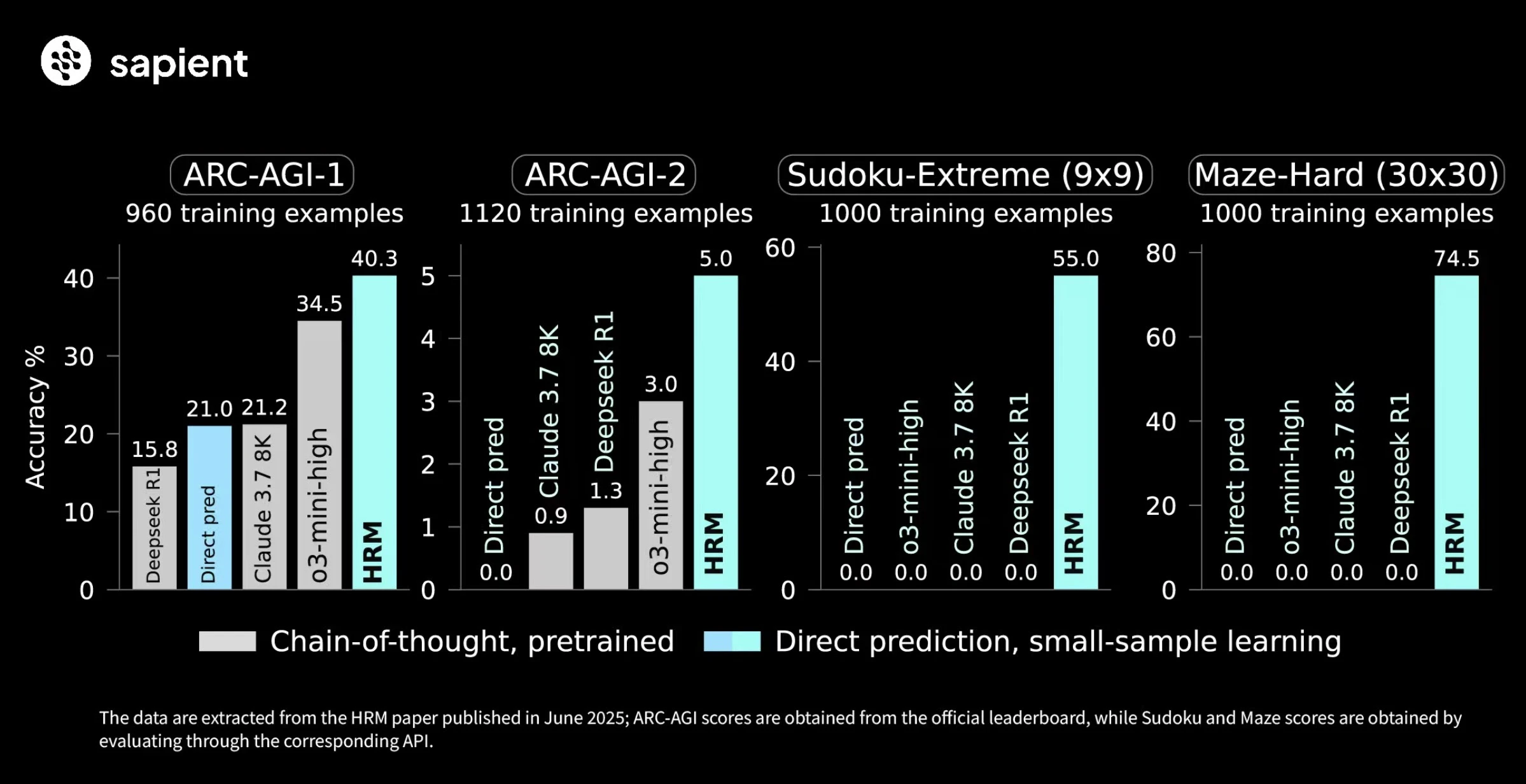
The young Singaporean start-up Sapient Intelligence has set itself the goal of achieving what many consider the Holy Grail of AI: AGI, or Artificial General Intelligence. To achieve this, it is betting on a radically innovative architecture: the Hierarchical Reasoning Model (HRM). Its model outperforms much larger LLMs like OpenAI o3-mini, Claude 3.7 8K, or DeepSeek R1 in notoriously difficult reasoning tasks, with only 27 million parameters and about 1,000 training examples, and this without pre-training.
Sapient Intelligence's team includes former members of Google DeepMind, DeepSeek, Anthropic, and xAI, as well as researchers from leading universities. The architecture they have developed, inspired by the way the human brain processes information, is based on a hierarchical structure and multi-scale temporal processing.
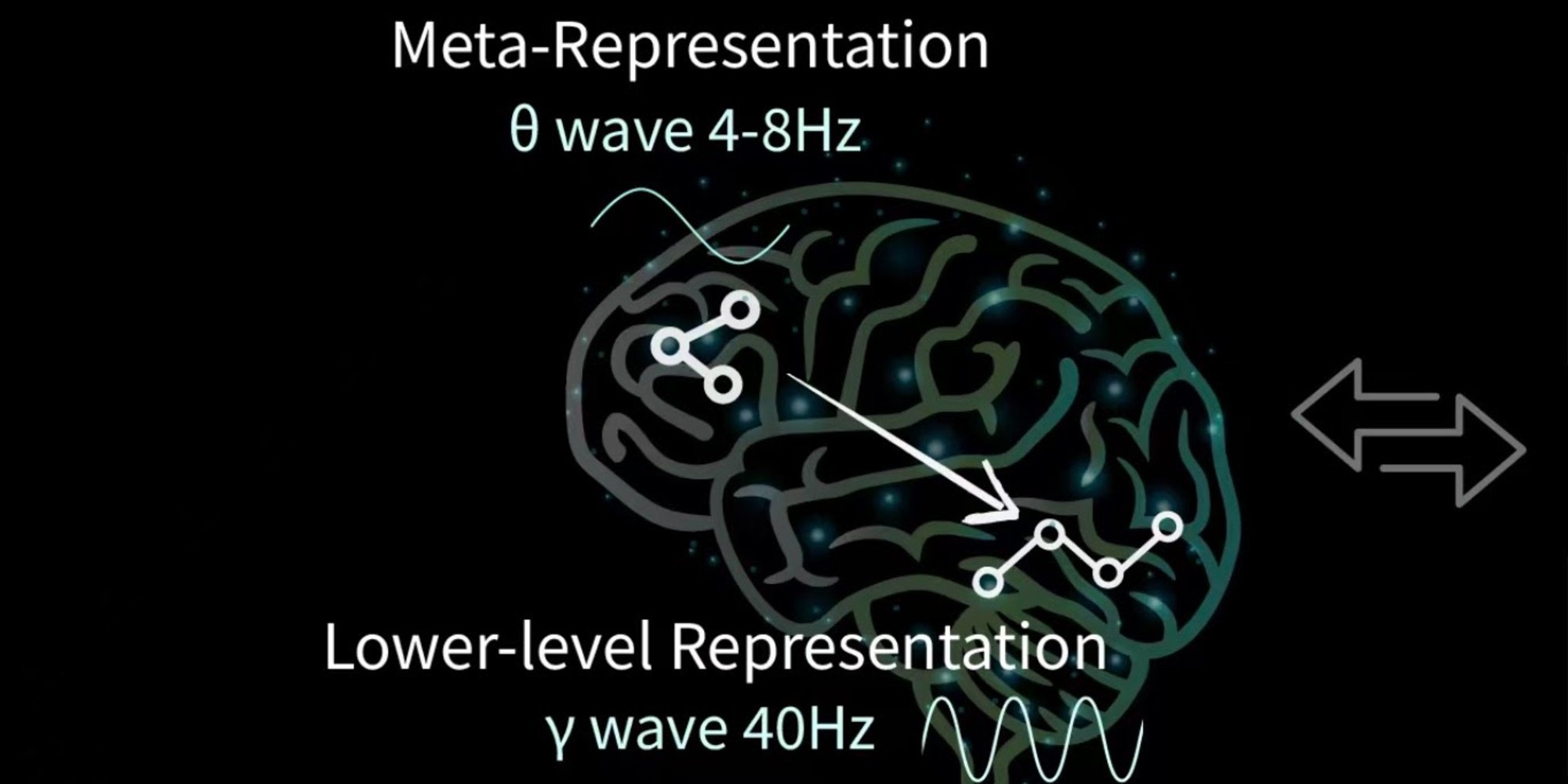
An Architecture Inspired by Biology
Unlike large language models (LLM), which rely mainly on Chain-of-Thought prompting (CoT), a method prone to fragile task decompositions, the HRM model introduces a fundamentally different approach.
The model relies on a two-tier hierarchical architecture: a high-level recurrent network manages abstract and slow planning, while a second, low-level one handles fast and detailed execution.
This organization allows it to juggle between fast and intuitive reasoning and slow and deliberate analysis in a single computational pass.
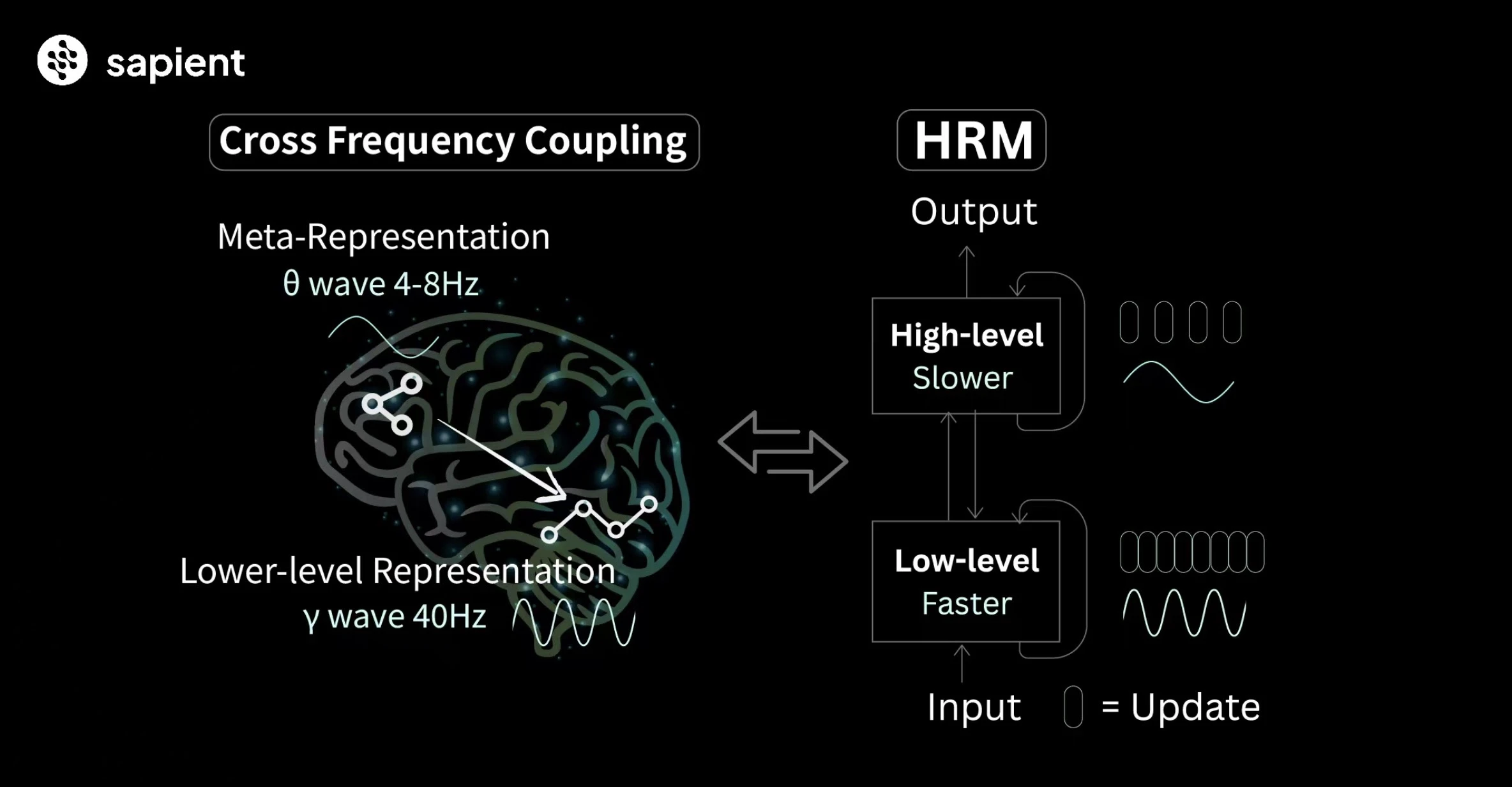
Credit Sapient. HRM features two recurrent networks operating at different time scales to solve complex tasks collaboratively
.
Guan Wang, founder and CEO of Sapient Intelligence, comments:
"AGI is really about giving machines human-level intelligence, and eventually beyond human. CoT allows models to mimic human reasoning by playing the probabilities, and that's just a workaround. At Sapient, we start from scratch with an architecture inspired by the brain, because nature has already spent billions of years perfecting it. Our model thinks and reasons like a person, and doesn't just analyze probabilities to get benchmarks. We believe it will reach, then surpass, human intelligence, and that's when the AGI conversation will become real."
Performance
Despite its modest size, HRM outperforms models like OpenAI o3-mini, Claude 3.7 8K, or DeepSeek R1 in tasks known to be particularly challenging.
It notably achieves 5% on version 2 of ARC-AGI (Abstraction and Reasoning Corpus), one of the most demanding benchmarks for inductive intelligence. In complex Sudoku puzzles and optimal pathfinding in 30x30 mazes, it is the only one to succeed.
What Are the Concrete Uses?
The model's reasoning efficiency and low data dependency open up prospects in areas where large datasets are limited, but where accuracy and interpretability are essential.
The use cases mentioned by Sapient Intelligence include healthcare, where it is being tested to help diagnose rare diseases. For seasonal climate forecasts, the team reports accuracy rates of 97%. Thanks to its computational lightness, HRM can be embedded in robots operating in real-time, dynamic environments.
The source code is available on GitHub at https://github.com/sapientinc/HRM .