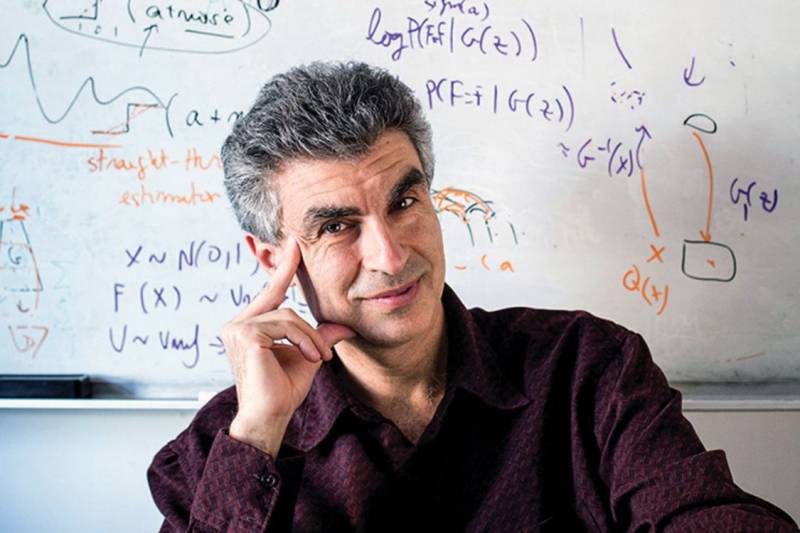
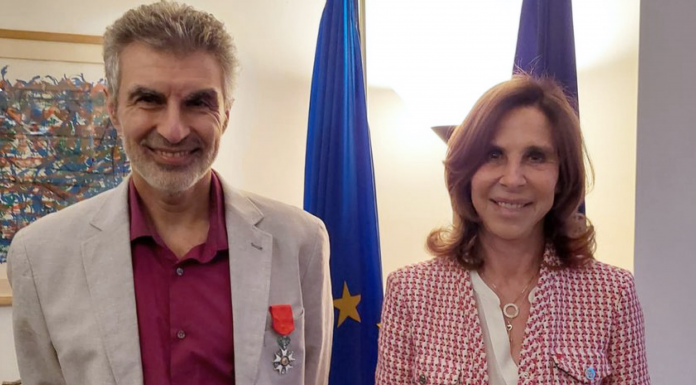
Yann LeCun, born in 1960 near Paris, is an iconic figure in the field of artificial intelligence (AI), particularly in deep learning. A graduate of ESIEE Paris and holding a PhD from the University Pierre-et-Marie-Curie, he is renowned for his significant contributions to the domain of convolutional neural networks (CNN), which have revolutionized computer vision and image recognition. In 1988, he designed the famous LeNet-5 network, used for handwritten character recognition, thus laying the foundation for modern CNNs.
Areas of Expertise and Key Achievements
Yann LeCun is one of the pioneers of deep learning, a technology that enables machines to learn from data. His work on convolutional neural networks has paved the way for significant advancements in object detection, semantic segmentation, and image classification. In 2013, he joined Facebook to lead the FAIR (Facebook Artificial Intelligence Research) lab in New York, and later in Paris, where he focuses on image and video recognition. He currently holds the position of Chief Scientist at Meta (formerly Facebook) while teaching at New York University.
Recent Contributions and Notable Projects
Yann LeCun continues to be at the forefront of AI research. Among his recent contributions is the I-JEPA model, developed by Meta, which aims to predict missing parts of an image or text with greater precision than current generative AI models. Based on his vision, I-JEPA relies on an architecture that overcomes the limitations of current AI systems by learning "world models" in a self-supervised manner, directly from unlabeled data.
Position in the Technological Ecosystem
Yann LeCun is an influential and often polarizing figure in the AI field, due to his advocacy for open source and his opposition to overly strict regulation that could hinder innovation. He is a staunch advocate for open source, believing it is crucial that AI platforms are open and accessible to all. This position distinguishes him from his colleagues Geoffrey Hinton and Yoshua Bengio, with whom he shared the prestigious Turing Award in 2019, often regarded as the "Nobel Prize of Computing."
Recent Developments and News
Yann LeCun is involved in several projects aimed at pushing the boundaries of AI. He serves as a scientific advisor for initiatives such as Kyutai, an open science lab in AI, and supports startups like Nabla, which develops AI solutions for healthcare. Furthermore, he actively participates in debates on the future of AI, advocating for regulation that does not stifle innovation and promoting ethical applications of AI.
In summary, Yann LeCun remains a central figure in artificial intelligence, both through his scientific contributions and his influence on the direction this rapidly evolving field is taking. His optimistic vision and advocacy for open source continue to shape the landscape of AI and machine learning.
À travers ses publications, prises de position et travaux théoriques, LeCun défend une vision ambitieuse de l’IA, fondée sur l’apprentissage auto-supervisé comme pilier de l’intelligence artificielle générale. Très actif sur les réseaux sociaux, il y partage réflexions, critiques et débats sur l’avenir de l’IA.