Meta AI, a division of Meta (formerly Facebook), is a key player in the field of artificial intelligence. Initially founded as Facebook Artificial Intelligence Research (FAIR) in 2013, this entity has established itself as a driving force in the development of advanced AI technologies. Meta AI is at the heart of the company's efforts to integrate artificial intelligence into its products, notably through innovations in conversational assistants, language models, and computer vision technologies.
Areas of Expertise and Key Achievements
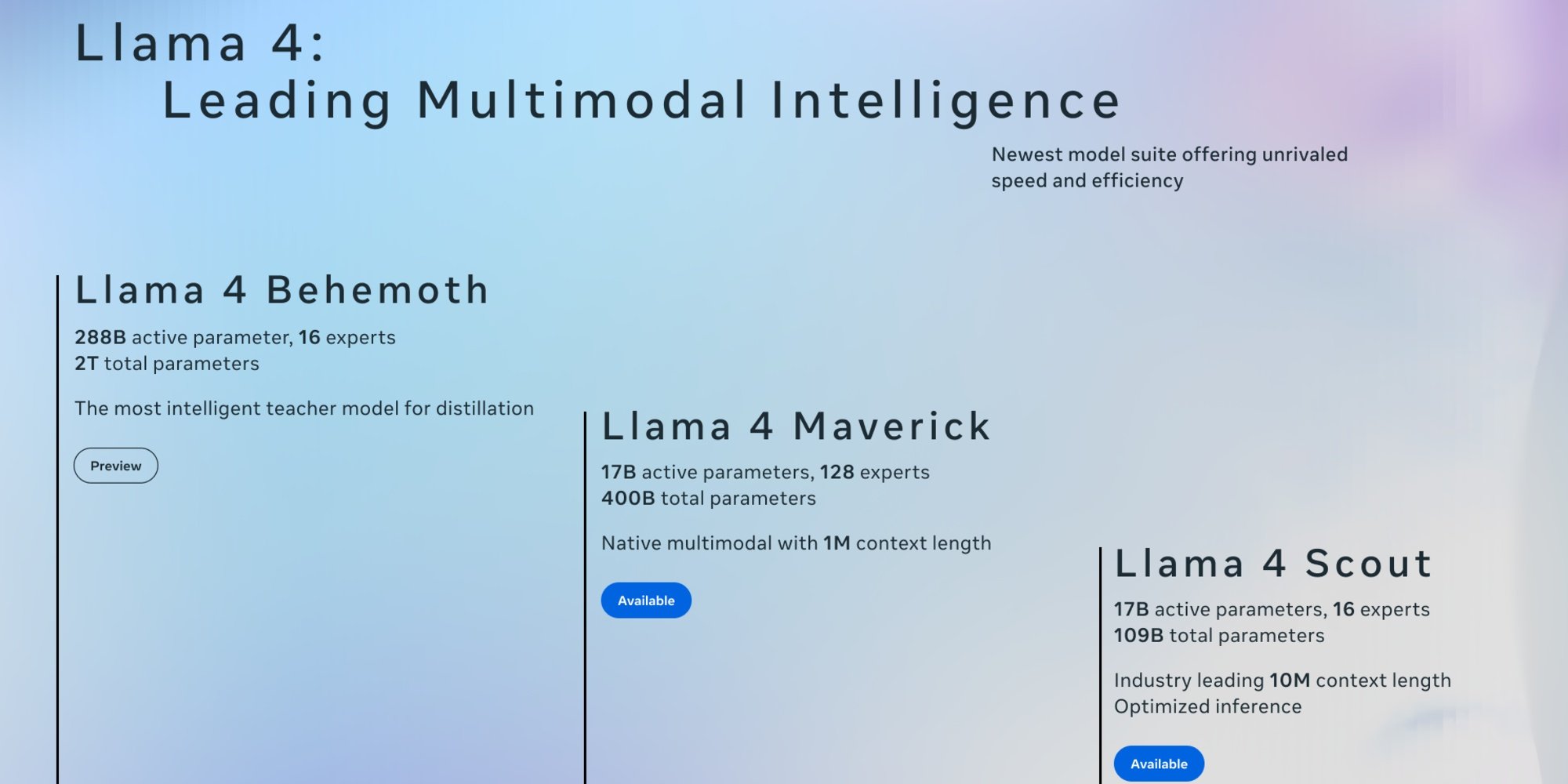
Meta AI is particularly recognized for its contributions to the development of large-scale language models, such as the Llama series. These models, which have achieved impressive performance levels, are used for a variety of tasks ranging from text generation to natural language understanding. Llama 4, for instance, introduces architectures such as Mixture-of-Experts (MoE), enabling increased efficiency and reduced computational costs.
Furthermore, Meta AI has invested in computer vision with advancements such as CoTracker3, a point-tracking model in videos that offers increased accuracy through semi-supervised training methods. This technology is crucial for applications like augmented reality and robotics.
Recent Contributions and Notable Projects
Recently, Meta AI launched Meta AI Studio, a platform that allows users to create their own AI assistants for Instagram, Messenger, and WhatsApp. This project is part of an effort to democratize access to AI, even for those without programming skills. Additionally, the division has worked on multimodal models like Llama 4 Scout and Maverick, capable of processing text, images, and videos.
Another ambitious project is the Waterworth submarine cable, aimed at boosting global AI by improving digital connectivity between continents. This project demonstrates Meta AI's commitment not only to developing innovative AI models but also to investing in the infrastructure necessary to support these technologies on a global scale.
Position in the Technological Ecosystem
In the technological ecosystem, Meta AI positions itself as a leader in the open-source domain, sharing its language models with the global developer community. This approach aims to encourage collaborative innovation and counter the emerging oligopoly in the AI sector. For example, the "Llama Impact Grants" program provides funding for projects using Llama 2 to address major social issues.
Meta AI also stands out for its ability to integrate its innovations directly into Meta's products, such as WhatsApp, Instagram, and Facebook, thus enhancing user engagement through AI-enriched experiences.
Recent Developments and News
In terms of recent developments, Meta AI has launched an AI assistant in Europe, although limited by the strict GDPR regulations. This deployment highlights the challenges the company faces in navigating varied regulatory environments. In parallel, Meta AI has collaborated with Google to develop ML Drift, a local inference technology that improves AI model performance on various platforms.
Finally, Meta AI continues to innovate in the field of augmented and virtual reality. At Meta Connect 2024, advancements were presented in smart glasses and the Quest 3 headset, integrating AI features for an enhanced user experience.
In conclusion, Meta AI positions itself as a major and innovative player in the artificial intelligence landscape, pursuing ambitious projects aimed at transforming digital interactions through advanced and accessible technologies. Its recent contributions and commitment to open source and global infrastructure make it an indispensable pillar of the technology industry.
Autre défi majeur : la monétisation et l'intégration efficace de ces avancées dans les produits Meta. Si la recherche menée par le groupe est de premier plan, l'entreprise peine encore à transformer pleinement ces innovations en leviers commerciaux capables d'avoir un impact visible sur ses résultats financiers. Le projet Metaverse, pourtant ambitieux et consommateur de ressources, n'a toujours pas offert de résultats probants ni atteint le niveau d'adoption espéré.