

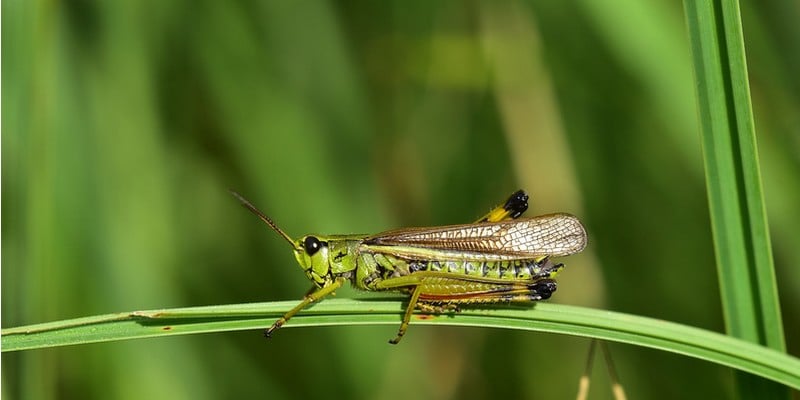
One of the consequences of global warming in East Africa is the multiplication of locusts which have invaded Kenya, Ethiopia and Somalia where their presence was previously rare. Faced with the devastation caused by these locusts on crops, a solution had to be developed to enable farmers to prevent their invasion on plantations and the destruction of crops. Last year, researchers developed PlantVillage based on an existing application and artificial intelligence to contain and prevent these invasions. The solution, implemented since February 2021, has saved the lives of nearly 34 million people.
A solution to help farmers on a daily basis
The PlantVillage solution aims to increase crop yields and profitability for millions of farmers, while taking into account the additional difficulties caused by climate change. To achieve this goal, their teams are developing algorithms and systems integrating artificial intelligence to prevent risks to plantations or to provide decision support in predefined situations. It is only natural that the locust invasion in East Africa during the year 2020 has become one of PlantVillage's priorities. According to Keith Cressman, head of the Food and Agriculture Organization (FAO), these African countries "have not faced a threat of this magnitude since the early 1950s. PlantVillage proposed a solution: to use an existing application called eLocust3m and adapt it to recognize locust hoppers. David Hughes, the founder of PlantVillage, said of the development of this solution:"Grasshoppers and locusts show how we can "collaborate" with artificial intelligence to find consistent solutions. [...] This can be a game changer for hundreds of millions of people as we try to adapt to climate change."